
Caffeine and L-Theanine: The Most Studied Cognitive Pairing in Plain Language

Key Takeaways
Option A
Caffeine
The widely consumed stimulant with a well-documented mechanism of action.
Best for: Adults seeking a rapid, reliable boost in alertness and reaction time.
Option B
L-Theanine
The amino acid associated with calm, focused attention without sedation.
Best for: Adults who want mental clarity without the jitteriness that caffeine alone can produce.
If you want faster reaction time and heightened wakefulness
Caffeine
Caffeine's adenosine-blocking action produces measurable gains in alertness and processing speed, supported by decades of research.
If you want calm, sustained attention with less agitation
L-Theanine
L-theanine increases alpha-wave activity in the brain, associated with a relaxed but alert mental state, without stimulant effects.
If you want to reduce jitteriness while keeping caffeine's alertness benefits
Caffeine
Combining caffeine with L-theanine is the most studied approach for this goal, with the combination showing better sustained attention than caffeine alone in several controlled trials.
If you are sensitive to stimulants or have anxiety-related concerns
L-Theanine
L-theanine alone has no stimulant properties and has shown calming effects in small trials; individuals sensitive to caffeine should consult a healthcare provider before combining the two.
How each compound acts in the brain
Caffeine works primarily by blocking adenosine receptors. Adenosine is a neurotransmitter that accumulates during waking hours and progressively slows neural activity, producing the sensation of fatigue. By occupying those receptors without activating them, caffeine prevents that slowdown, which is why a cup of coffee makes you feel more alert rather than simply less tired. Secondary effects include increased dopamine signaling and a modest rise in circulating adrenaline, which accounts for the elevated heart rate some people notice.
L-theanine (gamma-ethylamino-L-glutamic acid) is an amino acid found almost exclusively in the leaves of Camellia sinensis, the plant that produces green, black, and oolong tea. It crosses the blood-brain barrier and influences several neurotransmitter systems. Research has documented increases in gamma-aminobutyric acid (GABA) activity, modest reductions in glutamate-driven excitatory signaling, and changes in serotonin levels. Electroencephalogram (EEG) studies have recorded increased alpha-wave oscillations in the occipital and parietal regions of the brain following L-theanine ingestion, a pattern associated with a calm, alert mental state rather than drowsiness.
For a broader orientation to how cognitive compounds are classified and evaluated, see our grounded introduction to nootropics.
What the combination research actually shows
| Criterion | Caffeine | L-Theanine |
|---|---|---|
| Primary mechanism | Blocks adenosine receptors | Increases GABA, raises alpha-wave activity |
| Onset of effect | 30 to 60 minutes after ingestion | 30 to 60 minutes after ingestion |
| Main cognitive effect | Increased alertness and reaction speed | Relaxed, focused attention |
| Stimulant properties | Yes | No |
| Common dietary source | Coffee, tea, some soft drinks | Green, black, and oolong tea |
| Known risks at high doses | Anxiety, insomnia, palpitations | Limited data; no serious effects reported in trials |
| Strength of cognitive evidence | Extensive, decades of controlled research | Moderate; strongest in combination trials |
The caffeine-plus-L-theanine pairing has been studied more rigorously than most nootropic combinations. A series of randomized, placebo-controlled crossover trials published between 2008 and 2014 by researchers including Haskell, Kennedy, and colleagues examined doses commonly in the range of 75 to 100 mg of caffeine combined with 100 to 200 mg of L-theanine. Across those trials, the combination consistently produced better performance on tasks measuring sustained attention, working memory accuracy, and speed of response compared with either compound given alone. The trials also reported lower ratings of headache and reduced self-reported fatigue in some conditions.
The proposed mechanism is partially additive and partially complementary. Caffeine increases arousal; L-theanine appears to blunt some of the sympathetic nervous system activation that caffeine triggers, reducing the likelihood of anxiety or distraction without canceling the alertness benefit. The result is sometimes described in the literature as a sharper, more stable attentional state.
It is worth stating plainly what the evidence does not show. Most trials are small and short-duration. Long-term cognitive effects are not well established. Individual responses differ based on genetics (particularly variants in the CYP1A2 enzyme that metabolizes caffeine), habitual caffeine intake, body weight, and baseline anxiety levels. The combination is not a treatment for any condition.
Profiles of other well-studied compounds, including phosphatidylserine and bacopa monnieri, provide useful context for how the caffeine-theanine evidence base compares to other researched options.
Practical context and safety considerations
~400 mg
Daily caffeine generally considered safe for healthy adults
The U.S. Food and Drug Administration has cited this level as not associated with negative effects in healthy adults, though individual tolerance varies.
5-7 hours
Approximate half-life of caffeine in most adults
Half-life varies based on genetics, liver function, medications, and habitual caffeine consumption, according to established pharmacokinetic data.
2:1
Common L-theanine to caffeine ratio used in trials
Trials by Haskell, Kennedy, and colleagues frequently used L-theanine at twice the caffeine dose, though optimal ratios have not been definitively established.
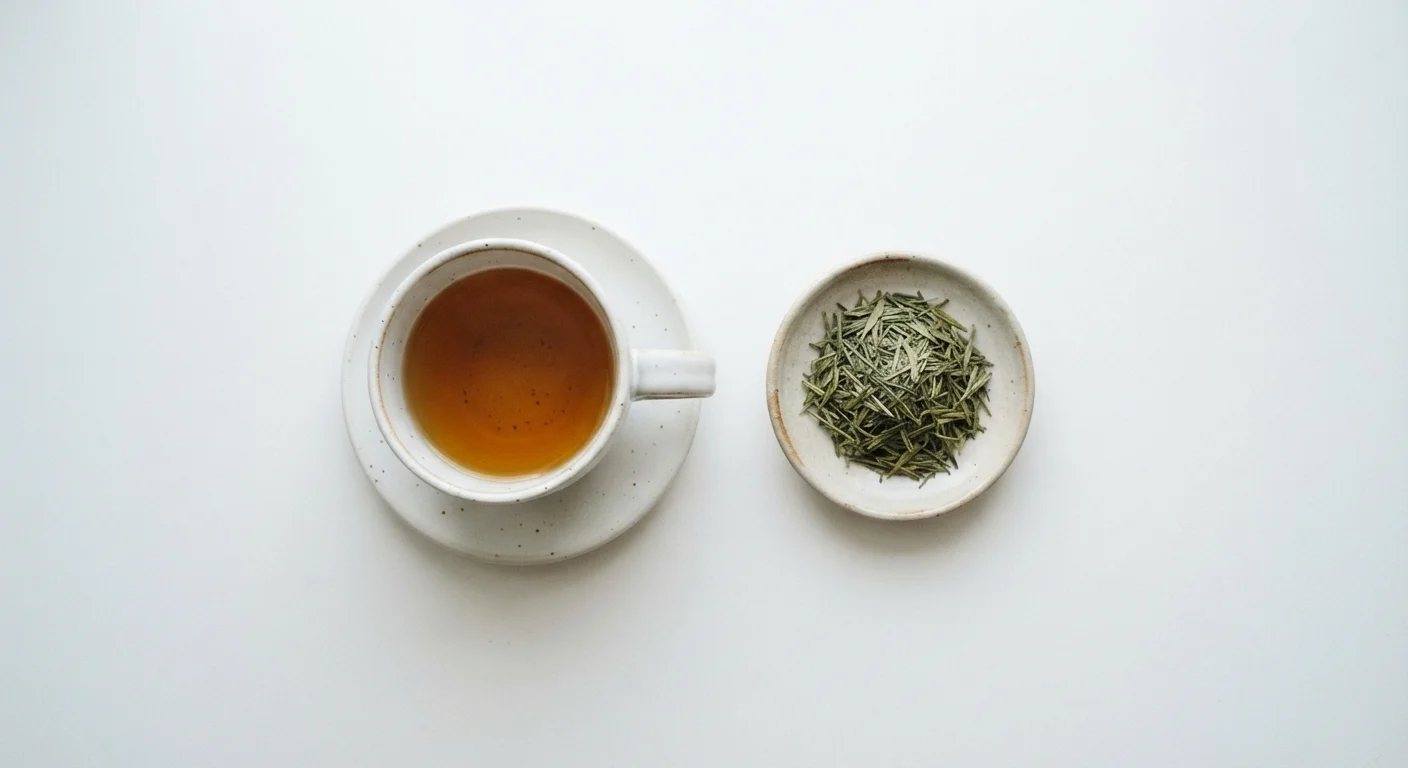
Both compounds are present in ordinary foods and beverages. A standard 8-ounce cup of brewed green tea contains roughly 25 to 45 mg of caffeine and approximately 6 to 25 mg of L-theanine, though concentrations vary considerably by tea variety, brewing time, and water temperature. This natural co-occurrence in tea is one reason the combination has attracted research attention: it reflects a dietary pattern consumed by large populations for centuries.
At typical dietary intakes, both compounds are broadly considered safe for healthy adults. Caffeine at higher doses can cause insomnia, palpitations, and anxiety in susceptible individuals. The U.S. Food and Drug Administration has noted that 400 mg per day is generally cited as an amount not associated with negative effects in healthy adults, though this does not constitute a recommended dose for any individual. L-theanine has not been associated with serious adverse effects in clinical trials at commonly studied doses, but systematic long-term safety data are limited.
People who are pregnant, nursing, have cardiovascular conditions, anxiety disorders, or take medications that interact with stimulants should discuss caffeine use with a qualified healthcare professional before making any changes. The same applies to anyone considering supplements rather than dietary sources.
Caffeine's persistence in the body also matters for sleep. Its half-life in most adults is approximately five to seven hours, meaning an afternoon intake can meaningfully reduce sleep quality. Understanding how long caffeine stays in your system is relevant to anyone using it for cognitive purposes. And as discussed in our article on lifestyle factors that nootropics cannot replace, no compound compensates for chronic sleep deprivation.
This article is for informational purposes only and is not medical advice. Consult a qualified healthcare professional before making changes to your diet, supplement intake, or any health-related routine.