

Key Takeaways
Memory encoding
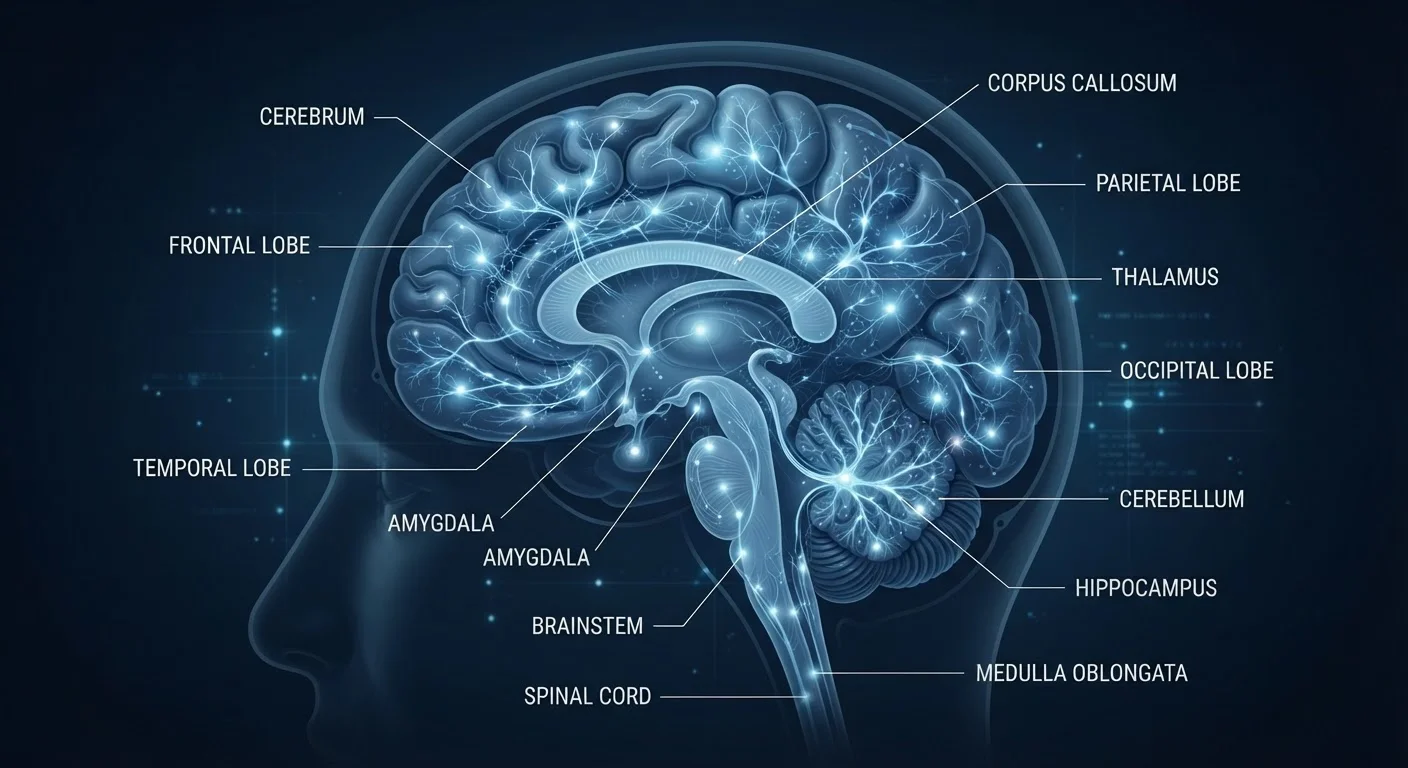
Memory encoding is the process by which the brain converts an experience or piece of information into a storable neural representation. It begins with sensory input and involves the coordinated activity of several brain regions, most notably the hippocampus and prefrontal cortex. Without successful encoding, information never reaches long-term storage and cannot be retrieved later.
At the cellular level, encoding depends on long-term potentiation (LTP), a process in which repeated synaptic activation strengthens the connection between neurons through changes in receptor density and protein synthesis.
How the brain builds a memory
Memory formation is not a single event. It unfolds across overlapping stages: sensory registration, short-term holding in working memory, and then encoding into longer-term storage. The hippocampus coordinates this by binding inputs from the visual cortex, auditory cortex, and prefrontal cortex into a coherent pattern. When the same pattern is reactivated, often during sleep, the connections between neurons strengthen through long-term potentiation (LTP).
LTP works through glutamate receptors, specifically NMDA receptors, which open only when a neuron is already active. This requirement for simultaneous pre- and post-synaptic activity makes LTP a selective, experience-dependent process. It is not random: the brain physically changes in response to what actually happens to it.
Acetylcholine amplifies this process. Released by neurons projecting from the basal forebrain, it increases the signal-to-noise ratio in the hippocampus during learning, making it easier for relevant patterns to stabilize. Noradrenaline and dopamine modulate encoding further by tagging emotionally or motivationally significant events as higher priority. This is why vivid or surprising experiences tend to be remembered more reliably than routine ones.
For a broader orientation to this topic, the Mental Clarity and Focus hub covers the lifestyle and nutritional context that underpins daily cognitive performance.
Where nootropic compounds intersect with these mechanisms
The most mechanistically coherent nootropic candidates target one or more of the neurochemical systems described above. The question is not whether a compound affects the brain: many substances do. The question is whether the effect is specific, measurable, and directionally consistent with improving encoding in humans at studied doses.
Cholinergic compounds aim to sustain acetylcholine availability. Alpha-GPC and citicoline are precursors to acetylcholine synthesis, and both have clinical trial data showing effects on cognitive outcomes, particularly in populations with mild cognitive impairment. In healthy adults, effects are more modest and context-dependent.
Bacopa monnieri contains bacosides, which in multiple randomized controlled trials have been associated with improvements in verbal learning rate and delayed recall. The proposed mechanism involves antioxidant activity at synapses and modulation of acetylcholinesterase, the enzyme that breaks down acetylcholine.
Phosphatidylserine is a phospholipid that maintains cell membrane fluidity, which affects receptor function and neurotransmitter release. Several controlled trials, including some in older adults, have reported modest improvements in memory tasks. The FDA has approved a qualified health claim for phosphatidylserine and cognitive decline, though the evidence is described as limited and not conclusive.
Lion's mane mushroom (Hericium erinaceus) is often cited for its content of hericenones and erinacines, compounds that in animal studies stimulate nerve growth factor (NGF) synthesis. Human evidence remains limited, but the mechanism is biologically plausible and the subject of active research.
~70%
Of memory consolidation linked to sleep stages
Research in sleep science consistently associates slow-wave and REM sleep with the hippocampal-to-cortical transfer of newly encoded memories.
12 weeks
Minimum trial duration in most Bacopa studies
Published randomized controlled trials of Bacopa monnieri typically run at least 12 weeks before measuring significant changes in delayed recall outcomes.
Modest
Typical effect size in human nootropic trials
Independent reviews of cognitive-enhancing compounds in healthy adults consistently report small-to-modest effect sizes, often detectable only on laboratory cognitive tasks.
For a wider orientation to compound categories and what questions to ask about any of them, see A Field Guide to Nootropics for First-Timers.
What the evidence does not support
A plausible mechanism is not the same as a proven effect. Many compounds that modulate neurotransmitter systems in vitro or in rodents fail to show consistent benefits in human trials, because the blood-brain barrier, oral bioavailability, and baseline neurochemical state all intervene. Effect sizes in the strongest human trials tend to be small, often detectable on specific laboratory tasks but unlikely to be noticeable in daily life for a healthy adult without deficiency.
Proprietary blends and multi-compound stacks complicate interpretation further. When a product contains ten ingredients, attributing any observed change to a specific component is not possible. This matters both for evaluating claims and for understanding risk.
Sleep, stress, and nutrition are foundational. Chronic sleep deprivation degrades LTP consolidation directly. No studied compound restores the consolidation that happens during slow-wave and REM sleep. Similarly, deficiencies in B vitamins, omega-3 fatty acids, and magnesium impair encoding through mechanisms no isolated supplement addresses when the deficiency itself is not corrected.
Anyone considering a nootropic compound should start with the checklist in questions to ask before adding a nootropic to your routine, which covers safety considerations and when to involve a physician. For those interested in how these compounds relate to aging, what research suggests about nootropics and long-term cognitive health reviews the current state of evidence. A grounded starting point is also available at Nootropics: A Grounded Introduction for the Curious but Cautious.
This article is for informational purposes only and is not medical advice. Consult a qualified healthcare professional before making any changes to your supplement routine or health management plan.