

Key Takeaways
Dietary fibre and gut bacteria
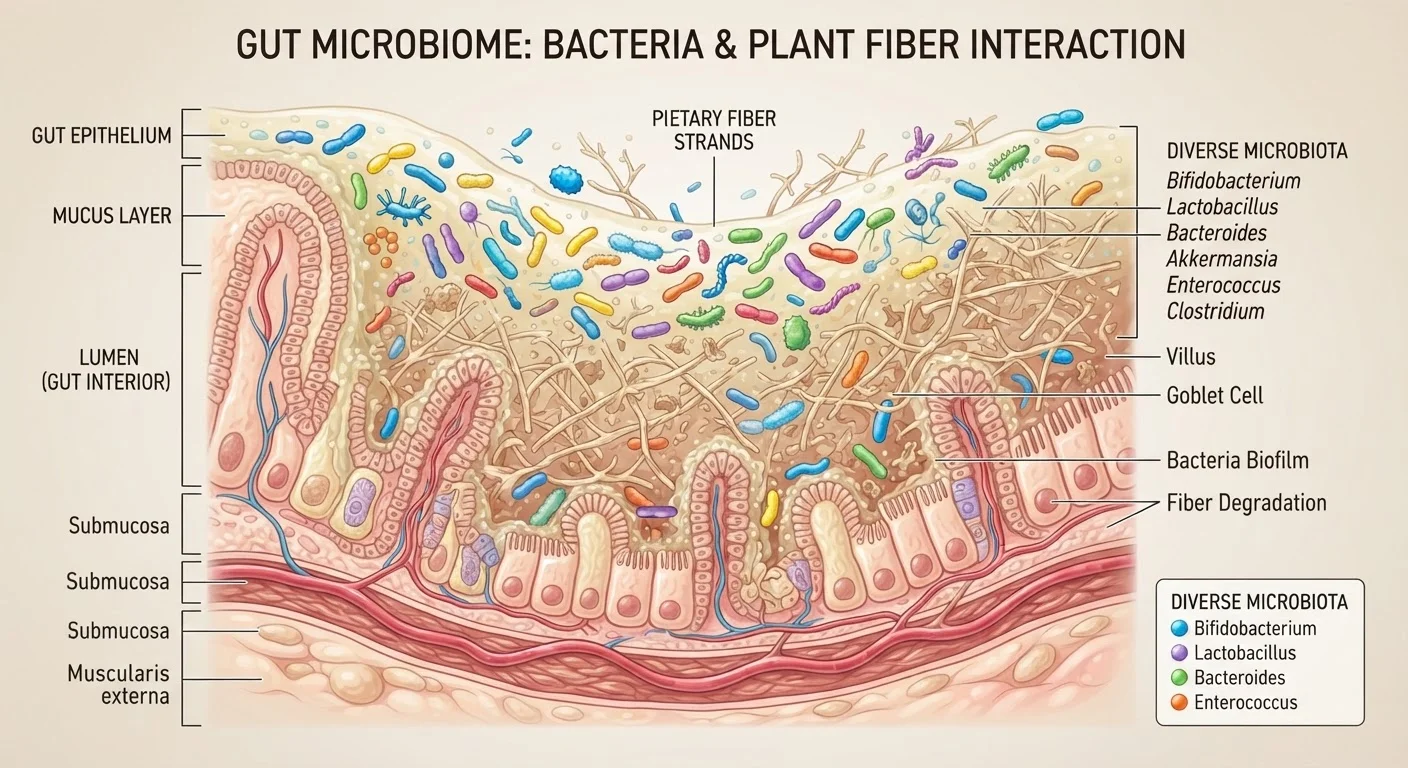
Dietary fibre is the indigestible portion of plant foods that passes through the small intestine largely intact and reaches the large intestine, where resident gut bacteria ferment it for energy. This fermentation process produces compounds that influence digestion, immune function, and the integrity of the gut lining. The relationship is mutually beneficial: bacteria get a fuel source, and the human host gets metabolic byproducts that support health.
Most of the fermentable fibre relevant to gut bacteria is classified as soluble, including fructo-oligosaccharides, inulin, and resistant starch. These substrates selectively stimulate the growth of specific bacterial genera such as Bifidobacterium and Lactobacillus.
What happens when fibre reaches the large intestine
When you eat plant foods, your small intestine absorbs sugars, proteins, and fats with relative efficiency. Fibre is different. The bonds holding fibre molecules together resist the enzymes your body produces, so fibre arrives in the large intestine largely intact. That is where roughly 38 trillion microbial cells are waiting.
Resident bacteria produce the enzymes needed to break down fibre structures that human biology cannot. The process is anaerobic fermentation, meaning it happens without oxygen, deep in the colon. Different bacterial species specialize in different fibre types: some target inulin from chicory or onions, others work on resistant starch from cooked legumes or cooled potatoes. The end products of this fermentation are what generate the health effects that researchers study.
For a broader view of how diet shapes the microbiome, see why fibre variety matters more than quantity.
Short-chain fatty acids: what fermentation produces
The main outputs of fibre fermentation are short-chain fatty acids (SCFAs), principally butyrate, propionate, and acetate. Each has a distinct role in the body.
Butyrate is the preferred fuel for colonocytes, the cells that line the colon wall. Without adequate butyrate, these cells are under nutritional stress. Colonocyte health directly affects the integrity of the gut lining, the barrier that separates intestinal contents from the bloodstream. A well-maintained lining limits the passage of bacterial fragments and partially digested food particles into circulation, a process sometimes described as increased intestinal permeability.
Propionate is absorbed into the portal vein and travels to the liver, where it participates in glucose regulation pathways. Acetate, the most abundant SCFA, enters general circulation and may interact with appetite-regulating signals, though this remains an area of active research rather than settled science.
Less than 10%
US adults meeting daily fibre recommendations
National dietary survey data from the USDA consistently shows the vast majority of US adults fall well below recommended fibre intakes.
38g
Daily fibre target for adult men (US guidelines)
The Dietary Guidelines for Americans set this target for men; the figure for women is 25 grams per day.
3 main SCFAs
Short-chain fatty acids produced by fermentation
Butyrate, propionate, and acetate are the principal fermentation products and each interacts with different tissues in the body.
These metabolic connections mean that what happens in the colon does not stay in the colon. The liver's role in metabolic health is one downstream system that fibre-derived SCFAs appear to influence.
How fibre shapes the bacterial community
Not all fibre feeds the same bacteria. Inulin and fructo-oligosaccharides, found in foods such as garlic, leeks, and asparagus, are associated with growth of Bifidobacterium species. Resistant starch from legumes and whole grains supports Ruminococcus and Faecalibacterium species, including Faecalibacterium prausnitzii, a bacterium associated with butyrate production and reduced intestinal inflammation in observational studies.
When fibre intake is consistently low, bacterial populations that specialize in fermentation decline. Some bacteria then switch to alternative substrates, including the mucus layer coating the gut lining, which can degrade that protective barrier over time. This dynamic was documented in animal research published in the journal Cell Host and Microbe, though direct human parallels are still being investigated.
Eating a wide range of plant foods, rather than relying on a single fibre source, supports a more diverse microbial community. Diversity itself is associated with functional resilience in the microbiome, meaning a more varied bacterial population tends to be less disrupted by factors such as antibiotic exposure or short-term dietary changes.
Fermented foods can complement fibre by introducing live bacterial strains directly. See what the research says about fermented foods for a closer look at that evidence.
Practical context: fibre intake in the US
The Dietary Guidelines for Americans set fibre targets at 25 grams per day for women and 38 grams per day for men. National dietary surveys consistently show average US adult intake below 20 grams per day, a gap sometimes called the fibre deficit.
Processed foods tend to displace whole plant foods in the diet, and food processing removes much of the fibre present in original ingredients. Refined grain products, for instance, lose much of their fibre content compared to whole grain equivalents.
Gradual increases in fibre intake allow gut bacteria time to adapt. Rapid shifts can cause temporary gas and bloating as fermentation activity increases before the microbial community adjusts. Starting with cooked vegetables, legumes, and whole grains, then expanding variety over weeks, is a commonly recommended approach. Anyone with a pre-existing digestive condition should speak with a healthcare provider before making significant dietary changes.
For a structured approach to building fibre and gut-friendly habits into daily eating, building a gut-friendly eating pattern from the ground up covers the practical steps. Additional context on digestive support strategies is available through the digestive support hub.
This article is for informational purposes only and is not medical advice. Consult a qualified healthcare professional for personal guidance on diet, digestion, or any health condition.