

Key Takeaways
Option A
Probiotics
Live microorganisms that add directly to the gut microbial community.
Best for: People looking to replenish beneficial bacteria after disruption, such as following antibiotic use or gastrointestinal illness.
Option B
Prebiotics
Non-digestible compounds that feed and sustain bacteria already living in the gut.
Best for: People who want to support long-term microbial diversity through everyday dietary choices.
If you have recently finished a course of antibiotics
Probiotics
Antibiotics can reduce microbial diversity significantly. Probiotic foods or supplements may help restore certain bacterial populations, though strain selection matters.
If you want to support existing gut bacteria over the long term
Prebiotics
Prebiotic fibers selectively feed beneficial microbes already resident in the colon, which can improve microbial diversity with consistent dietary intake.
If you are building a general gut-health diet from scratch
Prebiotics
A varied plant-rich diet naturally supplies prebiotic compounds and provides the broadest foundation for a healthy microbial community.
If you are interested in using fermented foods as part of your wellness routine
Probiotics
Fermented foods like kefir, yogurt, and kimchi deliver live cultures alongside nutrients, and current research links them to improved microbiome diversity.
If you want to combine both approaches for complementary effects
Probiotics
Pairing probiotic-rich foods with prebiotic fiber sources creates a synbiotic effect, giving introduced microbes the substrate they need to survive and function.
What probiotics actually are
Probiotics are live microorganisms that, when consumed in adequate amounts, confer a health benefit on the host. That definition comes from a joint expert consultation between the Food and Agriculture Organization and the World Health Organization and remains the working standard in gastroenterology today.
The most studied probiotic genera are Lactobacillus and Bifidobacterium, found in fermented dairy products like yogurt and kefir. Other strains, including Saccharomyces boulardii (a yeast), appear in some supplements and certain fermented foods. For a more detailed look at how fermented foods compare to capsule-form probiotics, see our comparison of fermented foods and probiotic supplements.
Probiotic strains do not permanently colonize the gut in most cases. Research suggests they exert transient effects: interacting with resident bacteria, competing with pathogens, and modulating immune signaling in the gut lining, then clearing within days to weeks after consumption stops. This means consistent intake matters more than occasional use.
What prebiotics actually are
Prebiotics are substrates selectively used by host microorganisms that produce a health benefit. The current scientific consensus, updated by the International Scientific Association for Probiotics and Prebiotics in 2017, broadened the category beyond fiber to include some non-fiber compounds, but dietary fiber remains the primary and best-documented source.
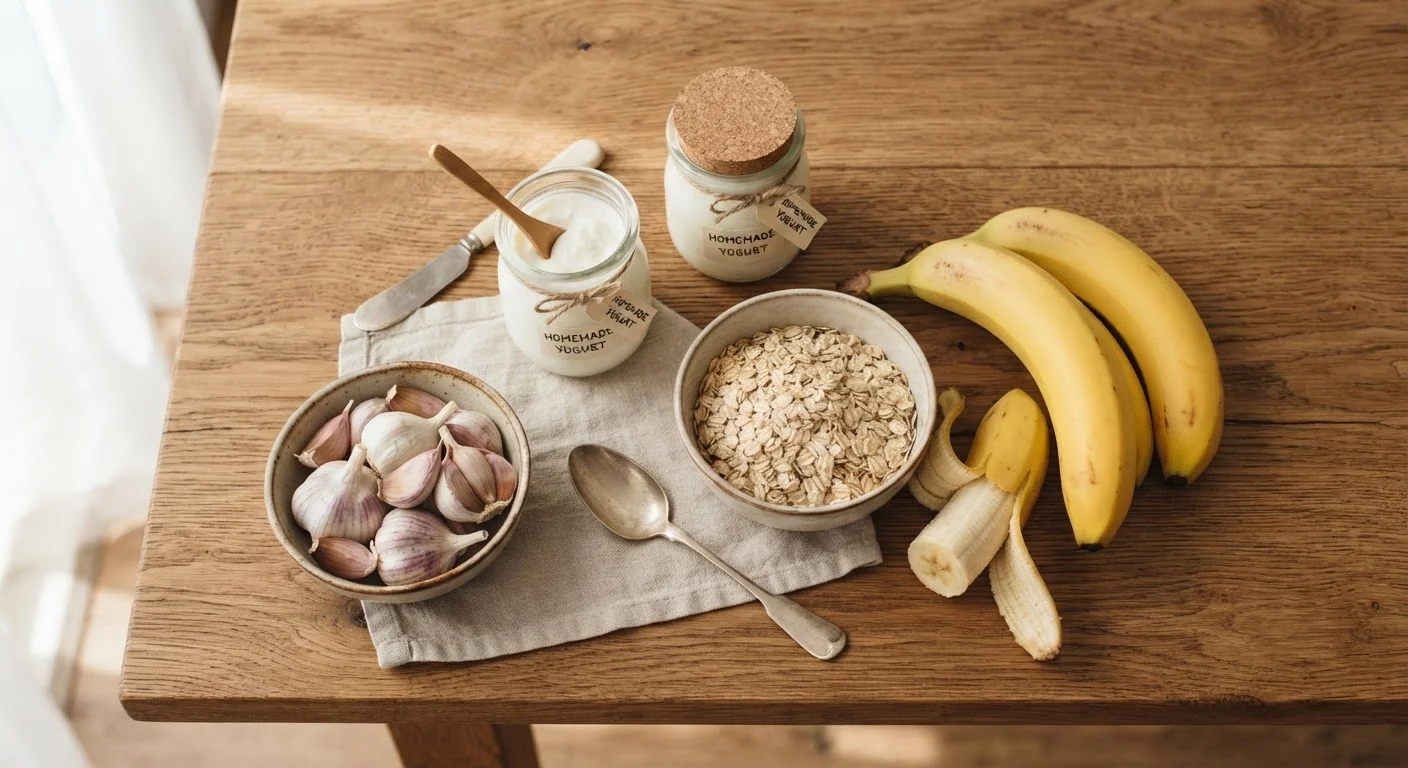
Common prebiotic fibers include inulin (found in chicory root, garlic, and onions), fructooligosaccharides (FOS) from bananas and asparagus, and beta-glucans from oats and barley. Resistant starch, found in cooked and cooled potatoes and legumes, also qualifies. Gut bacteria ferment these compounds in the colon, producing short-chain fatty acids (SCFAs) such as butyrate, acetate, and propionate.
SCFAs matter because they supply energy to colonocytes (cells lining the colon), help maintain the gut barrier, and influence systemic immune responses. This mechanism is why dietary fiber variety tends to produce broader microbial diversity, a point covered in depth in our article on fiber variety and the microbiome.
| Criterion | Probiotics | Prebiotics |
|---|---|---|
| Definition | Live beneficial microorganisms | Substrates that feed gut microbes |
| Primary source | Fermented foods, supplements | Plant fiber: garlic, oats, bananas |
| Mechanism | Transient colonization and immune modulation | Fermentation producing SCFAs in colon |
| Evidence specificity | Strain-specific; varies by condition | Broadly consistent across fiber types |
| Durability of effect | Fades when intake stops | Sustained with consistent dietary intake |
| Supplement availability | Yes, widely available | Yes, though food sources are preferred |
Where the evidence stands
The strength of evidence differs considerably between the two. Probiotic research is strain-specific: a well-studied strain like Lactobacillus rhamnosus GG has documented effects on antibiotic-associated diarrhea, but those findings do not transfer automatically to other strains or conditions. Regulatory bodies in the United States have not approved any probiotic health claim at the level of a drug indication.
Prebiotic research is less strain-specific and more consistent across studies, partly because SCFA production from fermentation is a reliable biological pathway. Higher prebiotic fiber intake is associated with greater populations of Bifidobacterium and Faecalibacterium prausnitzii, two genera linked to gut barrier integrity. That association does not confirm causation for every health outcome, and individual responses vary based on each person's existing microbial composition.
36%
Adults using probiotics in the U.S.
The National Institutes of Health reported that probiotics are among the most commonly used dietary supplements by American adults.
10-15g
Typical daily prebiotic fiber intake in U.S. adults
Research published in the Journal of Nutrition has estimated that most U.S. adults consume well below the amounts shown to meaningfully shift microbial composition.
Short-chain fatty acids
Primary metabolic output of prebiotic fermentation
Butyrate, acetate, and propionate produced during colonic fermentation are associated with colonocyte energy supply and gut barrier support in multiple human studies.
The broader evidence on fermented foods, which function as a probiotic food source, is reviewed honestly in our piece on fermented foods and the microbiome.
How they interact and practical considerations
Consuming probiotics alongside prebiotics is sometimes called a synbiotic approach. The rationale is that the prebiotic fiber provides substrate that helps introduced microbes survive in a competitive colonic environment. Some clinical trials have tested synbiotic combinations and found modest additive effects on microbial diversity, though this area of research is still maturing.
In practical terms, a diet already rich in diverse plant foods provides substantial prebiotic support without supplementation. Adding fermented foods to that base covers the probiotic side for most healthy adults. Supplements may be appropriate in specific clinical contexts, such as managing antibiotic-associated diarrhea or certain functional gut conditions, but anyone with a chronic health condition should consult a gastroenterologist or registered dietitian before starting a probiotic regimen.
For a full side-by-side breakdown including synbiotic considerations, see our detailed explainer on probiotics and prebiotics.
This article is for general informational and educational purposes only and does not constitute medical advice. Consult a qualified healthcare professional before making changes to your diet or supplement routine, particularly if you have a diagnosed health condition.