

Key Takeaways
Foot arch type
The arch of the foot is the curved structure along the inner sole formed by bones, tendons, and ligaments working together to absorb and distribute body weight. Arch type describes how high or low that curve sits when you stand. Most people fall somewhere along a spectrum from very flat (little or no curve) to very high (a pronounced, rigid curve). Arch type is not a diagnosis on its own; it is a structural characteristic that can influence how forces travel through the foot and up into the ankle, knee, and hip.
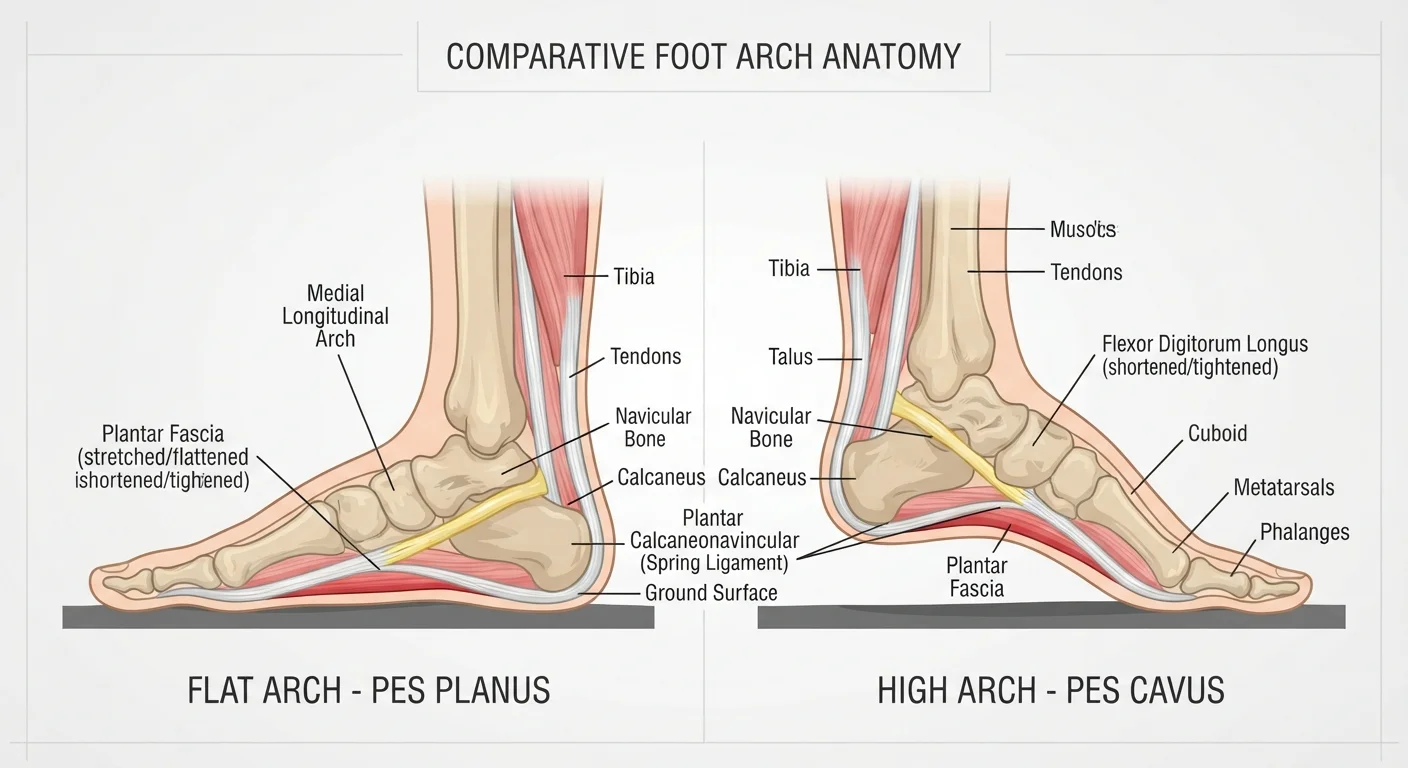
The medial longitudinal arch is the most clinically relevant of the foot's three arch structures. It is maintained dynamically by the plantar fascia, intrinsic foot muscles, and the tibialis posterior tendon, not solely by bone shape.
How the arch works
The foot contains 26 bones arranged in a structure designed to handle repetitive impact. Three arches form between those bones: the medial longitudinal arch along the inner edge of the foot, the lateral longitudinal arch along the outer edge, and the transverse arch running across the width of the forefoot. The medial arch is the largest and the one people refer to when they talk about having a high or flat arch.
That arch is not a static vault. It functions more like a spring, compressing under load and recoiling as the foot lifts off the ground. The plantar fascia, a thick band of connective tissue running from the heel to the toes, acts as a tension cable that prevents the arch from collapsing completely. The tibialis posterior tendon, which attaches at several points along the arch, provides active support as the foot moves. Intrinsic muscles inside the foot itself contribute additional stability during walking and standing.
When any part of this system is weak, rigid, or overloaded, the arch either collapses further than intended or cannot absorb shock adequately. Those are the two patterns that produce the distinct problems associated with flat feet and high arches. For a broader look at what can go wrong when these mechanics are disrupted, see why feet hurt.
Flat feet: what actually happens
A flat foot, sometimes called pes planus, has a low or absent medial arch that makes full or near-full contact with the ground during standing. This contact pattern is not inherently harmful, but it does change how forces travel through the foot.
When the arch is low, the foot tends to pronate, meaning the ankle rolls slightly inward and the heel tilts outward as weight is applied. Mild pronation is a normal part of gait. Excessive pronation, sustained over thousands of steps per day, can place repetitive strain on the plantar fascia, the tibialis posterior tendon, and the inner structures of the ankle. Over time, this strain pattern is associated with plantar fasciitis, posterior tibial tendon dysfunction, and medial shin pain.
Flat feet can be flexible or rigid. A flexible flat foot looks flat during standing but shows a visible arch when the foot is lifted or when standing on tiptoe. A rigid flat foot maintains a flat profile regardless of position, which usually reflects a more fixed structural issue and may have different clinical implications. The distinction matters when a clinician is deciding on management.
Check your pronation before buying insoles
Standing in front of a mirror and observing whether your ankle rolls inward when bearing weight gives a rough indication of pronation. A more reliable assessment comes from a podiatrist or physical therapist who can observe your gait dynamically. Off-the-shelf insoles vary widely in their firmness and arch height, so a clinical recommendation reduces the risk of buying something that does not match your actual foot mechanics.
Footwear choices can either support or worsen pronation patterns. Evidence on shoe design and foot mechanics is worth reviewing before making changes to what you wear daily.
High arches: what actually happens
A high arch, or pes cavus, has a pronounced medial curve that leaves only the heel and the ball of the foot in contact with the ground. The foot is often rigid in this configuration, with limited ability to flatten and absorb load on impact.
Because the surface area in contact with the ground is smaller, pressure concentrates at two points: the heel and the metatarsal heads (the bony prominences behind the toes). That concentration can cause calluses, metatarsalgia (pain in the forefoot), and heel pain. Reduced shock absorption also means more impact force travels upward into the ankle, knee, and hip.
High arches are also associated with supination, the outward rolling of the foot during gait. Supination reduces the foot's ability to adapt to uneven surfaces and increases the risk of lateral ankle sprains. People with high arches often have tighter calf muscles and shortened plantar fascia, which compounds the rigidity.
20-30%
Adults estimated to have flat feet
Prevalence estimates vary by assessment method, but population studies consistently place flexible flat foot in this range among adults in Western countries.
~10%
Adults estimated to have high arches
Pes cavus is less common than flat feet and more frequently associated with underlying neuromuscular conditions when it presents in adults.
60%
Plantar fasciitis cases linked to biomechanical factors
Biomechanical contributors including excessive pronation and arch-related tension are among the most commonly cited factors in clinical reviews of plantar fasciitis etiology.
When high arches are accompanied by neurological symptoms such as muscle weakness or loss of sensation, evaluation by a physician is warranted, as pes cavus can sometimes reflect an underlying neuromuscular condition.
What arch type means for daily care
Arch type is context, not destiny. The majority of people with either flat feet or high arches go about their lives without significant foot problems. Pain tends to emerge when structural characteristics intersect with contributing factors: prolonged standing, high mileage in unsupportive footwear, sudden increases in activity, or weakness in surrounding muscles.
For both arch types, muscle conditioning is one of the most actionable interventions available without specialist equipment. Toe-spreading exercises, single-leg calf raises, and towel scrunches target the intrinsic muscles that provide dynamic arch support. These are general conditioning approaches rather than treatments for any specific condition; anyone with foot pain should have a clinical assessment before starting a structured program.
Footwear assessment also deserves attention regardless of arch type. A shoe that allows excessive motion may worsen pronation in flat feet, while a shoe that is too rigid may increase pressure in a high-arched foot. Foundational foot care habits are a useful starting point for anyone building or revising a daily routine.
Habits around stretching and footwear choices that seem reasonable can sometimes backfire. Common foot care habits that quietly prolong pain covers patterns worth reconsidering. Arch mechanics also change with age; how age affects foot structure and care needs is relevant context for adults managing long-term foot health.
This article is for informational purposes only and is not medical advice. Consult a qualified healthcare professional for personal assessment, diagnosis, or treatment of foot pain or any related condition.