

Key Takeaways
Sedentary tightness
Sedentary tightness refers to the progressive shortening and stiffening of muscles, tendons, and fascia that occurs when the body holds the same position for extended periods. It is not limited to one region. Sustained sitting compresses joints, reduces circulation, and signals muscles throughout the body to adapt to a static, shortened state.
Prolonged static loading causes viscoelastic creep in connective tissue, meaning tissues deform slowly under constant load and lose their ability to return fully to resting length without deliberate mobilization.
The kinetic chain problem with prolonged sitting
The human body functions as a linked system. A restriction in one segment alters mechanics in adjacent ones. When you sit for hours each day, this chain-wide effect means that tissue changes do not stay contained to the hips, even though that region bears the most obvious load.
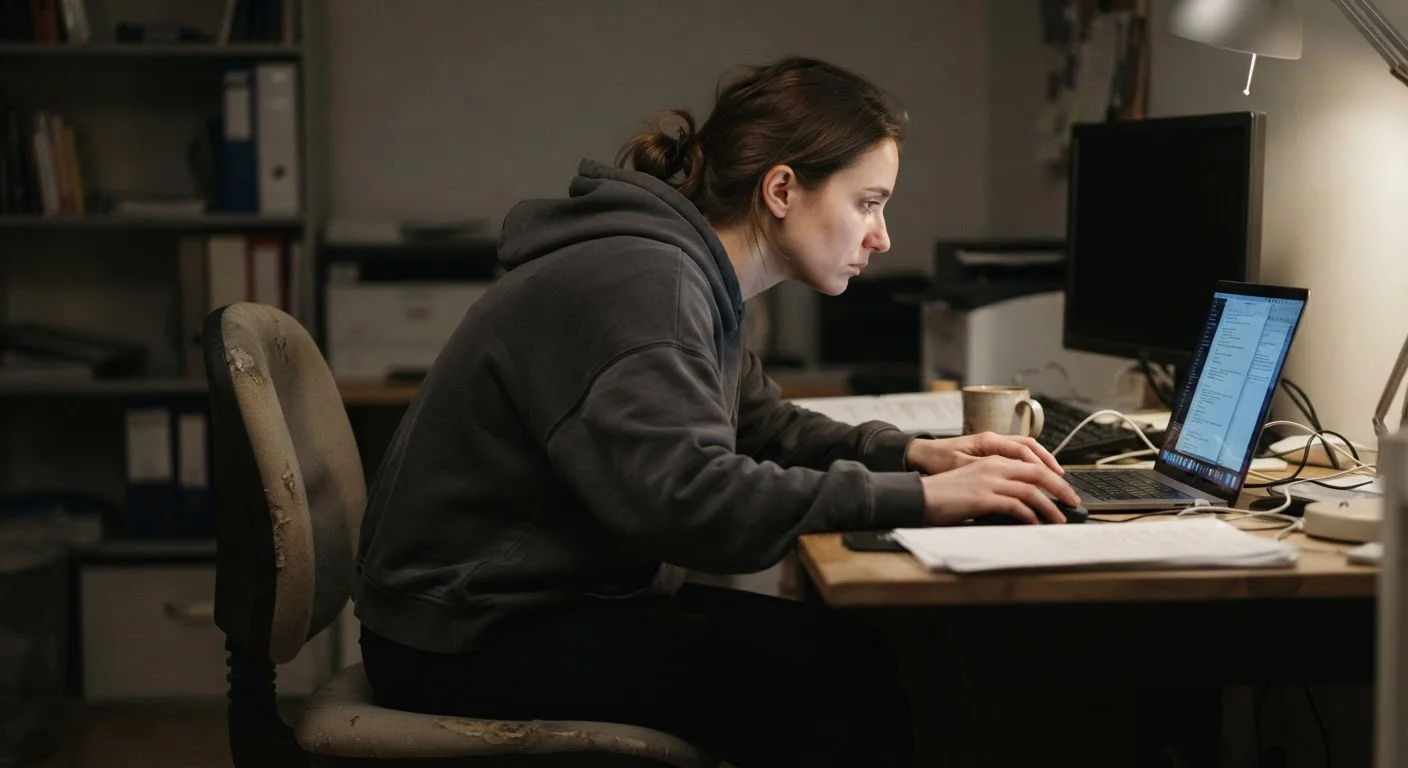
The hip flexors, particularly the iliopsoas, shorten when the hip joint stays at roughly 90 degrees for extended periods. But the thoracic spine simultaneously flattens its natural curve under desk-work posture, the cervical spine compensates with forward head carriage, the pectorals shorten as the arms reach forward, and the ankle plantar flexors lose range because the foot rests flat on the floor in a position that never challenges dorsiflexion.
Each of these adaptations reinforces the others. A stiff thoracic spine limits shoulder rotation, which pushes compensatory movement into the neck. Tight ankles shift weight distribution during standing and walking, which loads the lumbar spine differently. The hip tightness that most people recognize is often the last visible symptom of a pattern that started further up or down the chain.
Sedentary behavior interacts with sciatic nerve pain in a similar chain-wide way, with compression and altered pelvic tilt contributing to nerve irritation over time.
Regions that tighten beyond the hips
Thoracic spine. The mid-back normally has a gentle kyphotic curve. Slumped sitting exaggerates this curve and compresses the facet joints posteriorly while stretching the anterior longitudinal ligament. After sustained loading, the thoracic extensors adaptively shorten in a lengthened-weak position, making upright posture feel effortful even when you stand up.
Shoulders and pectorals. Forward arm reach at a keyboard places the glenohumeral joint in internal rotation for hours. The anterior capsule and pectoral minor tighten in response. This restricts overhead movement and can contribute to shoulder impingement patterns when the tissue is loaded dynamically, such as during exercise or lifting.
Calves and ankles. A chair position keeps the ankle in slight plantar flexion. The gastrocnemius and soleus adapt to this shortened range, reducing dorsiflexion over time. Reduced dorsiflexion is associated with altered gait mechanics, increased Achilles tendon load, and compensatory knee and hip patterns during walking. Prolonged sitting affects foot tissue in ways that are easy to overlook until symptoms appear.
Suboccipital muscles. As the head translates forward to meet a screen, the small muscles at the base of the skull shorten to maintain the head in an upright position. This can contribute to tension headaches and cervical stiffness that most people do not associate with desk posture at all.
Set a movement timer during desk work
Brief, frequent breaks are more effective at reducing cumulative tissue load than a single long stretch at the end of the day. A timer set for every 30 to 40 minutes prompts you to stand, walk, or move through a quick range-of-motion sequence. Even 2 to 3 minutes of varied movement interrupts the static loading cycle that drives adaptive shortening.
Practical mobility strategies that address the full body
Addressing only hip flexors with a standard kneeling stretch leaves the rest of the chain untouched. A more complete approach works through the regions that sitting specifically loads.
- Thoracic extension over a foam roller or rolled towel. Position the roller across the mid-back, support the head, and extend gently over several segments. This counteracts sustained flexion loading and can restore range of motion that makes upright sitting easier.
- Wall pectoral stretch with a bent elbow. Place the forearm against a doorframe, rotate the torso away slowly. Hold for 30 to 60 seconds per side. This targets the anterior capsule and pectoral minor rather than just the pectoral major.
- Ankle dorsiflexion mobilization. In a half-kneeling position, drive the front knee forward over the foot while keeping the heel down. This restores range progressively and directly counters the plantar flexion bias of sitting.
- Movement breaks every 30 to 45 minutes. Brief standing, walking, or bodyweight movement interrupts the static load cycle. The value is in frequency, not duration.
For those managing chronic pain, these strategies need adjustment. Mobility work for people with chronic pain requires specific precautions that go beyond general flexibility guidance.
Prolonged sitting also affects the lymphatic system. Compression at the groin and reduced muscle pump activity slow lymph flow, which quietly compromises lymphatic circulation without producing obvious symptoms early on.
This article is for informational purposes only and is not medical advice. If you experience pain, neurological symptoms, or worsening mobility, consult a qualified healthcare professional before beginning any new exercise program.