
Stress, Cortisol, and the Hair Follicle: Understanding Stress-Related Shedding

Key Takeaways
Stress-related hair shedding
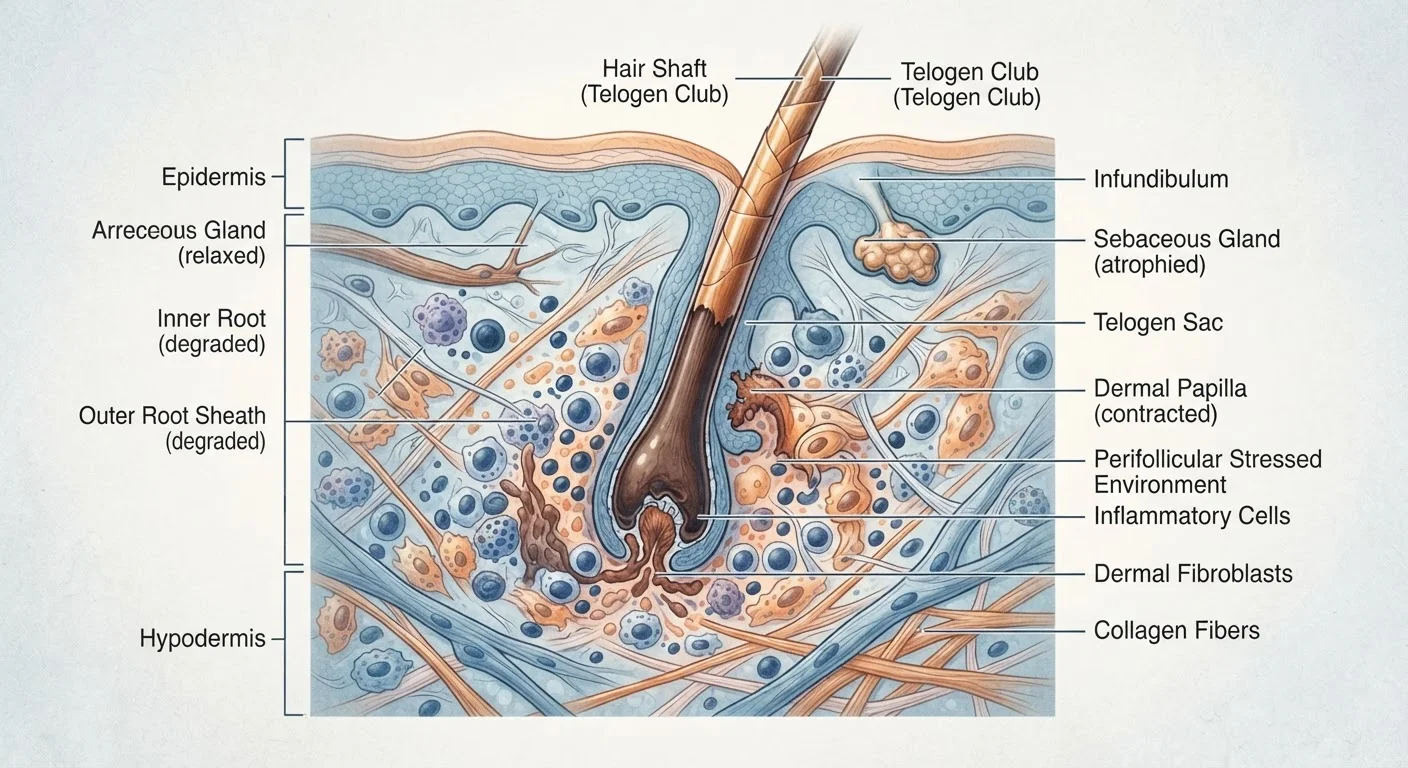
Stress-related hair shedding, clinically called telogen effluvium, occurs when elevated stress hormones disrupt the normal hair growth cycle and cause a large proportion of follicles to enter their resting phase simultaneously. Weeks to months later, those resting hairs shed in noticeable quantities. The condition is typically diffuse, meaning it affects the entire scalp rather than patchy areas.
Cortisol, the primary glucocorticoid released during the stress response, has receptors in follicle stem cells and can suppress the Wnt/beta-catenin signaling pathway that sustains the anagen (active growth) phase.
How cortisol reaches the hair follicle
The stress response begins in the hypothalamus, which signals the adrenal glands to release cortisol. In short bursts, cortisol is adaptive: it mobilizes energy and reduces inflammation. When stress is chronic, cortisol levels remain elevated for weeks or months, and the consequences extend far beyond the nervous system.
Hair follicles are not passive bystanders. They contain glucocorticoid receptors, meaning they respond directly to circulating cortisol. Research published in Nature found that sustained corticosterone (the rodent equivalent of cortisol) depletes the pool of follicle stem cells by keeping them in a prolonged resting state and inhibiting their reactivation. The mechanism involves suppression of Gas6, a growth factor that normally prompts stem cells to re-enter the active growth phase.
This is why stress does not merely slow hair growth in a vague, general sense. It interrupts a precise molecular conversation at the follicle level, one that governs when each hair grows, rests, and sheds. For readers interested in how this same cortisol cascade affects the skin's surface, our coverage of how chronic stress rewires skin behaviour explains the parallel mechanisms in sebum production and collagen synthesis.
The hair growth cycle and where stress intervenes
Each follicle cycles independently through three main phases. Anagen is the active growth phase, lasting two to seven years on the scalp. Catagen is a brief transitional phase. Telogen is the resting phase, lasting roughly two to four months, after which the hair sheds and a new anagen phase begins.
Under normal conditions, about 85 to 90 percent of scalp follicles are in anagen at any given time. Elevated cortisol can push a disproportionate number of follicles into telogen prematurely. When those follicles eventually shed, the volume of hair lost can be jarring. Handfuls in the shower, dense accumulation on pillows, and visible thinning at the part line are common reports.
The critical point is the delay. Because shedding only occurs at the end of the telogen phase, a person who experienced severe stress in January may not notice accelerated hair loss until March or April. That lag frequently causes confusion about the true cause.
85-90%
Follicles normally in active growth phase
Under healthy conditions, the majority of scalp follicles are in anagen at any given time; stress can shift this ratio toward the resting telogen phase.
2-4 months
Typical delay between stressor and shedding
The lag reflects the duration of the telogen phase before the resting hair is released, which is why many people do not link shedding to its true cause.
6-12 months
Approximate recovery window for visible density
Even after follicles re-enter anagen, new hair must grow several inches before thinning areas appear visibly fuller.
Nutritional depletion as a compounding factor
Chronic stress often impairs appetite, digestion, and nutrient absorption. Iron, zinc, biotin, and protein are all required for healthy hair production. Cortisol also increases urinary excretion of zinc and can deplete magnesium, both of which follicles need for normal cell division.
When the body is under sustained stress, it prioritizes resources for immediate survival functions. Hair, which is metabolically expensive and not essential for survival, can be deprioritized. This means a person who is both psychologically stressed and eating poorly faces a compounded risk that goes beyond cortisol alone.
Correcting identified nutritional deficiencies, under medical guidance, is one of the more tractable parts of recovery. The lifestyle factors that support follicle health article covers how dietary patterns, sleep, and other habits affect the scalp environment over time.
Ask your doctor about nutrient testing
If you are experiencing significant shedding alongside chronic stress, blood tests for ferritin (stored iron), zinc, and thyroid hormones can identify deficiencies that compound follicle vulnerability. Correcting a documented deficiency under clinical guidance addresses a tangible, modifiable factor. Do not begin supplementation without confirmation of a deficiency, as excess intake of some nutrients can be harmful.
Recovery: what the evidence suggests
Telogen effluvium is generally self-limiting. Once the stressor resolves, follicles typically re-enter anagen, and shedding slows over the following months. Visible density improvements can take six to twelve months because new hair must grow long enough to be noticeable.
The distinction between stress-related shedding and other hair loss conditions matters for recovery expectations. Hormonal changes across life stages can produce overlapping symptoms, particularly during postpartum periods or perimenopause, which is why professional evaluation is useful when shedding is severe or prolonged. A clinician may assess thyroid function, ferritin levels, and androgen status to rule out concurrent contributors.
For readers who want to understand how stress impairs the body's broader repair capacity, the article on how chronic stress disrupts the body's ability to recover explains the downstream effects on sleep quality and cellular repair. These systemic factors are not separate from follicle health; they are part of the same physiological context.
This article is for general informational purposes only and is not a substitute for professional medical advice, diagnosis, or treatment. If you are experiencing significant or persistent hair shedding, consult a qualified healthcare provider.