

Key Takeaways
Sleep hygiene
Sleep hygiene refers to the collection of behavioral and environmental practices that support consistent, restorative sleep. The term covers habits around timing, light exposure, physical activity, diet, and bedroom conditions. Good sleep hygiene does not guarantee perfect sleep, but poor sleep hygiene reliably disrupts it.
The concept was introduced in clinical sleep medicine in the 1970s by researcher Peter Hauri, initially as a behavioral checklist for patients with chronic insomnia, and has since been incorporated into cognitive behavioral therapy for insomnia (CBT-I).
Where the concept comes from
The phrase 'sleep hygiene' entered clinical use in the late 1970s when sleep researcher Peter Hauri developed a behavioral checklist for patients with chronic insomnia. The word 'hygiene' was borrowed from public health language, where it describes practices that prevent illness rather than treat it. Hauri's original list covered topics like caffeine, alcohol, irregular schedules, and bedroom noise, areas that research has continued to refine.
Since then, sleep hygiene has become a standard component of CBT-I, which the American College of Physicians recommends as the first-line treatment for chronic insomnia. CBT-I uses sleep hygiene alongside sleep restriction and cognitive restructuring, recognizing that behavior change alone rarely resolves clinical insomnia but remains a necessary foundation.
For the general population without a diagnosed sleep disorder, sleep hygiene functions as a set of evidence-informed defaults. No single habit is a cure, and the research base for individual practices varies in strength. The most consistent evidence supports maintaining a regular sleep schedule and managing light exposure around sleep.
What sleep hygiene actually covers
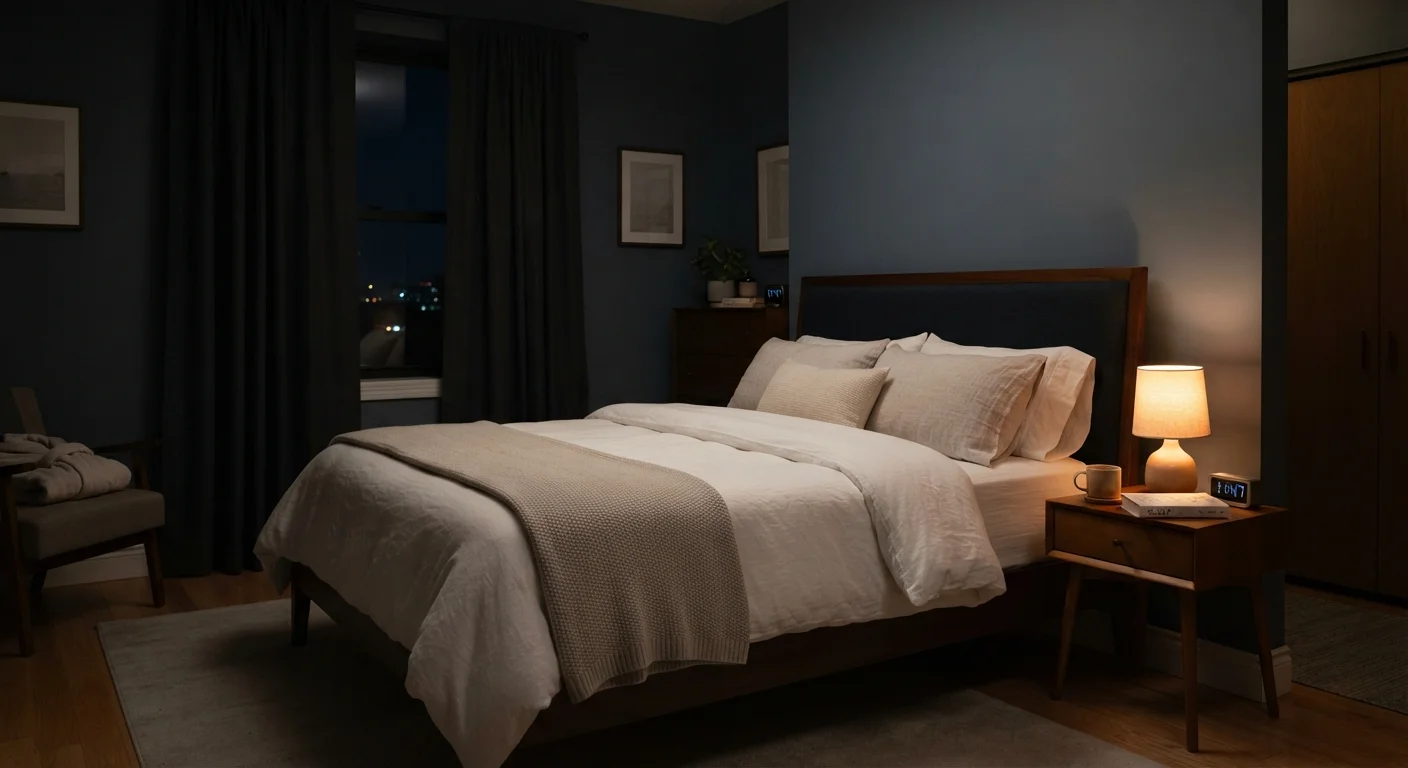
Sleep hygiene spans four broad areas: timing, environment, daytime behavior, and pre-sleep routine.
- Timing involves going to bed and waking at consistent times, including weekends. The body's circadian rhythm, a roughly 24-hour internal clock driven by the brain's suprachiasmatic nucleus, functions best when sleep timing is predictable.
- Environment covers light, temperature, noise, and surface comfort in the bedroom. Cool, dark, and quiet conditions are consistently associated with better sleep consolidation. See our sleep environment audit for a room-by-room breakdown.
- Daytime behavior includes caffeine and alcohol timing, physical activity, and light exposure earlier in the day. Many people underestimate how much morning and afternoon choices shape nighttime sleep. Our article on daytime habits that affect sleep covers this in detail.
- Pre-sleep routine refers to the roughly 30 to 60 minutes before bed, where winding down with low-stimulation activities helps the nervous system shift toward rest.
Start with wake time, not bedtime
When building a sleep routine, fix your wake time first and hold it consistent for at least two weeks before adjusting anything else. A stable wake time is the strongest single anchor for circadian rhythm regularity. Bedtime will gradually align once the wake time is consistent.
Why it matters for chronic health
Sleep is not passive downtime. During sleep, the body regulates hormones, consolidates memory, clears metabolic waste from the brain via the glymphatic system, and repairs tissue. Chronic sleep disruption is associated with elevated inflammatory markers, impaired glucose regulation, and reduced immune response.
For adults managing conditions like elevated blood pressure, blood sugar irregularities, or chronic pain, sleep quality is not separate from disease management. It is part of it. The relationship runs in both directions: poor sleep worsens many chronic conditions, and those conditions often disrupt sleep in return.
1 in 3
U.S. adults not getting enough sleep
According to the Centers for Disease Control and Prevention (CDC), more than one-third of American adults regularly sleep less than the recommended seven hours per night.
7-9 hours
Recommended sleep for adults
The American Academy of Sleep Medicine and the Sleep Research Society recommend that adults aged 18 to 60 sleep at least seven hours per night for optimal health.
48%
Adults with at least one sleep complaint
National health surveys consistently find that nearly half of U.S. adults report at least one sleep-related complaint, such as difficulty falling asleep or staying asleep.
Standard sleep hygiene advice does not always account for this complexity. Someone managing neuropathic pain, for example, may find that a firm pre-sleep routine helps, but that pain itself will sometimes override even the best habits. Adapting strategies to individual circumstances matters more than following a generic checklist. Our chronic illness sleep guide addresses these specific challenges.
Sleep also intersects with liver function and metabolic processing. The body completes much of its metabolic clearing work during deep sleep stages. For context on how the liver supports these processes, see our liver health hub.
This article is for informational purposes only and is not medical advice. Consult a qualified healthcare professional for guidance on sleep concerns, especially if you have an existing health condition or take medications that affect sleep.
Starting with the fundamentals
For anyone new to sleep hygiene, the evidence points to two starting priorities above all others: consistent sleep timing and morning light exposure. These two habits directly anchor the circadian rhythm, which influences every other aspect of sleep quality.
Consistent sleep timing means waking at the same time each day, regardless of how the previous night went. This single practice builds up homeostatic sleep pressure, the biological drive to sleep, more reliably than most other interventions. Irregular wake times, including sleeping in on weekends, can shift circadian timing in ways that resemble mild jet lag.
Morning light, ideally natural sunlight within the first hour of waking, sends a strong timing signal to the circadian system and helps calibrate the evening release of melatonin. On cloudy days or in winter months, a light therapy lamp (used according to the manufacturer's guidelines) can partially substitute.
From those two anchors, other habits layer in progressively. Our beginner's guide to sleep hygiene walks through a structured sequence for building these habits without overhauling everything at once. For those whose schedules shift due to work or travel, maintaining sleep consistency under irregular conditions covers flexible approaches grounded in the same principles.