

Key Takeaways
Gut-hormone axis
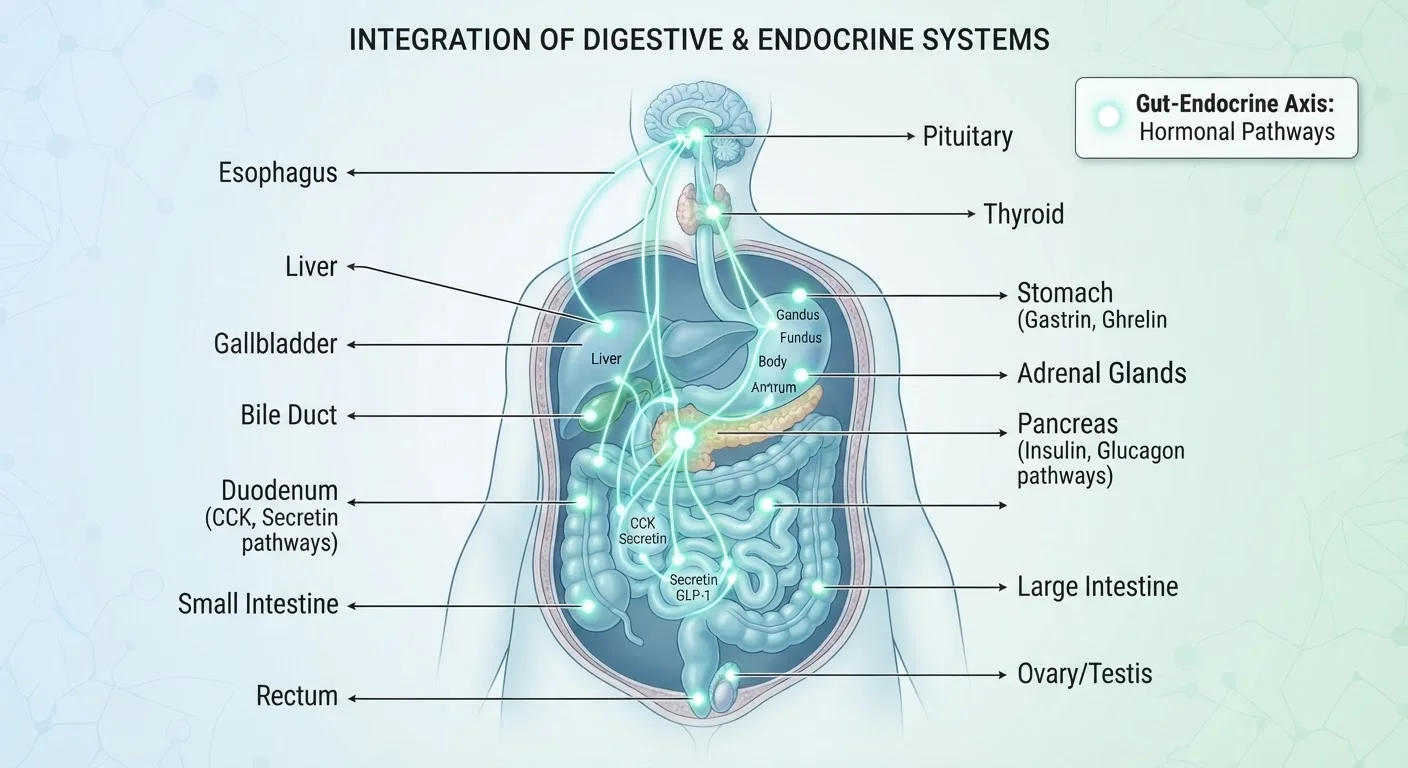
The gut-hormone axis describes the bidirectional relationship between the gastrointestinal tract and the body's hormone-producing systems. The gut microbiome, intestinal lining, and enteroendocrine cells all produce, modify, and regulate hormones that affect metabolism, stress response, reproductive function, and mood. Disruptions in digestive health can therefore ripple outward into endocrine imbalances throughout the body.
Enteroendocrine cells lining the gut wall secrete more than 20 distinct peptide hormones, making the gastrointestinal tract the largest endocrine organ by cell count in the human body.
Why the gut is an endocrine organ
Most people associate hormone production with glands: the thyroid, adrenals, ovaries, or testes. The gut rarely appears on that list, yet specialized cells embedded in the intestinal lining, called enteroendocrine cells, continuously secrete peptide hormones that govern digestion, satiety, glucose regulation, and even mood.
Hormones such as ghrelin, glucagon-like peptide-1 (GLP-1), cholecystokinin (CCK), and peptide YY originate in the gut wall. They signal to the pancreas, brain, liver, and adipose tissue, coordinating everything from insulin secretion to how full a person feels after a meal. Because these signals are produced in response to what passes through the intestine, the composition of food, bile acids, and the resident microbial community all shape what the gut secretes and when.
The gut-body connection extends well beyond digestion. Researchers now recognize that gut-derived hormones interact with nearly every classical endocrine feedback loop, which is why gastrointestinal conditions can present alongside metabolic, reproductive, or thyroid disorders.
The estrobolome: how gut bacteria regulate estrogen
One of the most studied intersections of gut and hormonal health involves estrogen metabolism. After the liver conjugates (chemically binds) estrogen for excretion via bile, a subset of gut bacteria produce beta-glucuronidase, an enzyme that cleaves that bond. This releases free estrogen back into the intestinal circulation, where it can be reabsorbed rather than excreted.
The collection of bacteria responsible for this process is called the estrobolome. When the microbial community is diverse and balanced, beta-glucuronidase activity stays within a physiological range, and estrogen recycling proceeds normally. Dysbiosis (an imbalance in microbial populations) can shift this activity in either direction. Higher beta-glucuronidase activity has been associated with elevated circulating estrogen, while reduced activity may lower it.
This mechanism has attracted scientific interest in the context of conditions associated with estrogen fluctuation, including certain menstrual disorders and perimenopausal symptoms. Research in this area is active but not fully settled; clinical applications remain under investigation.
Supporting the estrobolome through diet
Dietary fiber from vegetables, legumes, and whole grains feeds bacteria associated with balanced beta-glucuronidase activity. Fermented foods such as yogurt and kefir may also support microbial diversity. These are general dietary patterns with a broad evidence base; anyone managing an estrogen-related health condition should discuss dietary changes with their healthcare provider before making adjustments.
Cortisol, intestinal permeability, and the HPA axis
The hypothalamic-pituitary-adrenal (HPA) axis governs cortisol production in response to physical and psychological stress. The gut communicates with this axis through the vagus nerve, circulating cytokines (immune signaling proteins), and microbial metabolites.
When intestinal permeability increases, bacterial fragments such as lipopolysaccharide (LPS) can enter the bloodstream. The immune system responds by releasing pro-inflammatory cytokines, which activate the HPA axis and push cortisol higher. Chronically elevated cortisol, however, suppresses the production of gut-protective mucus and alters intestinal motility, which can worsen the permeability that started the cycle.
Animal studies and a growing body of human observational research suggest that probiotic interventions can dampen HPA axis reactivity in stress conditions, though researchers are careful to note that causality and the magnitude of effect in humans remain areas of active study. The gut-brain connection is a related dimension of this same bidirectional communication network.
Insulin sensitivity and short-chain fatty acids
Gut bacteria ferment dietary fiber into short-chain fatty acids (SCFAs), primarily acetate, propionate, and butyrate. These molecules do more than fuel colonocytes (the cells lining the colon). They bind to receptors on enteroendocrine and immune cells, influencing insulin secretion, glucagon-like peptide-1 release, and overall insulin sensitivity in peripheral tissues.
Butyrate, in particular, has been associated with improved pancreatic beta-cell function and reduced systemic inflammation, both relevant to blood sugar regulation. A gut environment that produces insufficient SCFAs, often a consequence of low dietary fiber intake or antibiotic-related dysbiosis, may therefore contribute to impaired metabolic hormone signaling.
This does not mean fiber intake alone determines insulin sensitivity; genetics, physical activity, sleep, and body composition all interact. However, the microbial production of SCFAs represents a mechanistic pathway through which gut health influences the hormones that regulate glucose metabolism.
Thyroid hormones and gut microbiome interactions
Thyroid hormone conversion is another area where gut health has a documented influence. The gut microbiome affects iodine and selenium absorption, both cofactors in thyroid hormone synthesis. Intestinal inflammation can impair the peripheral conversion of thyroxine (T4) to the more biologically active triiodothyronine (T3), a process that relies partly on deiodinase enzymes expressed in gut tissue.
Research has also found that conditions involving increased intestinal permeability appear more frequently in people with autoimmune thyroid conditions. Whether altered permeability contributes to thyroid autoimmunity, or whether thyroid dysfunction changes the gut environment, remains an open scientific question. The liver's role in thyroid hormone metabolism adds another layer, since T4-to-T3 conversion also occurs in hepatic tissue, and gut-derived toxins can burden hepatic function.
This article is for general health education and is not a substitute for advice from a qualified healthcare professional. Anyone experiencing symptoms of a hormonal or thyroid condition should consult their physician before making changes to diet, supplementation, or medication.