

Key Takeaways
Gut-brain axis
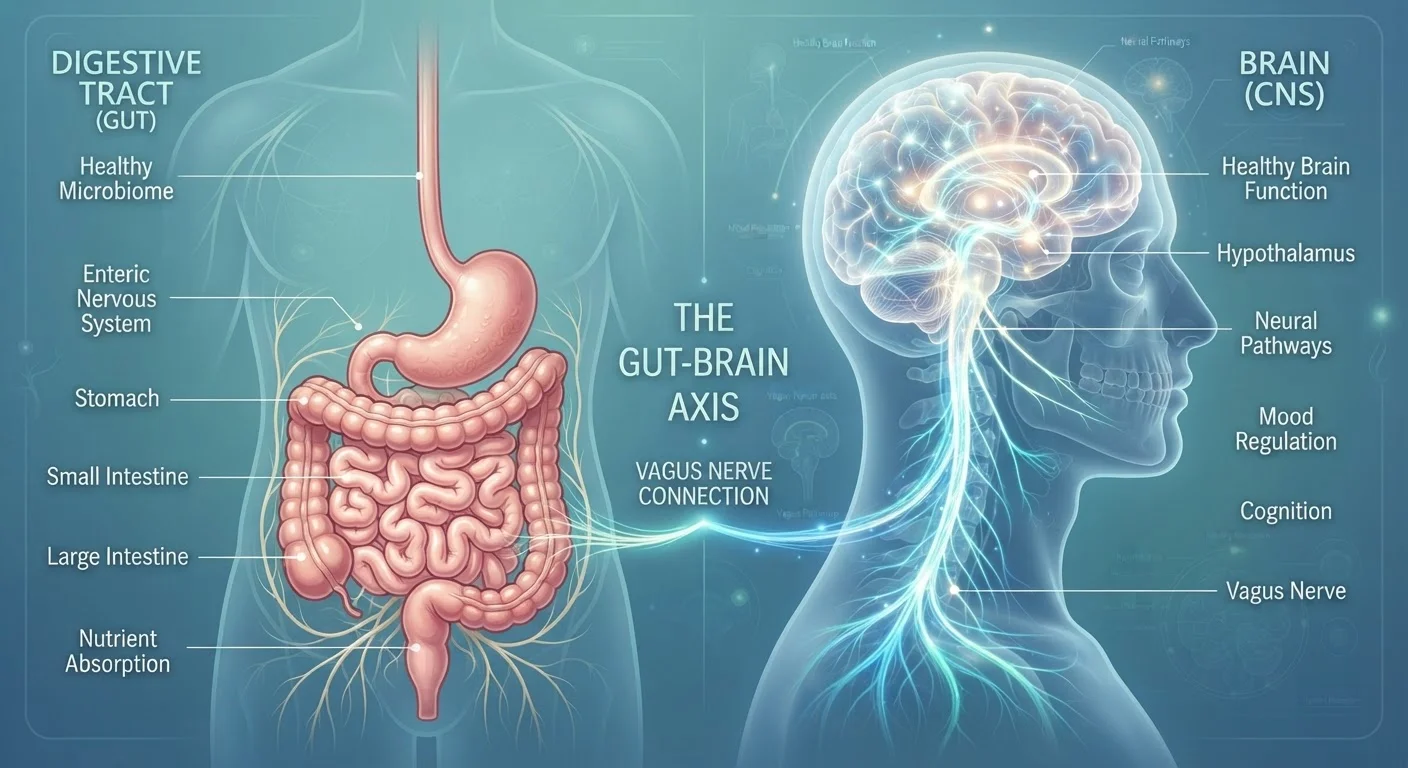
The gut-brain axis is a bidirectional communication network linking the gastrointestinal tract and the central nervous system. It transmits signals through nerve pathways, immune molecules, and chemical messengers. When digestive health deteriorates, these signals can disrupt cognitive processes, producing the sluggish, unfocused state commonly called brain fog.
The vagus nerve carries roughly 80% of gut-to-brain signals, making it the dominant structural conduit in this axis. Microbial metabolites such as short-chain fatty acids also cross into systemic circulation and influence neuroinflammatory tone.
How the gut talks to the brain
The gut contains its own nervous system, the enteric nervous system, comprising roughly 500 million neurons embedded in the gastrointestinal wall. This network connects to the central nervous system primarily through the vagus nerve, which runs from the brainstem to the abdomen. Chemical signals, including neurotransmitters, cytokines, and microbial metabolites, travel this route constantly in both directions.
About 90% of the body's serotonin is synthesized in the gut, and gut bacteria influence how much tryptophan (the amino acid precursor) is available for that process. Gut microbes also produce gamma-aminobutyric acid (GABA) and short-chain fatty acids, compounds that affect neurological tone. When microbial balance is disturbed, the production and balance of these molecules shift, and that shift reaches the brain.
For a broader view of how the digestive system influences the body systemically, see how the gut shapes whole-body health.
Why dysbiosis contributes to cognitive cloudiness
Dysbiosis describes a state in which the gut's microbial community loses the diversity and balance associated with normal function. Antibiotic use, high intake of ultra-processed foods, chronic stress, and insufficient sleep are among the factors that contribute to dysbiosis. When the microbial environment shifts, several processes that affect brain function are disrupted simultaneously.
One well-studied mechanism involves intestinal permeability. A healthy gut lining acts as a selective barrier, allowing nutrients to pass while blocking microbial byproducts such as lipopolysaccharides (LPS). When that barrier becomes more permeable, LPS can enter systemic circulation and trigger inflammatory cytokine responses. Neuroinflammation, the presence of inflammatory signaling within brain tissue, is a recognized factor in cognitive impairment and low mood in clinical research.
Gut symptoms and cognitive complaints often overlap
In clinical populations with functional gastrointestinal disorders such as IBS, cognitive symptoms are reported more frequently than in the general population. This co-occurrence does not mean gut dysfunction is always the cause of brain fog, since both can share a common upstream driver such as chronic stress or systemic inflammation. Professional evaluation helps determine the actual relationship in any individual case.
The overlap between gut symptoms and mood changes is documented in the literature on IBS and functional gastrointestinal disorders, where cognitive complaints appear alongside gastrointestinal ones at rates higher than chance.
Recognizing gut-linked brain fog
Brain fog is not a clinical diagnosis but a cluster of reported experiences: difficulty concentrating, slower processing speed, word-finding problems, and mental fatigue that does not resolve with rest. When gut dysfunction contributes to it, certain patterns tend to appear together. Cognitive symptoms frequently coincide with bloating, irregular bowel habits, food sensitivities, or post-meal fatigue.
The timing can be informative. Many people with gut-related cognitive symptoms report a worsening of mental clarity within one to two hours after eating specific foods, particularly those high in refined carbohydrates or those that provoke an immune response. This pattern does not confirm gut causation on its own, but it gives a clinician useful data to work with.
For a detailed breakdown of what brain fog involves physiologically, brain fog explained covers the neuroscience and common triggers across body systems.
Dietary and lifestyle strategies supported by research
Several dietary patterns consistently appear in gut-brain research as associated with better cognitive outcomes. Diets high in dietary fiber from vegetables, legumes, and whole grains support microbial diversity by providing fermentable substrates for beneficial bacteria. Fermented foods such as plain yogurt, kefir, and kimchi introduce live microorganisms that may improve microbial richness, according to a 2021 randomized controlled trial published in Cell.
Reducing ultra-processed foods matters for two reasons. These foods are typically low in fiber and high in emulsifiers and preservatives that laboratory research suggests may disrupt the gut mucosal layer. Sleep and stress management also affect the gut directly. The gut-brain axis is bidirectional: psychological stress alters gut motility, permeability, and microbial composition through the hypothalamic-pituitary-adrenal (HPA) axis and the autonomic nervous system.
Support your gut-brain axis through daily habits
Consistent sleep, regular physical activity, and a fiber-rich diet are the most studied lifestyle factors for maintaining gut microbial diversity. Chronic stress actively degrades gut barrier function through cortisol-mediated pathways, so stress management is not optional in gut-brain health. Any significant dietary change, especially for individuals with a diagnosed digestive condition, should be discussed with a healthcare provider first.
The gut-body connection hub provides additional context on how digestive health interacts with immunity, metabolism, and other organ systems.
This article is for informational purposes only and is not medical advice. If you are experiencing persistent cognitive symptoms or digestive concerns, consult a qualified healthcare professional for evaluation and guidance.