
The Gut-Body Connection: How Your Digestive System Shapes Whole-Body Health

Key Takeaways
What the gut actually does
Most people think of digestion as a one-way process: food in, waste out. The reality is considerably more complex. The gastrointestinal tract is a continuous tube stretching roughly 25 to 30 feet in adults, lined with specialized cells that absorb nutrients, secrete hormones, filter pathogens, and relay signals to distant organs. It is one of the body's most metabolically active tissues.
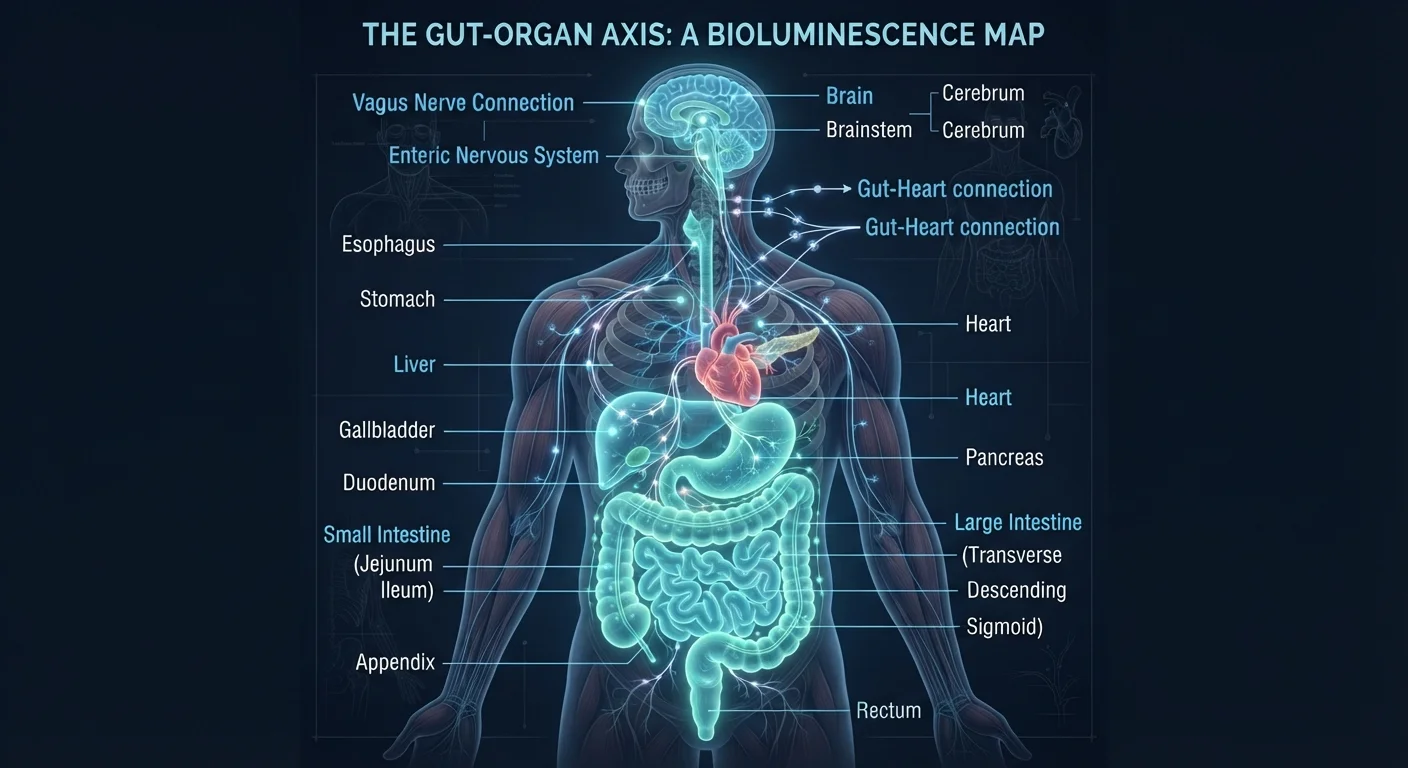
Within its walls sits the enteric nervous system (ENS), a network of more than 100 million nerve cells embedded in the gut lining. The ENS coordinates muscular contractions, regulates blood flow to intestinal tissue, and communicates bidirectionally with the central nervous system via the vagus nerve. For a plain-language explanation of terms like "enteric nervous system" and related concepts, see our gut health glossary.
The gut lining itself is a selective barrier. It allows digested nutrients to pass into the bloodstream while blocking bacteria, undigested proteins, and toxins. When that barrier is compromised, substances that would normally stay inside the intestinal lumen can enter systemic circulation, triggering immune responses throughout the body.
The microbiome: a system within a system
The human gut harbors trillions of microorganisms, collectively called the gut microbiome. This community includes bacteria, fungi, viruses, and archaea. Bacterial species dominate and vary widely between individuals based on genetics, diet, early-life exposures, and medication history.
These microorganisms are not passengers. They ferment dietary fiber into short-chain fatty acids (SCFAs) such as butyrate, propionate, and acetate. Butyrate is the primary fuel source for colonocytes (the cells lining the colon) and also has anti-inflammatory properties that extend beyond the gut wall. SCFAs can enter the bloodstream and affect metabolic processes in the liver, muscles, and adipose tissue.
Prioritize fiber variety over fiber quantity alone. Rotating legumes, root vegetables, and whole grains each week feeds a broader range of microbial species than eating the same high-fiber food every day.
Different bacteria specialize in fermenting different types of dietary fiber, so microbial diversity correlates strongly with plant food diversity rather than total fiber grams alone.
If you have recently completed a course of antibiotics, reintroducing fermented foods gradually (such as plain yogurt with live cultures or kefir) may help restore microbial balance, but discuss this with your clinician first.
Antibiotic-associated disruption of gut flora is well documented; fermented foods deliver live microorganisms that can help repopulate the colon, though the magnitude of benefit varies by individual and antibiotic class.
Microbiome composition shifts in response to changes in diet within days. Conversely, a prolonged low-fiber diet can reduce microbial diversity in ways that take considerably longer to reverse. To understand the full range of signals the microbiome sends to other systems, see how the gut microbiome communicates with the rest of the body.
Gut signals and the brain
The gut and brain exchange information constantly. Roughly 90% of the fibers in the vagus nerve carry signals from gut to brain rather than the other direction, which means the gut is an active sender of information, not just a receiver of instructions.
Gut bacteria produce or stimulate the production of several neuroactive compounds, including serotonin, gamma-aminobutyric acid (GABA), and dopamine precursors. Approximately 90% of the body's serotonin is synthesized in the gut, largely by enterochromaffin cells whose activity is influenced by the local microbial environment.
Research links disrupted gut microbiomes to changes in anxiety, mood regulation, and cognitive function. The mechanisms are still being studied, but they appear to involve inflammatory cytokines, vagal nerve signaling, and microbial metabolites that cross the blood-brain barrier. For a detailed look at these pathways, see the gut-brain connection explained, and for the structural biology of this pathway, see what the gut-brain axis actually is.
Immunity, the liver, and lymphatic connections
The gastrointestinal tract houses a large share of the body's immune tissue, organized into structures called gut-associated lymphoid tissue (GALT). This tissue monitors the contents of the intestinal lumen and trains immune cells to distinguish between beneficial microbes, harmless food proteins, and genuine pathogens. When the microbiome is imbalanced (a state called dysbiosis), that training can be disrupted, contributing to inappropriate immune activation. For a deeper account of how gut bacteria train immunity, see how gut bacteria influence your immune system.
The gut and liver are connected by the portal vein, which carries blood directly from the intestines to the liver. Everything absorbed through the gut wall passes through this portal circulation first. When the intestinal barrier is intact, the liver receives well-processed nutrients and manageable amounts of bacterial byproducts. When barrier function deteriorates, the liver faces a higher load of lipopolysaccharides (bacterial cell wall fragments) and other pro-inflammatory compounds, which can drive hepatic inflammation over time. The liver health hub covers how the liver manages this metabolic load in greater detail.
The lymphatic system also intersects with gut function. The gut's lymphatic vessels (lacteals) absorb dietary fats and fat-soluble vitamins that bypass the portal vein, delivering them to systemic circulation via the thoracic duct. Lymphatic flow from the intestines also carries immune cells and antigen-presenting cells to lymph nodes, where broader immune responses are coordinated.
Hormones and metabolic health
The gut is the largest endocrine organ in the body. Enteroendocrine cells scattered throughout the intestinal lining secrete more than 20 distinct peptide hormones. These include glucagon-like peptide-1 (GLP-1), which stimulates insulin release and slows gastric emptying, and peptide YY (PYY), which signals satiety to the brain.
Gut bacteria also participate in estrogen metabolism. An enzyme produced by certain gut microbes, beta-glucuronidase, deconjugates estrogens in the colon, allowing them to be reabsorbed into circulation rather than excreted. Dysbiosis that alters this microbial population can therefore affect circulating estrogen levels. This gut-hormone relationship is covered in detail in the gut-hormone axis.
What disrupts gut integrity
Several common factors negatively affect gut barrier function and microbiome composition. Prolonged antibiotic use reduces microbial diversity because antibiotics do not selectively target harmful bacteria. Diets low in fiber deprive bacteria that produce butyrate, reducing colonocyte health. Chronic psychological stress activates the hypothalamic-pituitary-adrenal (HPA) axis, which alters gut motility, mucus secretion, and intestinal permeability through stress hormone pathways.
Alcohol, nonsteroidal anti-inflammatory drugs (NSAIDs), and disrupted sleep each have documented negative effects on the intestinal lining and microbial balance. These disruptions rarely occur in isolation; their effects on gut health are often additive.
Supporting gut health across body systems
Dietary patterns with the most consistent research support for microbiome diversity include high fiber intake from varied plant sources (vegetables, legumes, whole grains, fruits), fermented foods that deliver live cultures, and limited ultra-processed foods. Fiber diversity appears to matter as much as quantity because different bacterial species ferment different types of fiber.
Sleep quality affects gut microbiome composition through circadian-regulated changes in motility and mucus secretion. Even a few nights of poor sleep can measurably shift microbial populations in healthy adults, based on published research. Sustained aerobic exercise is also associated with greater microbial diversity independent of diet.
No single supplement or intervention restores gut health uniformly across individuals. Any change to diet, supplementation, or medication should be discussed with a qualified healthcare provider, particularly for people managing chronic conditions, those who are pregnant, or those taking prescription medications.
This article is for general informational purposes only and does not constitute medical advice. Consult a qualified healthcare professional before making changes to your diet, supplement routine, or treatment plan.