

Key Takeaways
Gut microbiome communication
The gut microbiome is the community of trillions of bacteria, fungi, and other microorganisms living in the digestive tract. These microbes do not stay isolated. They produce chemical compounds, interact with nerve endings, and influence immune cells in ways that send information to distant organs including the brain, liver, and lungs. This constant signaling shapes inflammation, mood, metabolism, and immune responses across the entire body.
Microbiome-to-body signaling operates through at least four distinct pathways: metabolite production (including short-chain fatty acids and neurotransmitter precursors), vagus nerve activation, immune cell modulation via pattern recognition receptors, and the portal circulation that carries microbial metabolites directly to the liver.
Four channels the microbiome uses to send signals
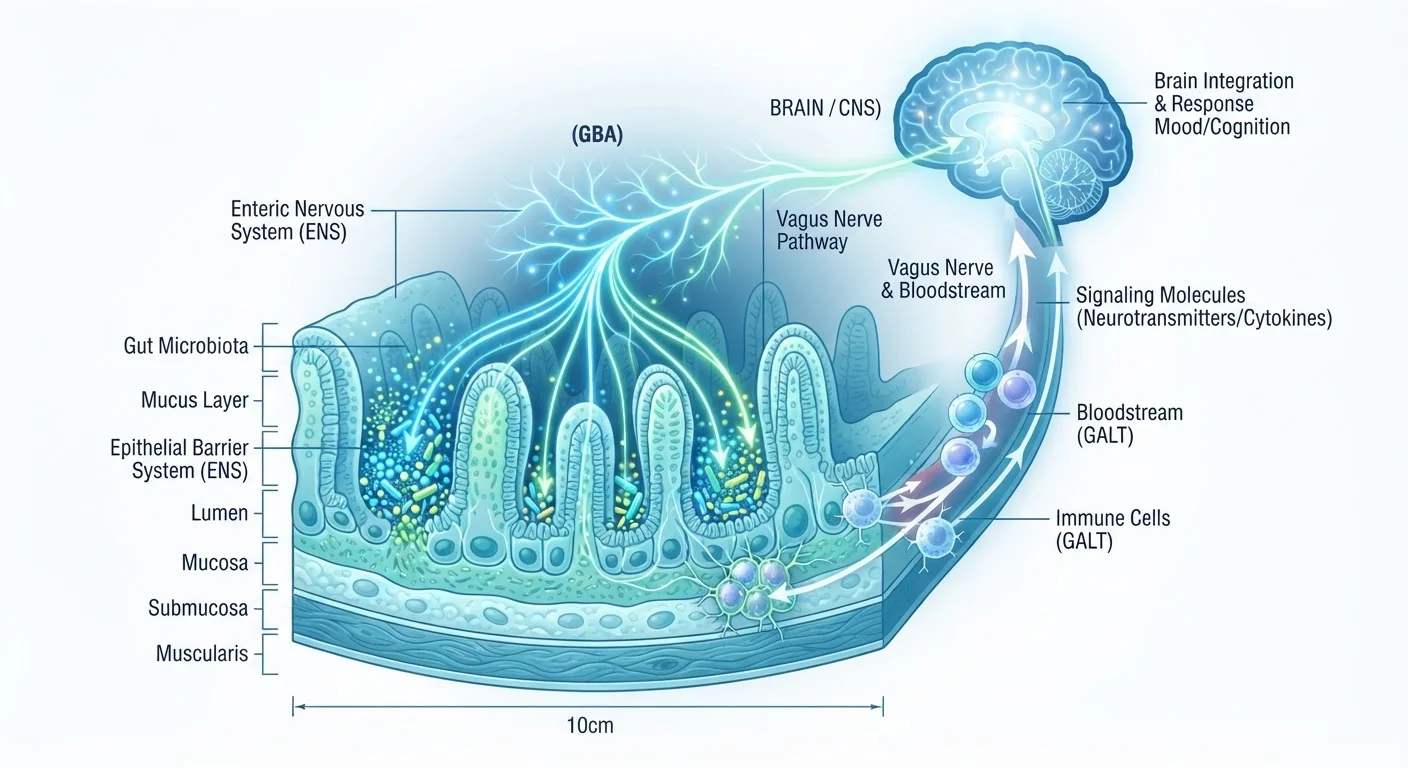
The gut microbiome is not a passive resident. It generates a continuous output of molecules, electrical impulses, and immune signals that reach organs well beyond the digestive tract. Four main channels carry that output.
Metabolite production. Bacteria ferment dietary fiber and produce short-chain fatty acids (SCFAs) such as butyrate, propionate, and acetate. These compounds enter the bloodstream, where they influence immune cell behavior, regulate energy metabolism in the liver, and modulate appetite signaling in the brain. Other metabolites include secondary bile acids, tryptophan derivatives, and trimethylamine, each of which carries distinct physiological instructions to different tissues.
The vagus nerve. The gut wall contains an estimated 100 million nerve cells forming the enteric nervous system, sometimes called the second brain. Many of those cells have direct connections to the vagus nerve, which runs from the brainstem to the abdomen. Gut bacteria interact with specialized cells called enterochromaffin cells, which release serotonin and other signaling molecules that activate vagal fibers. This is one reason mood and digestive function so often track together. See how the gut-brain axis works for a deeper look at this pathway.
The portal circulation. Blood draining the intestines flows through the portal vein directly to the liver before reaching general circulation. This anatomical arrangement means the liver is the first organ to receive microbial metabolites and any bacterial fragments that pass through a disrupted gut lining. Liver health is closely tied to the composition and activity of the gut microbiome for this reason.
Immune cell modulation. The gut hosts a dense network of immune tissue called gut-associated lymphoid tissue (GALT). Bacteria continuously interact with immune receptors in the GALT, calibrating which threats warrant a response and which substances should be tolerated. This training has body-wide consequences because immune cells educated in the gut circulate throughout the body.
Immune signaling and the gut lining
Roughly 70 percent of the body's immune tissue sits in or adjacent to the gut. That proximity is not accidental. The gut lining must simultaneously absorb nutrients and block pathogens, and the microbiome helps maintain that balance.
Healthy gut bacteria produce SCFAs, particularly butyrate, that nourish the epithelial cells forming the gut wall. Those cells are connected by tight junction proteins that control what passes into the bloodstream. When butyrate production falls, tight junctions can loosen, allowing bacterial fragments such as lipopolysaccharides (LPS) to enter circulation. Circulating LPS activates immune receptors called toll-like receptors and can drive systemic low-grade inflammation. How microbial imbalance connects to chronic inflammation explains this mechanism in more detail.
Dysbiosis can be silent at first
Dysbiosis, a state of microbial imbalance, does not always cause obvious digestive symptoms. Research suggests it can affect immune signaling and metabolite production before any gastrointestinal complaints appear. This is one reason gut health receives attention in the context of conditions that seem unrelated to digestion, including metabolic and inflammatory disorders.
Dysbiosis, a state of microbial imbalance, does not always cause obvious digestive symptoms. Research suggests it can affect immune signaling and metabolite production before any gastrointestinal complaints appear.
Why microbiome diversity matters for body-wide communication
A more diverse microbial community produces a broader range of metabolites, covering more signaling functions. Reduced diversity, which is associated with high-processed-food diets, antibiotic use, and chronic stress, narrows that output and creates gaps in the signals that organs normally receive.
Diet is the most direct and modifiable variable. Fiber from vegetables, legumes, and whole grains provides fermentable substrate for SCFA-producing bacteria. Fermented foods can add microbial variety. These patterns are associated with higher SCFA levels and more stable immune signaling, though individual responses vary considerably.
Physical activity, sleep quality, and stress each influence the microbiome through hormonal and neural channels, which in turn feed back into microbiome composition. The communication is bidirectional throughout.
For a broader view of how this network shapes organ systems and disease risk, see how the digestive system shapes whole-body health. And for the specific connection to mood and cognition, the gut-brain connection covers the research in depth.
This article is for informational purposes only and is not medical advice. Consult a qualified healthcare provider for guidance specific to your health situation.