

Key Takeaways
Gut-brain axis
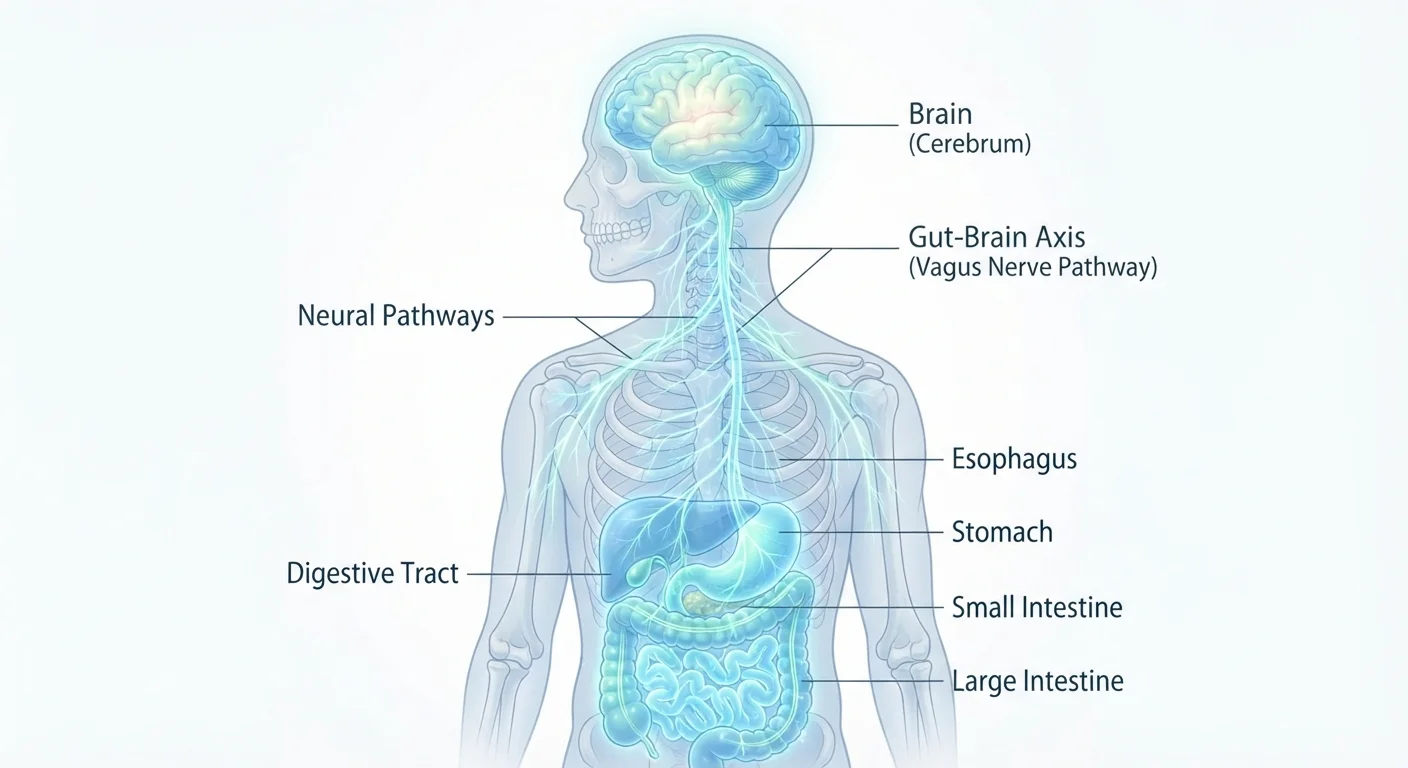
The gut-brain axis is a two-way communication network that links the digestive tract to the central nervous system. It uses nerves, hormones, and immune signals to pass information in both directions, meaning the gut influences the brain and the brain influences the gut. Disruptions to this network have been connected to conditions ranging from irritable bowel syndrome to anxiety.
The axis includes the enteric nervous system (the gut's own neural network), the vagus nerve, microbial metabolites such as short-chain fatty acids, and neuroactive compounds including serotonin precursors produced in the intestinal lining.
Two organs, one conversation
Most people think of the brain and the gut as separate systems with separate jobs. In practice, they operate more like two ends of a continuous conversation. The gut-brain axis is the structural and chemical framework that keeps that conversation going around the clock.
Three major channels carry the signals. The nervous system, particularly the vagus nerve, provides a direct physical connection. The endocrine system sends hormones and peptides through the bloodstream. The immune system contributes cytokines and inflammatory markers that both organs monitor and respond to. No single channel works in isolation; all three interact.
The direction of communication matters. Roughly 80 percent of the fibers in the vagus nerve carry information from the gut to the brain, not the other way around. This asymmetry means the brain is, in an important sense, listening to the gut more than it is directing it.
The enteric nervous system: the gut's internal network
Embedded in the walls of the gastrointestinal tract is a dense web of about 500 million neurons. This is the enteric nervous system (ENS), and it can process sensory information, coordinate muscle contractions, and regulate secretions without input from the brain or spinal cord.
The ENS does not operate independently of the brain forever, but it can manage digestion autonomously for extended periods. When the vagus nerve is severed experimentally, the gut continues to function, which shows how much autonomy the ENS has. What it loses is the refined, bidirectional calibration that the full axis provides.
One reason researchers call the ENS a "second brain" is the similarity of its neurotransmitter chemistry to the central nervous system. The ENS uses dopamine, serotonin, acetylcholine, and other signaling molecules that also operate in the brain. Roughly 90 percent of the body's serotonin is synthesized in the intestinal lining, where it coordinates muscle movement and influences sensory nerve activity in the gut wall.
~90%
Of the body's serotonin produced in the gut
According to estimates cited across multiple gastroenterology and neuroscience reviews, the vast majority of serotonin is synthesized by enterochromaffin cells lining the intestinal tract.
500 million
Neurons in the enteric nervous system
This figure, widely cited in gastroenterology literature, reflects the density of the ENS embedded in the gastrointestinal wall.
~80%
Vagus nerve fibers carrying signals from gut to brain
Neuroanatomical research on vagal fiber composition indicates that the majority of vagal afferent traffic runs upward from the gut, not downward from the brain.
Where the microbiome fits in
The trillions of microorganisms in the gut are not passive passengers. They metabolize dietary fiber into short-chain fatty acids (SCFAs) such as butyrate and propionate, which influence the integrity of the gut lining and the behavior of local immune cells. Some of those immune signals eventually reach the brain through the bloodstream and along nerve pathways.
Gut bacteria also interact directly with enteric neurons. Certain bacterial species stimulate cells in the intestinal lining to release serotonin precursors and peptides that activate vagal afferent fibers. The composition of the microbiome therefore shapes, at least in part, the chemical content of the messages moving up to the brain.
This is why microbiome diversity has drawn attention in research on mood and cognition. A less varied microbiome produces a narrower range of metabolites, which may alter the balance of signals the brain receives. Similar microbiome-to-body pathways appear to operate in other organ systems as well, including the skin.
Stress, the HPA axis, and the gut
The hypothalamic-pituitary-adrenal (HPA) axis governs the body's stress response. When the brain perceives a threat, the HPA axis triggers cortisol release, which affects gut motility, permeability, and microbial balance. This is why acute stress commonly produces digestive symptoms such as cramping or urgency.
The relationship runs in the other direction too. Signals from a disturbed gut can activate stress-response circuitry in the brain. Chronic gastrointestinal inflammation has been associated with elevated markers of psychological stress, though causality in human populations is difficult to establish cleanly.
Conditions such as irritable bowel syndrome (IBS) illustrate this bidirectional loop. Psychological stress worsens IBS symptoms; IBS symptoms increase psychological distress. Treating one without addressing the other often produces limited results, which is one reason gastroenterology increasingly considers behavioral and dietary interventions together. For a closer look at how gut disruption connects to cognitive symptoms, see how poor gut health can surface as mental fog.
The gut-brain axis also intersects with hormonal regulation more broadly. Gut microbiome activity influences how hormones are metabolized and recycled, adding another layer to how digestive health affects whole-body function.
This article is for informational purposes only and is not medical advice. Consult a qualified healthcare professional before making changes to your diet, lifestyle, or treatment plan.