
The Gut-Skin Axis: What Digestive Health Has to Do with Your Complexion

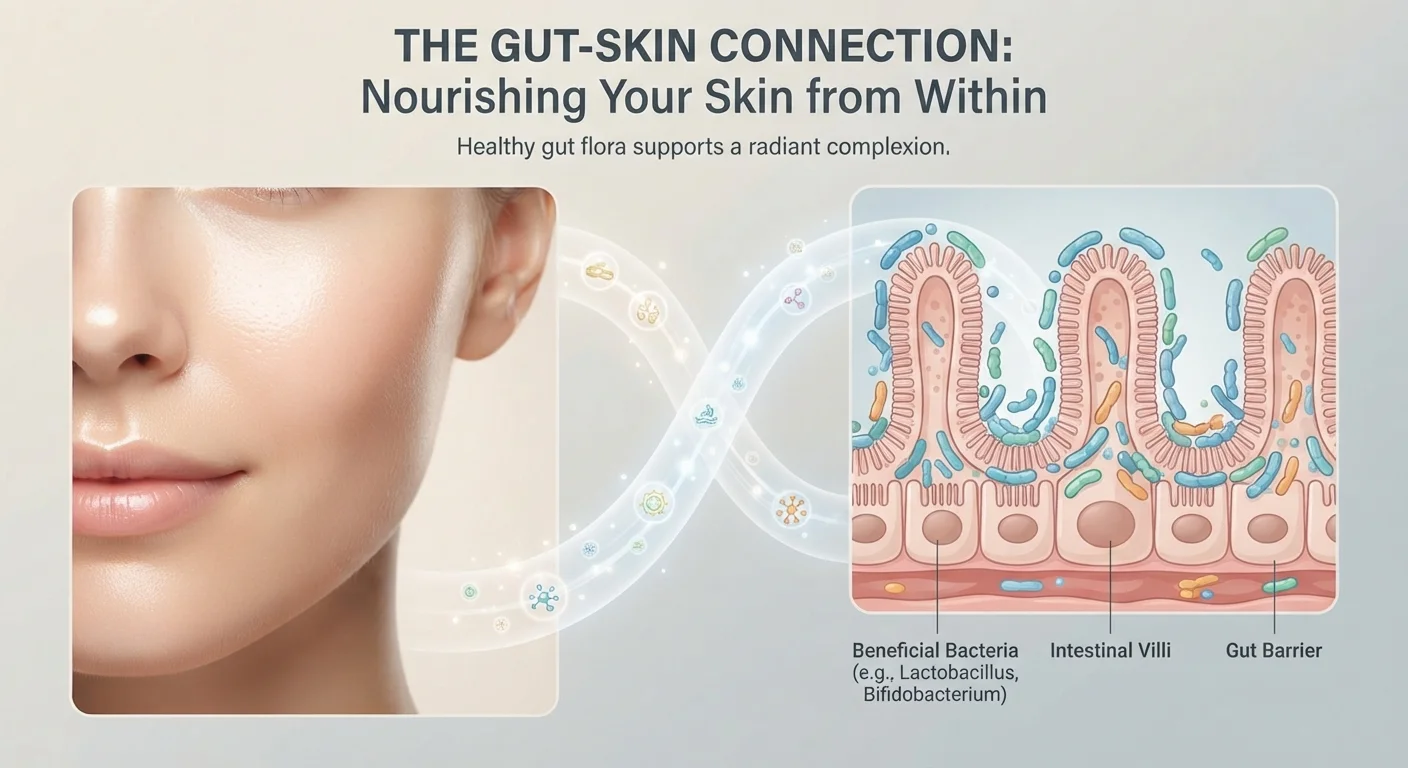
Key Takeaways
The gut-skin axis
The gut-skin axis is the bidirectional communication network between the gastrointestinal tract and the skin. The gut microbiome, the immune system, and metabolic signaling all influence how skin looks, behaves, and responds to irritants. When gut microbial balance is disrupted, the effects can appear on the skin as inflammation, breakouts, or impaired barrier function.
Communication occurs partly through circulating short-chain fatty acids, cytokines, and microbially derived metabolites that modulate keratinocyte behavior and sebaceous gland activity.
How the gut and skin are connected
The gut and skin may seem unrelated, but both are barrier organs with dense immune activity. Together, they contain a significant share of the body's immune cells, and both interact constantly with the external environment. When the gut microbiome, which includes trillions of bacteria, fungi, and viruses, is in balance, it produces metabolites that help regulate systemic inflammation. When that balance is disrupted, inflammatory signals reach the skin through the bloodstream.
One well-studied mechanism involves short-chain fatty acids (SCFAs), compounds produced when gut bacteria ferment dietary fiber. SCFAs help regulate immune responses and maintain the gut lining. Lower SCFA production, associated with low-fiber diets and reduced microbial diversity, correlates with higher circulating inflammatory markers. Those markers can affect skin cell behavior and oil gland activity. The skin barrier is particularly sensitive to systemic inflammatory load.
A second pathway involves intestinal permeability. When the gut lining is compromised, fragments of bacterial cell walls called lipopolysaccharides (LPS) can enter circulation. LPS are potent activators of the innate immune system, and elevated circulating LPS is associated with inflammatory skin conditions in several published studies.
Skin conditions linked to gut microbiome changes
Acne is the most studied skin condition in this context. Research published in peer-reviewed gastroenterology and dermatology journals consistently finds higher rates of gut dysbiosis, an imbalance in microbial composition, among people with acne compared to those with clear skin. The proposed mechanism involves dysbiosis driving systemic inflammation that amplifies sebaceous gland activity. Sebum production becomes dysregulated, creating conditions favorable to acne-causing bacteria on the skin surface.
Atopic dermatitis (eczema) has an even more developed body of evidence. Infants with lower gut microbial diversity in the first months of life show higher rates of eczema later in childhood, according to longitudinal cohort data. This suggests that early gut colonization shapes immune tolerance in ways that affect skin reactivity.
Rosacea, a chronic inflammatory skin condition, has also been linked to small intestinal bacterial overgrowth (SIBO) in several small studies. In some trials, treating SIBO produced measurable improvements in rosacea symptoms, though sample sizes remain limited and larger confirmatory studies are needed.
~70%
Of immune cells located in the gut
Gastroenterology literature consistently estimates that approximately 70 percent of the body's immune cells reside in the gastrointestinal tract, making it a central regulator of systemic inflammation.
2-3x
Higher dysbiosis rates in acne patients
Several published case-control studies report gut microbial imbalance at substantially higher rates in acne patients compared to matched healthy controls.
48-72 hrs
Time for diet to shift gut microbiome
Controlled dietary intervention studies have observed measurable changes in microbial composition within as little as 48 to 72 hours of significant dietary change.
Psoriasis, which has strong immune and systemic inflammatory components, similarly shows associations with altered gut microbial profiles. Researchers have identified specific microbial signatures in psoriasis patients that differ from healthy controls, though the direction of causality is not yet established.
Diet, the microbiome, and what it means for skin
The gut microbiome responds to diet faster than almost any other biological system. Studies using controlled dietary interventions have shown measurable shifts in microbial composition within days of changing food patterns. This makes diet one of the most accessible levers for influencing the gut-skin axis.
High-fiber plant foods, fermented foods such as yogurt and kimchi, and omega-3-rich foods like fatty fish are consistently associated with greater microbial diversity and lower systemic inflammation. These same dietary patterns are associated with better skin outcomes in observational research. Nutrients such as zinc, vitamin A, and omega-3 fatty acids have documented roles in skin barrier repair and inflammatory modulation.
Conversely, diets high in refined sugars and ultra-processed foods reduce microbial diversity and increase intestinal permeability in animal models and some human studies. High glycemic load diets in particular have been associated with acne severity in multiple controlled trials.
The gut also metabolizes hormones, including androgens that influence sebum production. Gut microbiome disruption can alter how these hormones are recycled, with downstream effects on oil production and skin inflammation. This connects gut health to broader systemic pathways beyond the immune system alone.
For readers interested in how gut signaling extends to other body systems, the gut-body connection covers the full range of organ-level interactions driven by digestive health. As with all emerging research in this field, current findings are largely associative. Individual responses to dietary changes vary, and anyone managing a chronic skin condition should work with a qualified healthcare provider rather than relying on dietary changes alone.
This article is for informational purposes only and is not a substitute for professional medical advice, diagnosis, or treatment. Always consult a qualified healthcare provider about any skin condition or digestive health concern.