

Key Takeaways
What sebum is and where it comes from
Sebum is not a single substance. It is a complex mixture of wax esters, squalene, cholesterol, free fatty acids, and triglycerides, all produced inside sebocytes and released into the hair follicle canal. Once it reaches the skin surface, it blends with sweat secretions to form the acid mantle.
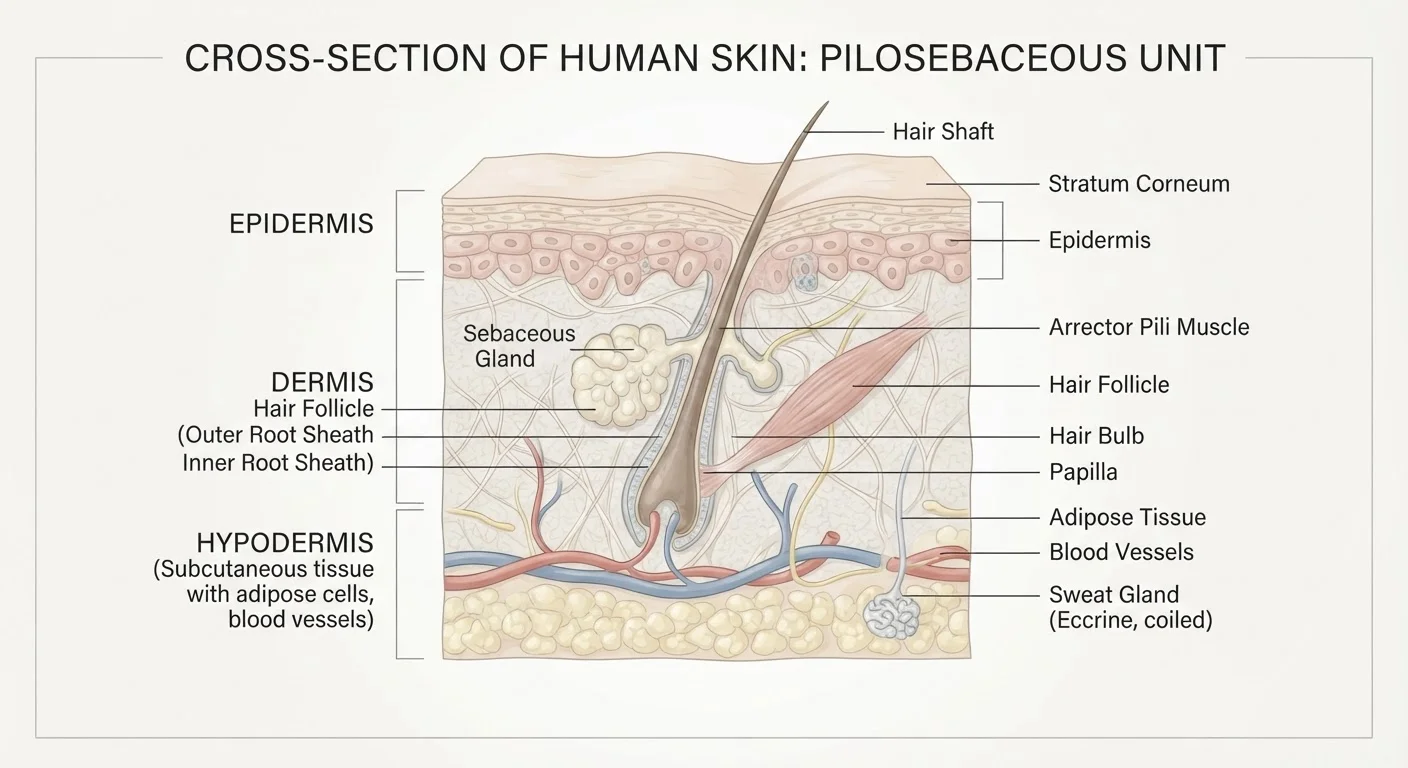
The sebaceous gland attached to each follicle is a holocrine gland, meaning it releases its contents by entirely disintegrating. New sebocytes form continuously from stem cells at the gland's base, mature, fill with lipids, and rupture, replenishing the sebum supply. This cycle runs continuously, independent of conscious control, though it responds to hormonal and nutritional signals.
Sebum output is not uniform across the body. The face, scalp, and upper trunk carry the greatest gland density and therefore produce the most sebum. Palms and soles have no sebaceous glands at all, which is one reason those areas lose moisture more quickly and show dryness readily.
The protective functions sebum actually performs
The acid mantle that sebum helps form is the skin's first chemical defense. Its low pH (around 5.5) inhibits the growth of many bacteria and fungi that colonize skin opportunistically. When this layer is disrupted, whether by alkaline soaps, over-washing, or disease, the skin becomes more hospitable to pathogens.
Sebum also slows transepidermal water loss (TEWL), the continuous evaporation of water from the epidermis. This function is separate from moisturizing in the conventional sense: the lipid film does not add moisture but acts as a partial seal. In very dry climates or low-humidity environments, this barrier effect is measurable.
The squalene in sebum has antioxidant properties, helping neutralize oxidative damage from UV exposure and pollution at the surface before it penetrates deeper layers. Its concentration in human sebum is unusually high compared to most mammals, which researchers have noted as a distinctive feature of human skin physiology.
Myth
Sebum is just dirt or excess grease that needs to be washed off as completely as possible.
Fact
Sebum is a structured mixture of lipids, including wax esters, squalene, and triglycerides, that the body manufactures deliberately to protect the skin.
Sebaceous glands are attached to almost every hair follicle on the body. They synthesize sebum from scratch inside specialized cells called sebocytes, then release it through the follicular canal. The resulting film on the skin surface forms part of the acid mantle, a slightly acidic layer that inhibits pathogenic microbes and limits water loss through the epidermis. Removing all sebum with harsh cleansers disrupts this barrier, leaving skin more vulnerable to irritation and infection, not less.
Myth
Oily skin causes acne, so producing less sebum would prevent breakouts.
Fact
Sebum quantity alone does not cause acne. The composition of sebum, the presence of specific bacteria, and follicular inflammation all contribute.
Research has shown that people with acne tend to produce sebum with a lower proportion of linoleic acid compared to people without acne. This shift in composition makes the sebum more irritating to the follicle wall and creates conditions that favor the proliferation of Cutibacterium acnes (formerly called Propionibacterium acnes). Reducing total sebum output without addressing composition or inflammation does not reliably prevent acne, which is why many acne treatments target inflammation, bacterial load, or cell turnover rather than oil production exclusively.
Myth
People with dry skin produce no sebum and have a stronger skin barrier than oily-skinned people.
Fact
Dry skin often reflects impaired barrier function, not an absence of sebum, and may actually be more susceptible to environmental damage.
Skin dryness results from inadequate water retention in the outer skin layer (the stratum corneum), which depends on a combination of sebum, natural moisturizing factors, and ceramides. A person can have low sebum output and still retain moisture reasonably well, or have normal sebum production but a disrupted barrier that allows water to escape. Dry skin is not inherently more resilient: the compromised barrier in xerosis (abnormally dry skin) increases the risk of irritant and allergic contact dermatitis.
Myth
Sebum production is fixed by genetics and cannot be meaningfully influenced by lifestyle.
Fact
Hormones, diet, stress, and sleep each influence sebaceous gland activity, and these factors are partly modifiable.
Androgen hormones, particularly dihydrotestosterone (DHT), directly stimulate sebaceous glands, which is why sebum production rises sharply during puberty. However, cortisol released during chronic stress also upregulates sebaceous activity (see how stress hormones alter sebum output). High-glycemic diets have been associated with increased sebum secretion in several controlled studies. Gut microbiome composition may also influence skin oil balance through systemic inflammatory signaling, as explored in research on the gut-skin axis. None of these factors are entirely within individual control, but they are not fixed either.
Myth
The scalp produces the same kind of sebum as the rest of the body, so the same products work equally well on both.
Fact
The scalp has a far higher density of sebaceous glands than most other skin areas, producing sebum at a substantially higher rate.
Sebaceous gland density varies considerably across the body. The scalp, face (particularly the forehead and nose), and upper back carry the highest concentrations. The scalp's unique biology, including its follicular structure and microbial environment, means that sebum imbalance there can affect hair follicle health differently than on facial skin. Excess scalp sebum can support the growth of Malassezia yeast, which contributes to dandruff and seborrheic dermatitis. For a fuller picture of scalp-specific biology, see scalp anatomy and follicle function.
How internal health drives what your glands produce
Sebaceous glands express androgen receptors, making them sensitive to circulating levels of testosterone and its more potent derivative, DHT. This is why sebum production increases at puberty and why hormonal conditions such as polycystic ovary syndrome (PCOS) are frequently associated with excess oiliness and acne.
Cortisol, the hormone released during sustained stress, also stimulates sebaceous activity through a separate pathway. Chronic stress rewires skin behavior in ways that go beyond sebum alone, but the oil-production effect is one of the more direct mechanisms. Poor sleep raises cortisol, which is one reason sleep disruption sometimes correlates with breakouts.
Diet and gut health add further layers. High-glycemic foods raise insulin and insulin-like growth factor 1 (IGF-1), both of which promote sebocyte proliferation and lipid synthesis. The relationship between gut microbiome composition and skin oiliness is less established, but evidence linking systemic gut-derived inflammation to skin outcomes continues to grow. For context on this pathway, see the gut-skin axis. On the scalp specifically, sebum imbalance connects directly to follicle function, as described in scalp health and hair growth.
Avoid stripping your skin barrier
Harsh cleansers, alcohol-based toners, and frequent washing can remove sebum faster than the skin can replenish it. The skin responds by upregulating sebaceous gland activity, which often worsens the oiliness a person was trying to reduce. Gentle, pH-appropriate cleansing is generally more effective than aggressive degreasing.
This article is for informational purposes only and is not medical advice. Consult a qualified healthcare professional for personal health concerns.