

Key Takeaways
Why what you eat shows up on your skin
Skin is a metabolically active organ. Its outermost cells turn over roughly every 28 days, and each renewal cycle depends on raw materials delivered through the bloodstream. When dietary intake falls short, barrier function weakens, wound healing slows, and inflammatory responses become harder to resolve. This is not cosmetic theory; it is cell biology.
The connection runs deeper than most people expect. The gut-skin axis shows that the microbiome and the intestinal lining mediate how well nutrients are absorbed before they ever reach the skin. Poor gut health can blunt the benefit of an otherwise adequate diet. For a detailed look at how digestive health shapes skin outcomes, see our article on how your digestive health shows up on your face.
The nutrients listed below have well-documented biological roles in skin structure, repair, or immune regulation. This is general health information, not personal medical advice. A qualified healthcare professional is the right person to assess your individual status and needs.
Zinc
Zinc is required for the activity of over 300 enzymes, and several of those enzymes govern collagen synthesis, keratinocyte (skin cell) differentiation, and wound healing. The mineral also has a documented role in controlling inflammatory cytokines involved in acne and dermatitis.
Inadequate zinc disrupts the normal turnover of skin cells, which can produce a rougher texture and impair the skin's ability to repair minor damage. Dietary sources with high bioavailability include oysters, red meat, and pumpkin seeds. Absorption is lower from plant sources because phytates in legumes and whole grains can bind zinc before the gut can absorb it.
Zinc governs collagen synthesis, skin cell differentiation, and the control of inflammatory skin responses.
Vitamin A and its precursors
Vitamin A is essential for epithelial tissue maintenance. It regulates gene expression in keratinocytes and is required for the production of glycoproteins that hold skin cells together. A deficiency produces follicular hyperkeratosis, a condition where the skin around hair follicles becomes rough and bumpy.
Preformed vitamin A (retinol) is found in liver, dairy, and eggs. Provitamin A carotenoids, found in orange and dark-green vegetables, are converted to retinol in the gut, though conversion efficiency varies between individuals. Because vitamin A is fat-soluble and can accumulate, high-dose supplementation carries risks and should only be pursued under medical supervision.
Vitamin A regulates keratinocyte gene expression, making it central to normal skin cell behavior.
Vitamin C
Vitamin C is a cofactor for two enzymes, prolyl hydroxylase and lysyl hydroxylase, that stabilize collagen's triple-helix structure. Without adequate vitamin C, newly synthesized collagen is structurally weak and degraded faster than normal. This is why severe deficiency (scurvy) produces fragile skin and impaired wound healing.
The nutrient also acts as a water-soluble antioxidant in skin tissue, helping neutralize reactive oxygen species generated by UV exposure. UV exposure accelerates collagen breakdown, so maintaining vitamin C status is one factor in managing cumulative photodamage. Citrus fruit, bell peppers, kiwi, and broccoli are reliable dietary sources.
Vitamin C stabilizes collagen structure; without it, newly formed collagen degrades faster than normal.
Omega-3 fatty acids
The skin barrier is composed partly of lipids, and omega-3 fatty acids (particularly EPA and DHA) are incorporated into cell membrane phospholipids throughout the body, including in skin cells. They also serve as precursors to anti-inflammatory signaling molecules called resolvins and protectins.
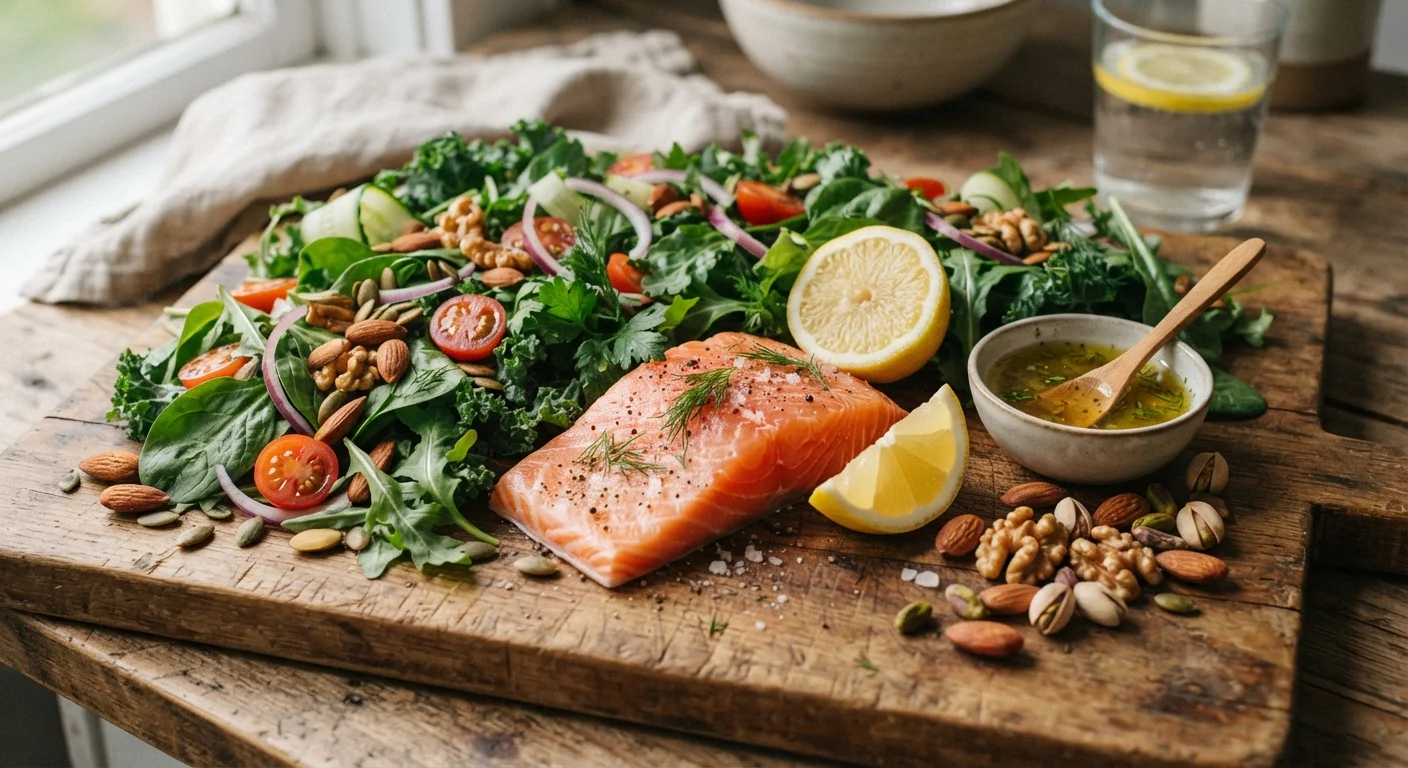
Clinical studies have associated low omega-3 status with drier skin and heightened sensitivity, and some research has examined the role of omega-3s in inflammatory skin conditions such as psoriasis and atopic dermatitis, though results remain mixed. Fatty fish (salmon, mackerel, sardines), walnuts, and flaxseed are common sources. The balance between omega-3 and omega-6 intake also matters because the two fatty acid families compete for the same metabolic enzymes.
Omega-3 fatty acids are incorporated into skin cell membranes and modulate inflammation through specialized signaling molecules.
Selenium
Selenium is a trace mineral incorporated into selenoproteins, including glutathione peroxidase, an antioxidant enzyme active in skin tissue. It supports the body's capacity to manage oxidative stress, which is relevant to both UV-induced damage and chronic inflammatory skin conditions.
Selenium status in the diet is heavily influenced by soil content, which varies by geographic region. Brazil nuts are particularly concentrated sources, though they should be eaten in small amounts given how easily selenium intake can become excessive. Whole grains, tuna, and eggs provide more moderate amounts. Because the margin between adequate and toxic intake is narrower for selenium than for many other micronutrients, supplementation should be approached cautiously and guided by a clinician.
Selenoproteins in skin tissue depend on adequate dietary selenium to manage oxidative stress effectively.
Biotin
Biotin (vitamin B7) is widely marketed for skin and hair, but the evidence base is narrower than the marketing suggests. Biotin is genuinely required for fatty acid synthesis and amino acid metabolism, both of which affect skin cell production. Severe biotin deficiency does produce dermatitis and hair loss, but true deficiency is uncommon in people eating varied diets.
Most people consuming eggs, nuts, legumes, and whole grains get enough biotin. Supplementation in people without a documented deficiency has not demonstrated reliable skin benefits in controlled research. If you are considering biotin supplements, be aware that high doses can interfere with certain laboratory tests, including thyroid and cardiac biomarker panels. Mention any supplements to your healthcare provider before blood tests.
Biotin deficiency can cause dermatitis, but supplementation benefits are not well established outside of documented deficiency.
Putting nutrient knowledge to practical use
Food sources generally provide nutrients in forms and ratios the body handles well. Whole foods also supply co-factors that isolated supplements may lack. That said, certain populations, including people with malabsorption conditions, those following highly restrictive diets, or older adults with reduced gastric acid, may have difficulty reaching adequate levels through diet alone. A clinician can assess whether supplementation is appropriate and at what level.
Focus on dietary patterns, not single nutrients
Nutrients interact. Vitamin C improves iron absorption; fat-soluble vitamins like A require dietary fat to be absorbed properly; zinc and copper compete at the same transport sites. A varied, whole-food diet covers these interactions more reliably than stacking individual supplements. If you suspect a deficiency, blood testing with a clinician is a more informative starting point than self-directed supplementation.
Topical and internal approaches address different layers of skin biology. A well-formulated moisturizer supports the outer barrier while dietary nutrients supply the structural proteins and lipids that form it from below. Neither replaces the other. For a closer look at what the barrier itself does at a cellular level, the article on skin barrier function covers the underlying science.
This article is for informational purposes only and is not medical advice. Consult a qualified healthcare professional before making changes to your diet, supplement routine, or any aspect of your health care.