

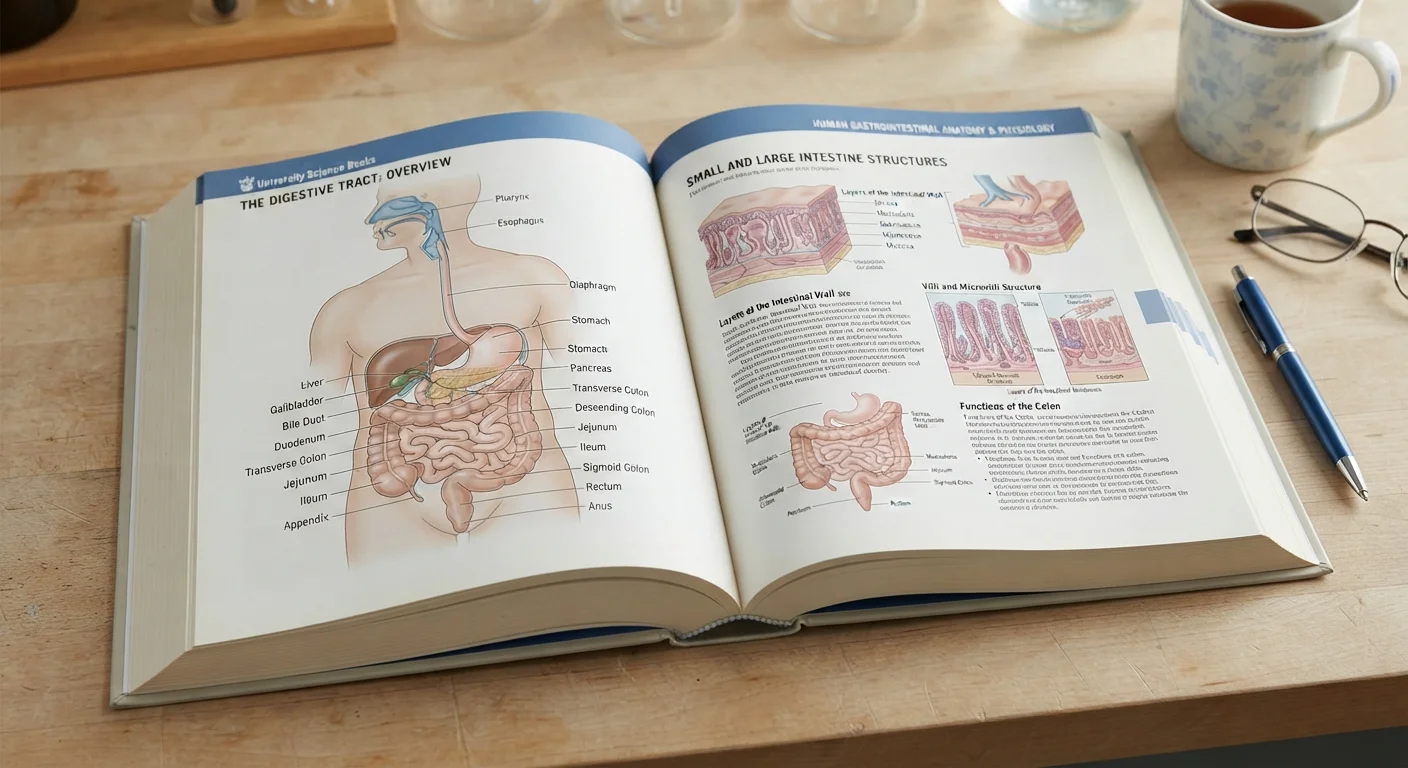
| Neurons in the enteric nervous system | Approximately 500 million (Furness, The Enteric Nervous System, 2006) |
| Primary fiber types that produce SCFAs | Inulin, pectin, resistant starch, fructooligosaccharides |
| Main SCFAs produced by fermentation | Acetate, propionate, butyrate |
| Route connecting gut to liver | Portal vein |
| WHO/FAO probiotic definition year | 2001 (World Health Organization and Food and Agriculture Organization of the United Nations) |
Why terminology matters in gut health research
Gut health research has expanded rapidly over the past two decades, and the vocabulary used in journals, clinical guidelines, and popular health writing has grown with it. Terms like "dysbiosis," "intestinal permeability," and "the enteric nervous system" appear frequently, yet they are rarely explained in plain language. Without a working understanding of these terms, it is difficult to evaluate health claims, interpret research summaries, or make informed decisions with a healthcare provider.
This reference defines the most commonly encountered terms in gut health science. It draws from gastroenterology, microbiology, and nutrition research. For a broader introduction to the organisms that populate the digestive tract, see what lives in your gut. For vocabulary specific to microbiome science, the microbiome science reference glossary is a useful companion resource.
Microbiome
The collective community of microorganisms, including bacteria, viruses, fungi, and archaea, that live in and on the human body. In gut health research, it most often refers specifically to the microbial community in the gastrointestinal tract.
Dysbiosis
An imbalance in the composition or function of the gut microbial community. Dysbiosis is associated with a range of conditions, though researchers continue to study which patterns of imbalance cause disease versus which arise as a consequence of it.
Intestinal permeability
A measure of how easily substances pass through the lining of the intestine into the bloodstream. The intestinal epithelium is normally selective; increased permeability means that barrier becomes less restrictive, which may allow larger molecules or microbial products to cross.
Enteric nervous system
A network of approximately 500 million neurons embedded in the wall of the gastrointestinal tract. It regulates digestive functions largely independently of the brain, though it communicates extensively with the central nervous system via the vagus nerve.
Gut-brain axis
The bidirectional communication network connecting the gastrointestinal tract and the brain. It involves neural, hormonal, and immune signaling pathways and is studied in relation to mood regulation, stress response, and conditions such as irritable bowel syndrome.
Short-chain fatty acids (SCFAs)
Compounds produced when gut bacteria ferment dietary fiber. The most studied SCFAs are acetate, propionate, and butyrate. They serve as an energy source for colon cells and have been linked to immune regulation and anti-inflammatory effects.
Prebiotics
Substrates, typically certain types of dietary fiber, that are selectively used by beneficial microorganisms in the gut. Prebiotics are not digested by the host; instead, they reach the colon intact and feed specific microbial populations.
Probiotics
Live microorganisms that, when consumed in adequate amounts, may confer a health benefit on the host. This definition, established by the World Health Organization and the Food and Agriculture Organization, is widely used in clinical research, though the evidence for specific strains and conditions varies considerably.
Gut-liver axis
The functional relationship between the gut and the liver, mediated largely by the portal vein, which carries blood and its dissolved contents from the intestines to the liver. Microbial metabolites produced in the gut reach the liver through this route and can influence hepatic function.
Epithelium
The single layer of cells lining the inside of the intestine. This layer absorbs nutrients, secretes mucus and immune molecules, and acts as a physical barrier between the gut contents and the rest of the body.
Mucosa
The innermost lining of the gastrointestinal tract, comprising the epithelial cell layer, a layer of connective tissue, and a thin muscle layer. The mucosal surface is where most nutrient absorption and microbial interaction occurs.
Colonization resistance
The ability of an established gut microbial community to prevent new or potentially harmful microorganisms from taking hold. A diverse, stable microbiome is generally thought to support stronger colonization resistance.
Core concepts and their connections to whole-body health
Gut health does not operate in isolation. The digestive system communicates with the immune system, the liver, and the brain through overlapping chemical, neural, and hormonal pathways. The gut-body connection is an area of active research, and several of the terms defined in this glossary describe the mechanisms behind that relationship.
The gut-brain axis, for instance, involves bidirectional signaling between the enteric nervous system (the network of neurons embedded in the gut wall) and the central nervous system. Disruptions to this axis are being studied in relation to conditions including irritable bowel syndrome, anxiety, and chronic fatigue. For a detailed look at those mechanisms, the gut-brain connection article covers the research in accessible terms.
Similarly, intestinal permeability, sometimes called "leaky gut" in popular writing, describes a change in how tightly the cells lining the intestine are joined together. When those junctions loosen, molecules that would normally stay in the gut lumen can cross into the bloodstream and interact with immune tissue. Research on this mechanism is ongoing, and its clinical significance in various disease contexts is still being clarified. Readers should note that the term "leaky gut" as used in some commercial contexts is not synonymous with its use in peer-reviewed gastroenterology literature.
The liver is closely integrated with gut function through the portal vein, which carries blood from the intestines directly to the liver. This is relevant when considering how metabolic byproducts of gut bacteria, including short-chain fatty acids and certain bile acids, reach the liver. Liver health research increasingly accounts for the gut-liver axis as a factor in conditions such as non-alcoholic fatty liver disease.
If you are new to digestive wellness concepts, gut health from the ground up provides a starting framework before working through more technical definitions.
This article is for informational purposes only and is not medical advice. Consult a qualified healthcare professional for guidance on any digestive symptoms, health conditions, or before making changes to your diet or treatment plan.