

Key Takeaways
Alcohol metabolism in the liver
When you drink alcohol, the liver converts it into less harmful substances so the body can eliminate it. This process involves a chain of chemical reactions that produce toxic byproducts before alcohol is fully cleared. The liver can process roughly one standard drink per hour, and anything beyond that rate accumulates in the bloodstream.
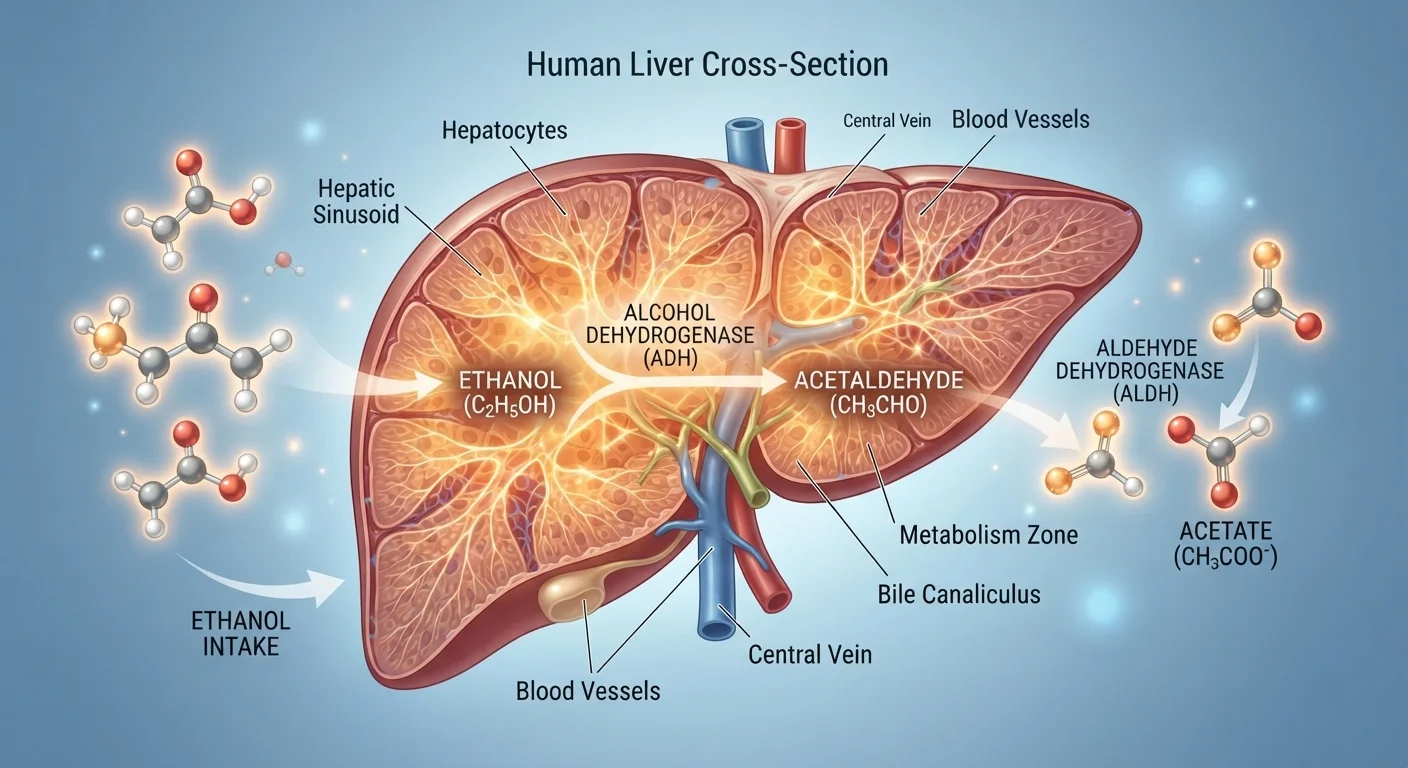
The primary pathway involves the enzyme alcohol dehydrogenase (ADH), which oxidises ethanol into acetaldehyde, a reactive compound more toxic than alcohol itself. A secondary pathway, the microsomal ethanol oxidising system (MEOS), activates with heavier or more frequent drinking and generates additional oxidative stress.
What the liver does with every sip
Alcohol enters the bloodstream within minutes of consumption, and roughly 90 to 95 percent of it is routed to the liver for processing. The liver uses an enzyme called alcohol dehydrogenase (ADH) to convert ethanol into acetaldehyde, a compound that disrupts cell membranes, interferes with DNA repair, and triggers inflammation. A second enzyme, aldehyde dehydrogenase (ALDH), then converts acetaldehyde into acetate, a much less reactive substance that the body can break down into water and carbon dioxide.
The liver's processing capacity is fixed at roughly one standard drink per hour. When consumption outpaces that rate, unmetabolised ethanol circulates through the brain, heart, and other organs, which accounts for the felt effects of intoxication. The MEOS pathway, which activates when alcohol intake is high or habitual, generates free radicals as a byproduct, adding a layer of oxidative stress on top of the acetaldehyde burden.
For a broader picture of what the liver manages beyond alcohol, see what your liver actually does all day.
How cumulative exposure changes liver tissue
A single night of heavy drinking causes measurable fat accumulation in liver cells, a condition called alcoholic steatosis (fatty liver). Fat droplets form because alcohol disrupts the normal metabolism of fatty acids, causing them to build up rather than be exported or burned. This stage produces few or no symptoms and is reversible with abstinence.
Continued heavy drinking moves the liver into a state of persistent inflammation called alcoholic hepatitis. Immune cells flood the tissue, liver enzymes leak into the bloodstream, and the organ swells. Mild alcoholic hepatitis may also resolve with abstinence, but severe cases carry significant clinical risk.
When inflammation persists long enough, the liver responds by depositing scar tissue, a process called fibrosis. Dense fibrosis across most of the liver is cirrhosis, a state in which normal liver architecture is replaced by non-functional scar tissue. Cirrhosis is largely irreversible and raises the risk of liver failure and liver cancer. Each stage involves less functional reserve than the last, which is why early intervention matters.
~1 drink/hr
Maximum liver alcohol processing rate
The liver metabolises approximately one standard drink per hour under average conditions, according to established pharmacokinetic data.
90-95%
Share of alcohol metabolised by the liver
The remainder is excreted via the lungs, kidneys, and skin, which is why breath alcohol tests reflect blood levels.
3 stages
Progression of alcohol-related liver disease
Clinicians describe three main stages: fatty liver, alcoholic hepatitis, and cirrhosis, each representing increasing structural damage.
Factors that change individual risk
Genetic variation in ADH and ALDH enzymes affects how quickly individuals convert ethanol to acetaldehyde and how fast acetaldehyde is cleared. People with slower ALDH activity accumulate acetaldehyde more rapidly, producing stronger flushing and nausea responses; this is common in some East Asian populations. That response does not confer protection against liver damage; it reflects a different metabolic profile.
Sex also affects processing speed. Women generally have lower ADH activity in the stomach lining and a higher proportion of body fat relative to total water volume, so the same amount of alcohol produces a higher blood alcohol concentration than in a man of similar weight. Nutritional status, concurrent medications, and the presence of other liver conditions all shift the risk profile further.
Because these variables interact in ways that are difficult to predict individually, general population guidelines are a starting point, not a personal threshold. Anyone with known liver concerns, a family history of liver disease, or questions about their own drinking patterns should speak with a physician.
Practical habits that support liver recovery
The liver retains meaningful regenerative capacity, particularly in earlier stages of damage. Sustained alcohol-free periods allow hepatocytes (liver cells) to clear fat, reduce inflammation, and restore some functional capacity. The length of abstinence needed depends on the degree of existing damage, which a clinician can assess through blood tests and imaging.
Nutritional support matters because heavy alcohol use depletes B vitamins (especially thiamine and folate), zinc, and vitamin E. These nutrients participate directly in liver metabolism and antioxidant defence. A diet that includes a variety of whole foods, particularly leafy vegetables, legumes, and lean protein, provides the raw materials for cellular repair without requiring supplementation beyond what a doctor might specifically recommend.
Adequate hydration supports bile production and the transport of metabolic waste, both relevant to liver function. How water supports liver filtration and bile production explains this relationship in more detail.
Sleep is another variable often overlooked. Alcohol disrupts sleep architecture even when it initially induces drowsiness, and the liver carries out significant repair processes during rest. Understanding how long alcohol stays in your system and disrupts sleep can help inform timing decisions around evening consumption.
Give your liver alcohol-free intervals
Scheduling several consecutive alcohol-free days each week allows liver cells to reduce fat accumulation and lower inflammation markers. This is not a cure for existing damage, but it is a concrete, evidence-consistent habit. If reducing alcohol intake is difficult, a healthcare provider can offer appropriate support without judgment.
This article is for informational purposes only and is not medical advice. If you have concerns about liver health or alcohol use, consult a qualified healthcare professional.