

Key Takeaways
Liver function
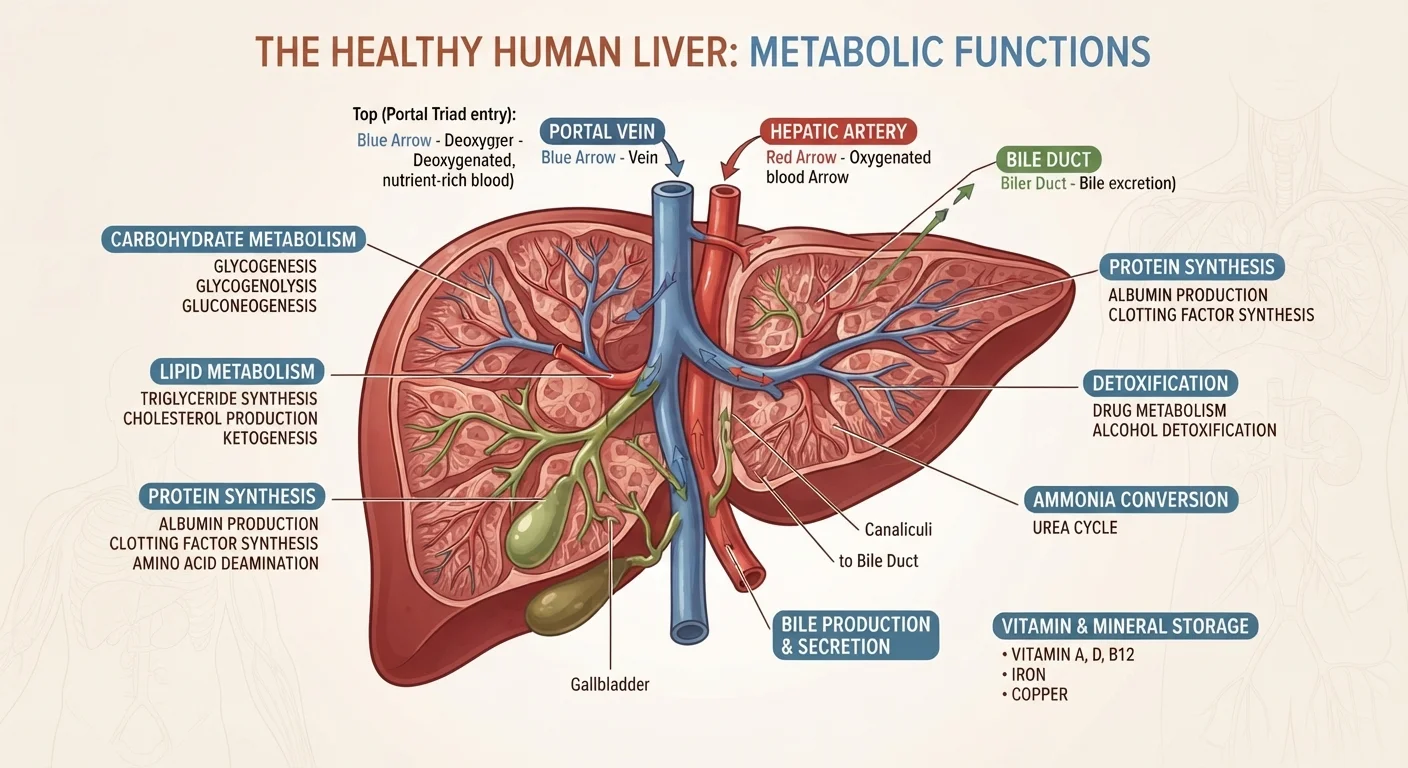
Liver function refers to the full range of biological tasks the liver performs to keep the body in balance. These include filtering blood, processing nutrients from food, producing bile for digestion, synthesizing proteins, and neutralizing harmful substances. The liver works continuously, adjusting its activity based on what enters the bloodstream after eating, drinking, or taking medication.
Hepatocytes, the liver's primary cell type, carry out most of these functions and have an unusual capacity for regeneration, though repeated injury can overwhelm this ability and lead to fibrosis.
The liver as a 24-hour processing center
Most people know the liver is important. Fewer appreciate just how much it is doing at any given moment. The organ processes nutrients absorbed from the small intestine before they reach the rest of the body. This means every gram of carbohydrate, fat, and protein you eat passes through a hepatic checkpoint before circulating further.
Glucose management alone involves several steps. After a meal, the liver absorbs excess glucose and stores it as glycogen. Between meals, it breaks that glycogen back down to maintain stable blood sugar. When glycogen stores run low, the liver can synthesize glucose from amino acids and fats, a process called gluconeogenesis.
Fat metabolism is equally involved. The liver packages dietary fats into lipoproteins for distribution to tissues, and it synthesizes cholesterol, which the body uses to make hormones, vitamin D, and cell membranes. Bile acids, which the liver produces from cholesterol, travel to the small intestine to emulsify dietary fats so they can be absorbed. For a broader orientation to how these functions fit together, see a beginner's overview of liver health.
Support liver function with consistent sleep
The liver follows circadian rhythms: several metabolic and detoxification processes are more active during nighttime hours. Disrupted or insufficient sleep can impair glucose regulation and lipid metabolism at the hepatic level. Maintaining a consistent sleep schedule is a low-cost habit with measurable effects on metabolic health.
Detoxification: what it actually means
The word 'detox' is used loosely in popular health culture, but the liver's detoxification role is a precise biochemical process. When blood from the gut arrives via the portal vein, the liver screens it for ammonia (produced during protein breakdown), bacterial byproducts, drugs, alcohol, and other compounds that would be harmful in general circulation.
Detoxification occurs in two main phases. Phase I uses enzymes, mostly from the cytochrome P450 family, to chemically modify toxins, often making them more reactive in the short term. Phase II then attaches molecules to those reactive intermediates, making them water-soluble so they can be excreted in bile or urine. This system handles everything from acetaminophen to caffeine to environmental pollutants absorbed through the gut or skin.
The liver also converts ammonia to urea, which the kidneys then excrete. When liver function is severely compromised, ammonia accumulates in the blood and can affect brain function, a condition called hepatic encephalopathy. The lymphatic system works alongside the liver, carrying immune cells and returning interstitial fluid to circulation, which helps manage the inflammatory responses that liver stress can trigger.
500+
Distinct functions performed by the liver
According to the American Liver Foundation, the liver carries out more than 500 known biological functions.
1.5 L
Blood processed by the liver per minute
The liver receives roughly 1,500 mL of blood each minute via the hepatic artery and portal vein combined.
25%
Of U.S. adults estimated to have fatty liver
Non-alcoholic fatty liver disease is estimated to affect approximately one in four adults in the United States, according to published epidemiological analyses.
Protein synthesis and blood chemistry
The liver produces most of the proteins that keep blood chemistry stable. Albumin, the most abundant protein in blood plasma, is made exclusively in the liver. It maintains oncotic pressure, which keeps fluid inside blood vessels rather than leaking into surrounding tissue. When albumin production drops because of liver disease, fluid accumulates in the abdomen and legs.
Clotting factors are another liver product. Factors I, II, V, VII, IX, and X are all synthesized there, along with several proteins that regulate clotting. A damaged liver produces fewer of these, which is why people with advanced liver disease bruise and bleed more easily. Blood tests for clotting time (prothrombin time) are, in part, a measure of liver function.
The liver also produces acute-phase proteins that respond to infection and inflammation, carrier proteins that transport hormones and vitamins, and enzymes involved in lipid metabolism. These functions collectively explain why liver disease has such wide-ranging effects on health.
Habits that protect liver function
The liver is durable, but it is not invulnerable. Sustained excess, whether from alcohol, highly processed foods, or certain medications taken without medical supervision, can accumulate into structural damage over years. Several evidence-based habits reduce this accumulation.
Limiting alcohol is among the most documented. Even moderate daily drinking raises the risk of fatty liver disease over time. How the liver metabolizes alcohol explains the cellular mechanisms in detail. Avoiding unnecessary over-the-counter medications, particularly acetaminophen at high doses, also matters because many drugs are hepatotoxic when taken in excess or combined with alcohol.
Diet affects liver fat directly. Diets high in added sugars, particularly fructose, promote fat accumulation in liver cells, the hallmark of non-alcoholic fatty liver disease. A diet with adequate fiber, vegetables, and lean protein supports the substrates needed for Phase II detoxification enzymes. Hydration is a simpler variable: adequate fluid intake supports bile production and urinary excretion of water-soluble waste. For a structured overview of how diet, sleep, and movement interact with liver function, the complete picture of liver health covers each factor in depth. Common daily routines that quietly strain the organ are documented in everyday habits that strain the liver.
This article is for informational purposes only and is not medical advice. Consult a qualified healthcare provider for any concerns about your liver health or before making changes to your diet, medications, or health routine.