

| Most liver-specific enzyme | ALT (alanine aminotransferase) |
| Marker most affected by alcohol use | GGT, often alongside AST |
| Marker of synthetic liver function | Albumin and prothrombin time (PT/INR) |
| Visible sign of high bilirubin | Jaundice (yellow skin or eyes) |
| Panel name | Liver function test (LFT) or hepatic panel |
| Reference ranges | Vary by laboratory; always use your own report's ranges |
What a liver function test actually measures
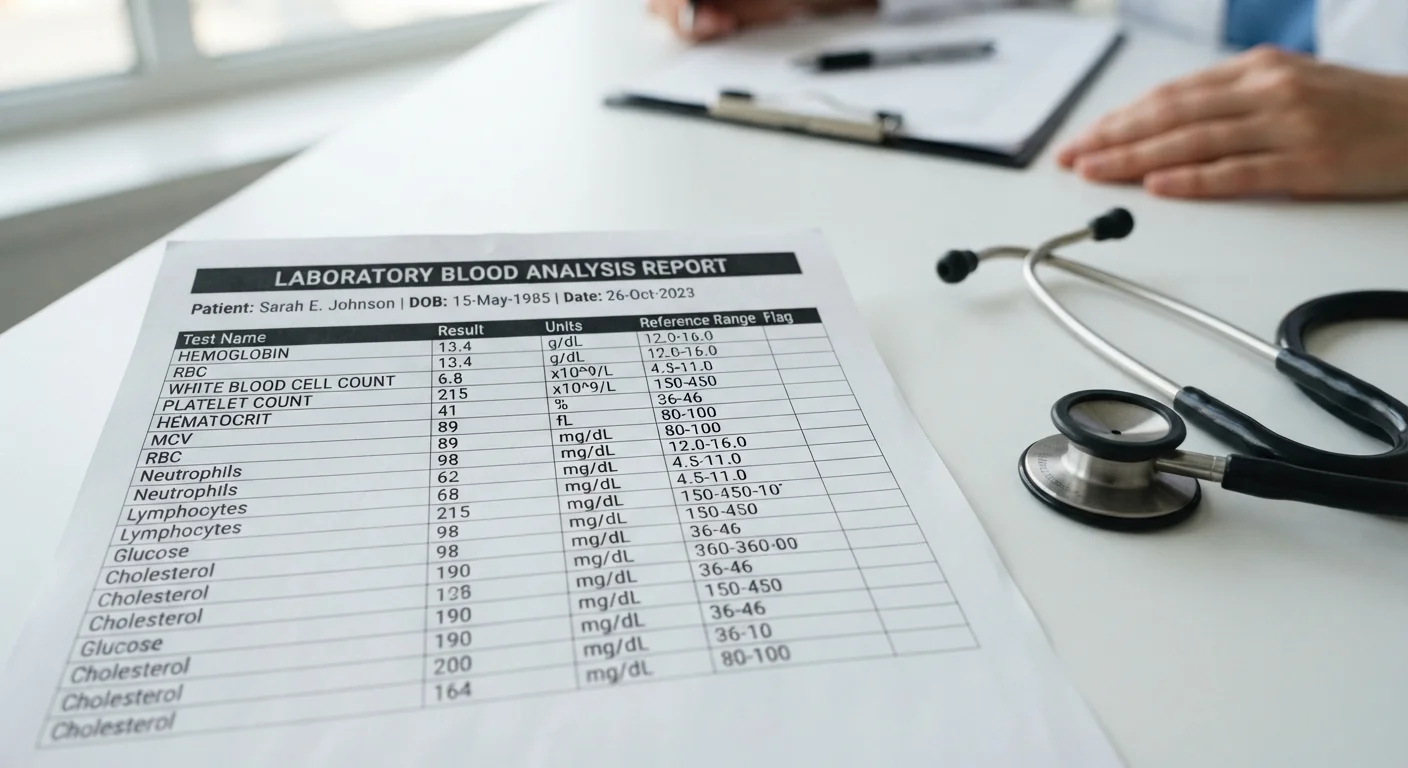
A liver function test (LFT), sometimes called a liver panel or hepatic panel, is a group of blood tests ordered together to assess how well the liver is working. The panel does not give a single pass-or-fail result. Instead, it measures several distinct markers, each reflecting a different aspect of liver activity. Some markers indicate cell damage; others reflect the liver's ability to process waste or synthesize proteins.
Because the liver handles hundreds of metabolic tasks, a single abnormal value rarely tells the whole story. Clinicians read the pattern across all markers, alongside symptoms, medication history, and other lab results. For context on how liver results interact with metabolic health more broadly, see how lipid panel values are interpreted.
The sections below explain what each common LFT marker measures and what high or low values can signal. Reference ranges vary between laboratories, so always read your results against the ranges printed on your own report.
ALT (alanine aminotransferase)
An enzyme concentrated in liver cells. Blood levels rise when liver cells are damaged or inflamed, making ALT a relatively specific indicator of liver injury.
AST (aspartate aminotransferase)
An enzyme found in the liver, muscle, and heart. Elevated AST is less liver-specific than elevated ALT; the two are usually read together to identify the likely source.
ALP (alkaline phosphatase)
An enzyme produced by the liver, bile ducts, and bone. High levels often point to bile flow obstruction or bone-related conditions.
GGT (gamma-glutamyl transferase)
A sensitive enzyme marker for liver and bile duct disease. GGT rises with alcohol use, fatty liver disease, and certain medications, but is not specific to one cause.
Bilirubin
A yellow pigment formed from the breakdown of red blood cells. The liver processes and excretes it; elevated bilirubin can indicate impaired liver function, bile duct obstruction, or excess red blood cell breakdown.
Albumin
A protein produced by the liver. Low albumin reflects reduced protein synthesis capacity and is more characteristic of chronic liver disease than acute injury.
Prothrombin time (PT) / INR
A measure of blood clotting speed, which depends on liver-produced clotting factors. Prolonged PT or elevated INR alongside other abnormal liver markers suggests impaired liver synthetic function.
Cholestasis
A condition in which bile flow from the liver is reduced or blocked. It typically produces elevated ALP and GGT and, if prolonged, raised bilirubin.
The main markers explained
ALT (alanine aminotransferase) is an enzyme found mainly in liver cells. When those cells are inflamed or damaged, ALT leaks into the bloodstream and its level rises. ALT is considered the most liver-specific marker on the standard panel. Elevated ALT is associated with conditions including viral hepatitis, non-alcoholic fatty liver disease (NAFLD), alcohol-related liver injury, and certain medication effects.
AST (aspartate aminotransferase) is present in the liver but also in muscle, heart, and red blood cells. A high AST alongside a high ALT suggests liver involvement; a high AST with a normal ALT is more likely to reflect a non-liver source, such as muscle injury. The AST-to-ALT ratio can help clinicians narrow the likely cause.
ALP (alkaline phosphatase) comes from the liver, bone, and other tissues. Elevated ALP often points to bile duct obstruction or cholestatic conditions, where bile flow is impaired. It can also rise with bone disorders or during normal bone growth in children and adolescents.
GGT (gamma-glutamyl transferase) is more sensitive than ALP for detecting liver and bile duct problems. GGT rises with alcohol use, certain medications, and fatty liver disease. Because GGT is not specific to one cause, it is most useful when read alongside other markers.
Bilirubin is a yellow pigment produced when red blood cells break down. The liver processes bilirubin and excretes it in bile. Elevated total bilirubin can indicate impaired liver cell function, bile duct obstruction, or increased breakdown of red blood cells. Jaundice (yellowing of the skin or whites of the eyes) becomes visible when bilirubin rises significantly above the normal range.
Albumin is a protein the liver manufactures continuously. Low albumin suggests the liver has lost some capacity to synthesize proteins, which tends to occur in chronic or advanced liver disease rather than in acute injury.
Prothrombin time (PT) or INR measures how long blood takes to clot, a process that depends on clotting factors the liver produces. A prolonged PT or elevated INR in the context of other abnormal liver markers suggests reduced synthetic function.
| Most liver-specific enzyme | ALT (alanine aminotransferase) |
| Marker most affected by alcohol use | GGT, often alongside AST |
| Marker of synthetic liver function | Albumin and prothrombin time (PT/INR) |
| Visible sign of high bilirubin | Jaundice (yellow skin or eyes) |
| Panel name | Liver function test (LFT) or hepatic panel |
| Reference ranges | Vary by laboratory; always use your own report's ranges |
What abnormal results can and cannot tell you
Mildly elevated enzymes are common and do not always mean serious disease. Transient rises can follow intense exercise, alcohol consumed before the test, or use of over-the-counter pain relievers such as acetaminophen. A single abnormal result is generally repeated before further investigation begins.
Persistently elevated values, or a pattern where multiple markers are abnormal together, carries more clinical weight. For example, disproportionately elevated ALP and GGT with normal or mildly elevated ALT is a pattern associated with bile duct problems rather than hepatocellular (liver cell) injury.
LFT results do not diagnose a specific condition on their own. Imaging, additional blood tests, and sometimes liver biopsy are needed to confirm a cause. If your results are outside the reference range, your clinician is the appropriate person to interpret them in the context of your full health picture. For a broader introduction to what the liver does and which habits support it, this beginner's overview of liver health provides useful background.
Readers who want to review their daily habits against evidence-based recommendations may find the liver-friendly living self-audit a practical companion to this reference.
This article is for informational purposes only and is not medical advice. Always consult a qualified healthcare professional about your individual lab results, symptoms, or treatment decisions.