

Key Takeaways
Start here
What the lymphatic system actually does
Next
Why lymph flow slows down
Apply it
Foundational habits that support lymph flow
Know the limits
When to talk to a doctor
What the lymphatic system actually does
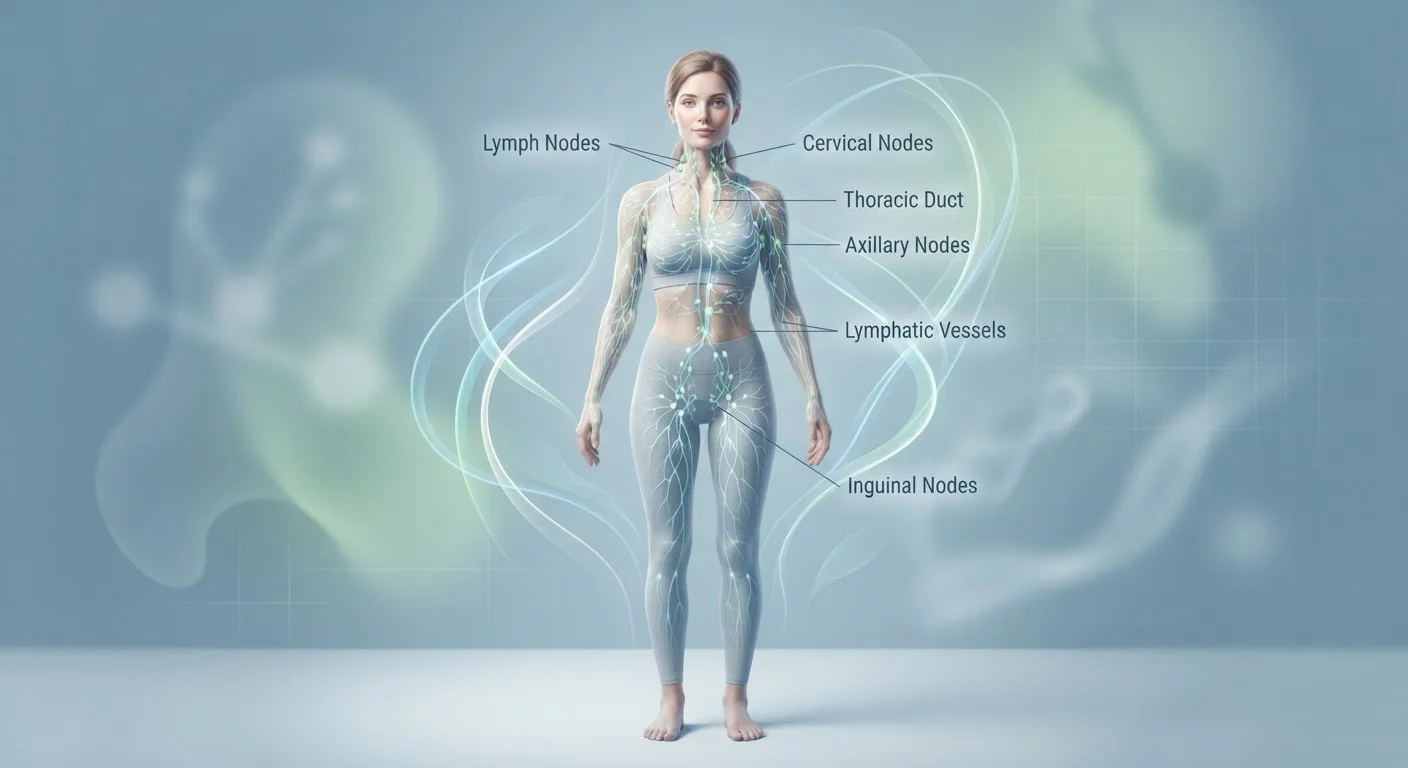
Most adults are familiar with the cardiovascular system, but the lymphatic system runs parallel to it and does work the heart cannot. Every day, small amounts of fluid, proteins, and cellular debris leak out of blood capillaries into surrounding tissue. The lymphatic system collects this fluid, now called lymph, through a network of thin-walled vessels distributed across almost every tissue in the body.
That fluid travels toward lymph nodes, small glandular structures concentrated in the neck, armpits, and groin. Inside the nodes, immune cells screen the fluid for bacteria, viruses, and abnormal cells. Cleaned lymph eventually drains into large veins near the collarbone and re-enters circulation.
The system also absorbs dietary fats from the small intestine and carries immune cells called lymphocytes throughout the body. For a deeper look at anatomy and physiology, the complete lymphatic reference guide covers each component in detail.
Lymph
The clear, watery fluid that the lymphatic system collects from body tissues. It contains proteins, immune cells, and cellular waste products.
Lymph nodes
Small, bean-shaped glands distributed throughout the body that filter lymph fluid and house immune cells that identify and destroy pathogens.
Thoracic duct
The largest lymphatic vessel in the body, responsible for collecting lymph from most of the body and draining it into a vein near the left collarbone.
Glymphatic system
A fluid clearance network in the brain, distinct from but related to the lymphatic system, that removes metabolic waste primarily during deep sleep.
Lymphedema
A medical condition in which lymphatic vessels are damaged or blocked, causing persistent fluid buildup and swelling, most often in the arms or legs.
Lymphocytes
A type of white blood cell that travels through the lymphatic system and plays a central role in the body's immune response to infection and disease.
Why lymph flow slows down
The lymphatic system has no dedicated pump. Flow depends almost entirely on external forces: skeletal muscle contractions, the pressure changes that come with breathing, and the rhythmic movements of everyday activity. When those inputs are absent or inadequate, fluid tends to pool.
Prolonged sitting is the most common everyday culprit. During long periods of inactivity, lower limb muscles stop compressing lymphatic vessels, and fluid can accumulate in the legs and feet. Chronic dehydration thickens lymph, making it harder to move through narrow vessel walls. Poor sleep disrupts the tissue repair processes that involve lymphatic clearing, particularly in the brain, where a related system called the glymphatic network removes metabolic waste during deep sleep.
Other contributing factors include tight or restrictive clothing worn for extended periods, chronic stress (which can affect vessel tone), and a diet consistently high in ultra-processed foods and sodium, which promotes fluid retention. Unlike the liver, which filters blood directly, liver health priorities involve a different set of lifestyle considerations, though both organs benefit from many of the same broad habits.
Small movement breaks make a difference
If your work requires long periods of sitting, a brief two-to-three minute walk every hour can meaningfully reduce the inactivity that slows lymph flow in the lower limbs. Standing desks and regular stretching offer similar benefits. Consistency matters more than intensity for this purpose.
Foundational habits that support lymph flow
No supplement or device is necessary to maintain healthy lymphatic function. The system responds well to consistent, ordinary lifestyle practices.
Movement
Any activity that contracts skeletal muscles moves lymph. Walking for 20 to 30 minutes most days is a practical starting point. Swimming, cycling, yoga, and rebounding (jumping on a small trampoline) are also commonly recommended because they use large muscle groups rhythmically. For adults dealing with stiffness that limits activity, a joint-by-joint mobility guide can help identify where to begin. The Mobility and Recovery hub has additional resources on building sustainable movement habits.
Hydration
Adequate water intake keeps lymph fluid at a consistency that moves freely through vessels. There is no single volume that applies to every adult; general guidance from public health bodies suggests paying attention to urine color as a practical gauge, aiming for pale yellow.
Diaphragmatic breathing
Slow, deep breaths that expand the belly create pressure changes in the chest cavity that pull lymph toward the thoracic duct, the main drainage channel. A few minutes of deliberate deep breathing each day requires no equipment and can be done anywhere.
Sleep
Research published in the journal Science (Xie et al., 2013) found that the brain's glymphatic clearance is most active during sleep. Protecting sleep quality and duration supports this process. For a practical overview of habits that collectively address these areas, the lymphatic wellness checklist organizes them into an audit-style format.
When to talk to a doctor
General lifestyle habits are appropriate for supporting a healthy system in adults without diagnosed conditions. They are not a substitute for medical evaluation when symptoms are present.
Persistent swelling in the limbs, face, or abdomen that does not resolve with rest and elevation warrants a medical assessment. The same applies to recurring infections, unexplained fatigue lasting more than a few weeks, skin changes such as thickening or hardening in a limb, or any swollen lymph nodes that are hard, fixed, or growing. A condition called lymphedema, in which lymphatic vessels are damaged or obstructed, requires professional management and is not addressed by lifestyle changes alone.
Special caution applies to people who have undergone cancer treatment involving lymph node removal or radiation, are pregnant, or have cardiovascular disease. All of these groups should get personalized guidance from a qualified healthcare provider before changing exercise, massage, or compression practices. Liver health considerations follow a similar principle: general information supports awareness, but individual medical decisions belong with a clinician.
This article is for informational purposes only and is not medical advice. Consult a qualified healthcare professional for any personal health concerns, symptoms, or before making changes to your health routine.