

Key Takeaways
What the lymphatic system is and why it matters
The lymphatic system is a network of vessels, nodes, and organs that runs alongside the cardiovascular system throughout the body. Its primary jobs are three: drain interstitial fluid (the liquid that leaks out of capillaries into surrounding tissue), transport dietary fats from the intestines to the bloodstream, and support immune defense by filtering pathogens and housing white blood cells.
Without functional lymph drainage, tissues would swell with fluid, waste metabolites would accumulate, and the immune system would lose a critical filtering mechanism. The system also works in close coordination with the liver, which processes toxins that the lymphatics help mobilize. Liver health and lymphatic function are connected: both organs share responsibility for clearing metabolic byproducts from circulation.
This article is for informational purposes only and is not a substitute for professional medical advice, diagnosis, or treatment.
Anatomy: the main structures
The lymphatic system consists of several interconnected structures.
- Lymph capillaries: Microscopic, thin-walled vessels that begin in tissue spaces. They are more permeable than blood capillaries, allowing large molecules such as proteins to enter.
- Lymph vessels (collecting vessels): These carry lymph fluid toward the chest. Valves inside prevent backflow, similar to veins.
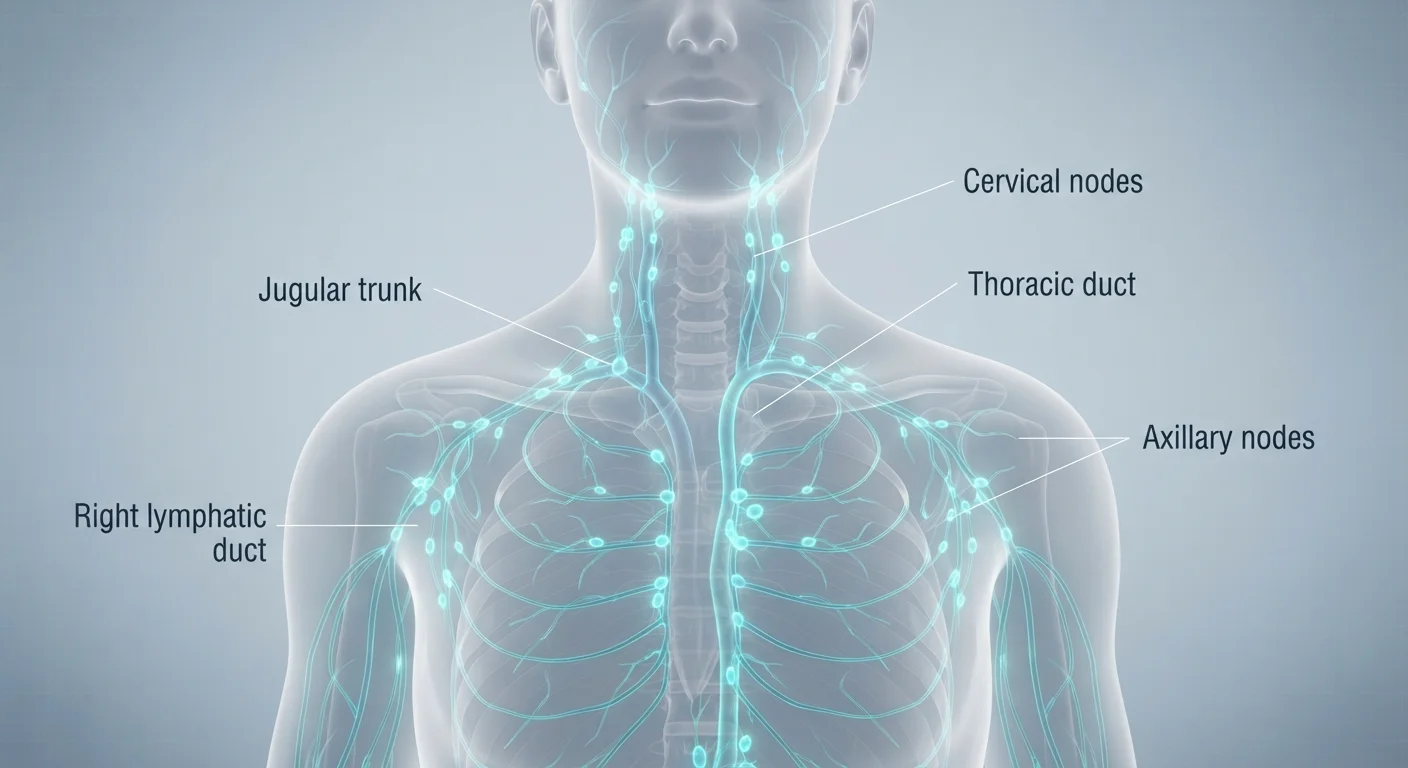
- Lymph nodes: Small, bean-shaped structures clustered in the neck, armpits, groin, chest, and abdomen. They filter lymph and house lymphocytes (white blood cells). See how lymph nodes coordinate immune defense for a detailed breakdown of this process.
- Lymph trunks and ducts: Larger collecting vessels. The thoracic duct, the body's largest lymphatic vessel, drains most of the body into the left subclavian vein near the collarbone. The right lymphatic duct drains the upper right quadrant.
- Lymphoid organs: The spleen (filters blood and stores immune cells), the thymus (where T-lymphocytes mature), and tonsils (front-line immune tissue in the throat).
How lymph flow works
Lymph has no dedicated pump equivalent to the heart. Fluid moves through the network by several mechanisms working together.
Skeletal muscle contraction squeezes lymph vessels with each movement, pushing fluid toward the chest. This is why prolonged sitting significantly slows lymph flow. Breathing creates pressure changes in the thoracic cavity that draw lymph upward toward the thoracic duct. Deep, diaphragmatic breaths produce greater pressure changes than shallow chest breathing. Intrinsic smooth muscle contractions in the walls of larger lymph vessels generate rhythmic pumping; these contractions are regulated partly by fluid volume and partly by the autonomic nervous system.
Lymph capillaries absorb interstitial fluid continuously. Under normal conditions, roughly two to four liters of lymph return to the bloodstream each day, according to standard physiology texts. Disruptions to any of the mechanisms above, including inactivity, surgical removal of nodes, infection, or inflammation, can impair this return and cause fluid buildup in tissues.
After long periods of sitting, a 5-minute walk is more effective for restarting lymph flow than passive stretching alone. The alternating contraction and relaxation of leg muscles generates the mechanical pressure needed to move lymph through collecting vessels.
The lymphatic system lacks a central pump, so skeletal muscle contraction is among the most reliable drivers of lymph transport, particularly in the lower extremities where gravity works against upward flow.
When elevating a swollen limb, position it so the affected area is above the level of the heart, not merely raised on a cushion at hip height. The angle matters for gravity-assisted drainage.
Fluid moves by hydrostatic pressure gradients; positioning the limb above heart level creates a meaningful gradient that passive elevation at a lower angle does not achieve.
Common dysfunctions and warning signs
Several conditions arise when lymphatic function is impaired.
Lymphedema
Lymphedema is persistent swelling, most often in a limb, caused by inadequate lymph drainage. Primary lymphedema results from developmental abnormalities in lymph vessels; secondary lymphedema is more common and follows damage to lymph nodes from surgery, radiation, infection, or trauma. Cancer treatment involving lymph node removal is a well-recognized cause.
Lymphadenopathy (swollen lymph nodes)
Nodes that enlarge temporarily during infection are a normal immune response. Nodes that remain enlarged for more than two to four weeks, feel hard or fixed, or appear without an obvious infectious cause warrant medical evaluation. These can be associated with infection, autoimmune disease, or, in some cases, malignancy.
Lipedema
Lipedema is a chronic condition involving abnormal fat deposition, primarily in the legs and sometimes the arms. It is distinct from lymphedema but can eventually impair lymphatic drainage. It is often misdiagnosed as general obesity.
Recurring infections
Because lymph nodes filter pathogens, impaired lymphatic function can contribute to increased vulnerability to local infections, particularly cellulitis (a bacterial skin infection) in affected limbs.
Lifestyle strategies to support lymph flow
Several evidence-informed habits support efficient lymph circulation. None of these replace professional care for diagnosed lymphatic disorders, but they are relevant to general wellness maintenance.
Regular physical movement
Rhythmic, repetitive activity such as walking, swimming, or cycling activates the skeletal muscle pump that drives lymph flow. Even short walking breaks during sedentary work periods help. Movement and recovery strategies that reduce everyday physical discomfort also benefit lymph circulation as a secondary effect of reducing inflammation and improving tissue perfusion.
Diaphragmatic breathing
Slow, deep breaths that expand the belly (rather than just the chest) create larger pressure gradients in the thorax, which draws lymph through the thoracic duct more effectively. Practicing deliberate diaphragmatic breathing for a few minutes several times a day is a low-cost habit with broader relaxation benefits as well.
Hydration
Lymph is roughly 95% water. Insufficient fluid intake thickens lymph, which may slow its movement through vessels. Adequate daily water intake (needs vary by body weight, activity level, and climate) supports the fluid balance that lymph drainage depends on.
Compression garments (for clinical use)
In people diagnosed with lymphedema, medically fitted compression garments are a standard part of management. These are prescribed and fitted by a healthcare professional; off-the-shelf compression products are not equivalent substitutes for clinical-grade garments used in lymphedema care.
Skin care and infection prevention
Skin that is broken, dry, or injured provides an entry point for bacteria, which can trigger infection and worsen lymphatic impairment in at-risk limbs. Moisturizing intact skin and protecting at-risk limbs from cuts, burns, or insect bites is a practical harm-reduction measure.
Build movement into sedentary work routines
Set a timer to stand and walk for five minutes every hour during desk work. Even low-intensity movement activates the muscle pump that drives lymph flow. Pairing these breaks with a few slow, deep breaths adds a mild thoracic pressure benefit at no extra time cost.
When to consult a healthcare professional
General lifestyle habits can support lymph flow in healthy adults, but certain symptoms require professional evaluation rather than self-management.
- Persistent swelling in a limb, the face, or the genitals that does not resolve after a day or two of rest and elevation
- Lymph nodes that remain enlarged beyond two to four weeks without a clear infectious cause
- Skin that feels tight, heavy, or has a leathery texture over a swollen area
- Recurrent cellulitis or unexplained skin infections in the same region
- Swelling that follows cancer treatment, especially after lymph node removal or radiation
A physician can refer patients to a certified lymphedema therapist, who is a specialist trained in complete decongestive therapy (CDT), the current standard of care for lymphedema. People with existing chronic conditions, those who are pregnant, elderly individuals, and children should consult a healthcare provider before starting any new physical or therapeutic regimen targeting lymphatic health.
Prompt evaluation matters because early intervention in lymphedema consistently produces better outcomes than delayed treatment, based on clinical practice guidelines from professional lymphedema organizations.