

Key Takeaways
Lymphatic immune defense
The lymphatic system is a network of vessels, nodes, and organs that collects excess fluid from tissues and transports it back to the bloodstream. Along the way, lymph nodes filter that fluid and house immune cells that detect and destroy pathogens. This process is a central part of how the body identifies infection and mounts a response.
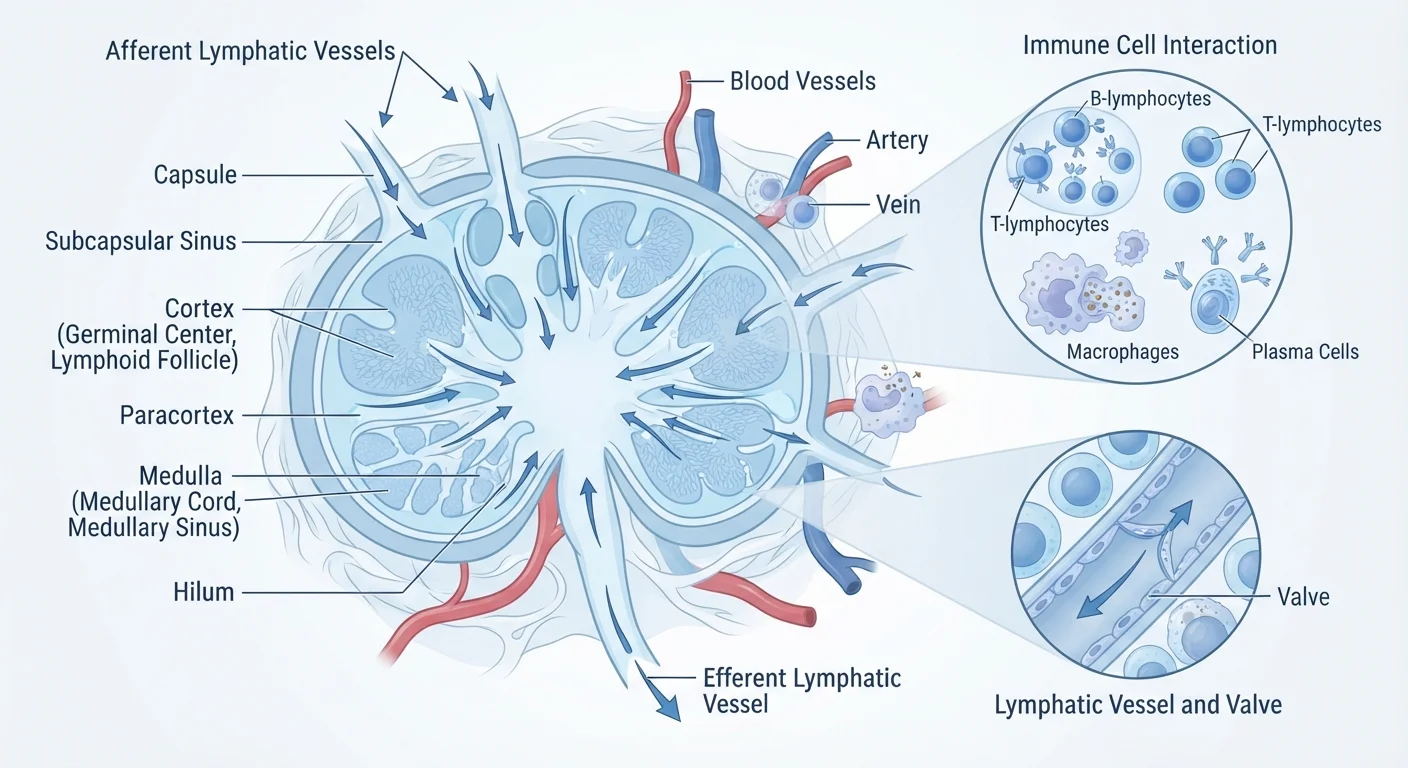
Lymph nodes contain B cells, T cells, and macrophages that trigger adaptive immunity when antigen-presenting cells deliver signals from infected or damaged tissue.
How the lymphatic system and immune system connect
The lymphatic system and the immune system are not separate entities that happen to cooperate. They are structurally intertwined. Lymphatic vessels collect interstitial fluid (the fluid surrounding cells in tissues), debris, and pathogens from almost every tissue in the body. That collected fluid, now called lymph, travels through a network of vessels toward the nearest lymph node.
Lymph nodes are small, bean-shaped structures distributed throughout the body, with concentrations in the neck, armpits, chest, abdomen, and groin. Each node contains dense populations of immune cells, primarily T cells, B cells, and macrophages. When lymph passes through, these cells scan it for foreign material. If a pathogen is detected, an immune response is initiated within the node itself.
This makes the lymphatic system the primary transit route that delivers threats to the immune cells equipped to handle them. Without that transit route, immune surveillance would be far less organized. For a broader overview of how this network is structured, see how the lymphatic system clears waste and fights infection.
What happens inside a lymph node
When a pathogen enters a lymph node, specialized cells called dendritic cells and macrophages capture it and break it into fragments. Those fragments, called antigens, are displayed on the cell surface and presented to T cells. This process is called antigen presentation.
Depending on the antigen, T cells either become cytotoxic (directly killing infected cells) or helper T cells that signal B cells to produce antibodies. B cells, once activated, differentiate into plasma cells that manufacture antigen-specific antibodies. Some of those activated cells become memory cells, which allow the immune system to respond faster if the same pathogen appears again.
Lymph node swelling during illness is the physical result of this process. The node expands because immune cells are proliferating rapidly inside it. Swollen nodes are a sign of active immune work, not necessarily a problem, though persistent swelling without an obvious cause should always be evaluated by a clinician.
600+
Lymph nodes in the human body
According to anatomy references from the American Cancer Society, the human body contains between 500 and 700 lymph nodes distributed throughout tissues and organs.
2-4 L
Lymph returned to bloodstream daily
Physiological estimates cited in standard medical textbooks indicate that roughly two to four liters of lymph fluid re-enter circulation through the thoracic duct and right lymphatic duct each day.
96%
Water content of lymphatic fluid
Lymph is predominantly water, with the remainder comprising proteins, lipids, and immune cells, making hydration a direct factor in lymph viscosity and flow.
Why lymph flow matters for immune efficiency
Pathogens and cellular debris reach lymph nodes only if lymph is flowing. The lymphatic system has no pump equivalent to the heart. Movement of lymph depends on skeletal muscle contractions, breathing patterns, and the one-way valves inside lymphatic vessels that prevent backflow.
Prolonged sitting, sedentary work patterns, and low physical activity all reduce the mechanical forces that push lymph through the vessels. When lymph stagnates, antigen delivery to immune cells slows, waste clearance from tissues is delayed, and inflammation can persist longer than necessary.
Physical activity is the most direct way to maintain lymph circulation. Even moderate movement, such as walking, promotes consistent lymph flow. Learn which movement types drive lymph flow most effectively and why the absence of a dedicated pump makes activity non-optional for this system.
Deep breathing also contributes. The pressure changes in the thorax during inhalation and exhalation create a pumping effect on the thoracic duct, the largest lymphatic vessel in the body, which drains lymph back into the bloodstream.
Lifestyle habits that support the system
Several daily habits have a measurable effect on how well lymph flows and how well immune cells function within the nodes.
- Consistent movement: walking, cycling, or any rhythmic physical activity contracts the muscles that drive lymph through vessels. Brief walks distributed across the day are more effective than one long session with hours of sitting on either side.
- Hydration: lymph is roughly 96 percent water. When fluid intake is insufficient, lymph becomes more viscous and harder to move. Dietary choices and hydration patterns directly affect lymph fluid quality.
- Sleep: during sleep, the glymphatic system in the brain (a separate but related fluid clearance system) is most active, and the body conducts much of its immune cell repair and regulation. Chronic sleep deprivation is associated with reduced natural killer cell activity and altered lymphocyte counts.
- Stress reduction: sustained psychological stress elevates cortisol, which suppresses lymphocyte function over time. Practices that reduce chronic stress also protect immune competence.
For readers newer to this topic, this foundational guide to lymphatic health covers why the system slows down and what habits keep it working well.
Keep lymph moving throughout the day
Short movement breaks every 60 to 90 minutes are more effective for lymph circulation than a single long workout followed by hours of sitting. Try standing, walking to a different room, or doing a few minutes of deep breathing during work breaks. These small interruptions maintain the muscle contractions and pressure changes the lymphatic system depends on.
The lymphatic system in recovery and inflammation
The connection between lymphatic function and immune defense extends into physical recovery. After exercise or injury, tissues accumulate metabolic waste products and inflammatory signaling molecules. Lymphatic vessels carry those materials away from tissue and toward nodes where they can be processed or neutralized.
When lymph flow is sluggish, recovery slows, and localized inflammation can persist. This is one reason that gentle movement after exertion, rather than complete rest, tends to support faster recovery. How the lymphatic system supports recovery after exertion goes deeper into the mechanisms behind this process.
The liver also participates in this process. Lymph from the gastrointestinal tract passes through the liver before reaching general circulation, allowing the liver to process fats, filter toxins, and regulate immune signals. Liver health resources explain how this organ intersects with the body's broader filtration and immune network.
This article is for informational purposes only and is not medical advice. Always consult a qualified healthcare professional regarding symptoms, conditions, or personal health decisions.