

Key Takeaways
The lymphatic system
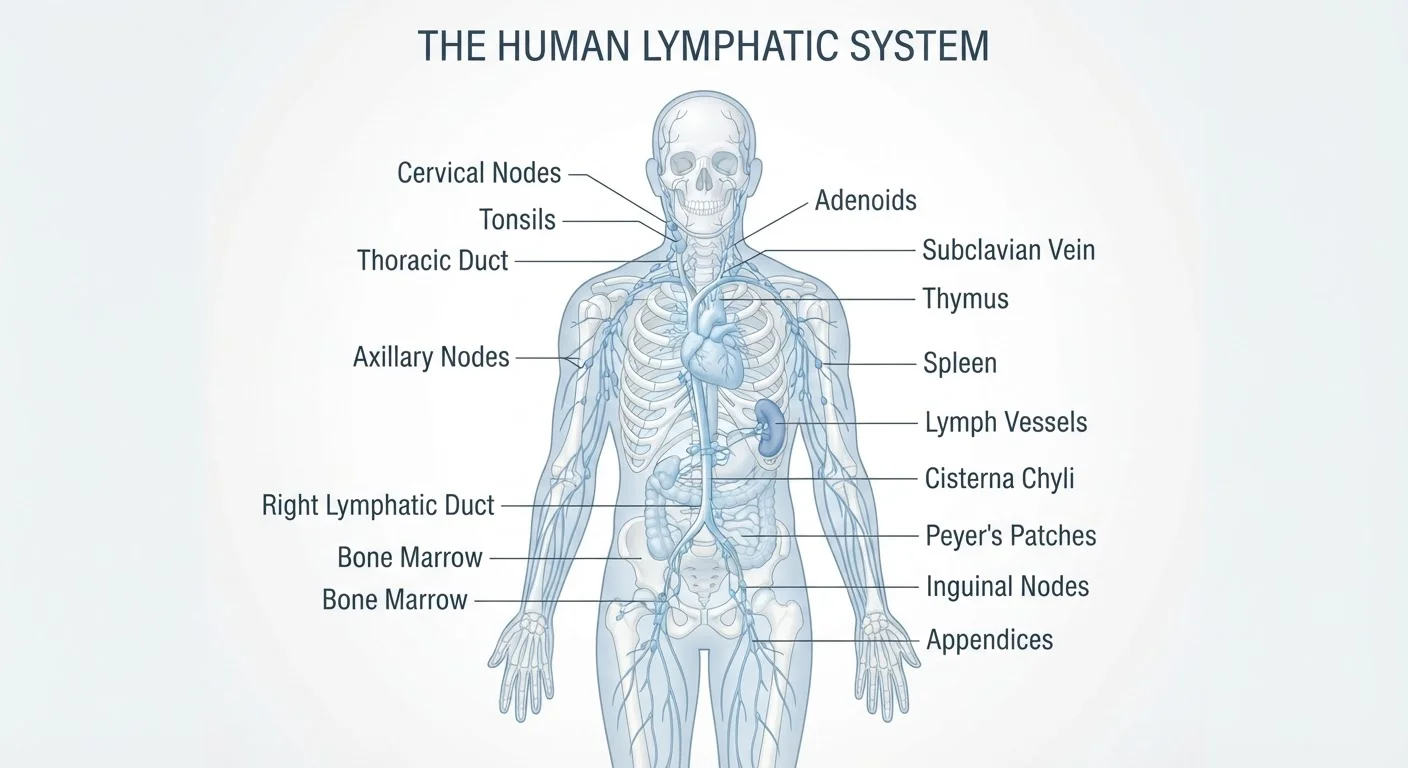
The lymphatic system is a network of vessels, nodes, and organs that collects excess fluid from tissues and returns it to the bloodstream. It filters out cellular waste, pathogens, and debris while transporting immune cells to sites of infection. Unlike the cardiovascular system, it has no dedicated pump and relies on muscle movement, breathing, and other physical activity to keep fluid moving.
Lymph fluid originates as interstitial fluid, the liquid that surrounds cells. Once it enters lymphatic capillaries, it becomes lymph and passes through a series of lymph nodes before draining into the subclavian veins near the collarbone.
What the lymphatic system does
Blood capillaries constantly leak small amounts of fluid into surrounding tissues. Without a system to recover that fluid, tissues would swell and cellular waste would accumulate. The lymphatic system collects this excess fluid through a fine mesh of capillaries and carries it as lymph through progressively larger vessels toward the heart.
Along the way, the fluid passes through lymph nodes, small bean-shaped structures concentrated in the neck, armpits, and groin. Nodes filter out bacteria, viruses, and cellular debris, and they release white blood cells when a threat is detected. The connection between lymph nodes and immune defense is direct: without this filtration step, pathogens would pass freely into circulation.
The system also absorbs dietary fats from the small intestine through specialized vessels called lacteals, transporting them into the bloodstream as a milky fluid called chyle. This makes the lymphatic system a participant in digestion, not only in waste removal.
For a detailed map of where vessels and nodes sit, see Lymph Flow From Head to Toe.
Why lymph flow needs your help
The cardiovascular system has the heart to propel blood. The lymphatic system has no equivalent organ. Fluid moves through it only when external forces compress the vessels, primarily skeletal muscle contractions during physical activity, the rhythmic pressure changes caused by breathing, and the pulsing of nearby arteries.
Sedentary habits reduce all of these drivers. Sitting for long periods lets fluid pool in the lower extremities, which is why ankles and feet tend to swell after extended flights or desk-bound workdays. Chronic stillness can make lymph thick and slow, reducing the system's capacity to clear waste efficiently.
2-4 L
Lymph fluid returned to bloodstream daily
Physiological estimates indicate the lymphatic system recirculates roughly 2 to 4 liters of interstitial fluid back into the cardiovascular system every day.
500-700
Lymph nodes in the human body
Anatomical references place the total number of lymph nodes in a healthy adult between approximately 500 and 700, distributed throughout the body with concentrations in the neck, abdomen, and groin.
~70%
Of immune cells associated with gut lymphatic tissue
A substantial portion of the body's immune activity is associated with gut-associated lymphoid tissue (GALT), reflecting the lymphatic system's role in intestinal defense.
Poor hydration compounds the problem. Lymph is mostly water, and when the body is dehydrated the fluid becomes more viscous and harder to move. Tight, restrictive clothing around the groin, armpits, or neck can also compress lymphatic vessels and impede drainage in localized areas.
Lifestyle habits that support lymphatic function
Regular movement is the most direct way to drive lymph flow. Walking, cycling, swimming, and yoga all produce the muscle contractions that propel fluid through lymphatic vessels. Rebounding on a small trampoline has been discussed in wellness circles as a method for stimulating lymph movement, though formal clinical evidence for it as a specific lymphatic therapy remains limited. Any consistent aerobic or resistance activity is well-supported by physiology.
Breathing intentionally through the diaphragm, rather than shallow chest breathing, creates larger pressure swings in the thoracic cavity. These swings act as a bellows that draws lymph upward toward the subclavian veins where it re-enters the bloodstream. Diaphragmatic breathing is also associated with reduced stress hormones, which have downstream effects on immune function.
Support drainage with simple daily movement
Even short movement breaks every hour can make a meaningful difference in lymph flow for people who sit most of the day. A five-minute walk, ankle circles, or a few minutes of deep diaphragmatic breathing are low-effort ways to activate the mechanical forces that move lymph. These habits are particularly useful for people in desk-based jobs or those with limited mobility.
Dry brushing, where a firm-bristled brush is moved in strokes toward the heart over dry skin, is a practice some people use to stimulate superficial lymphatic vessels. Research specifically on dry brushing is sparse, but the technique causes no harm in healthy individuals and may improve awareness of how the body feels during movement-based recovery routines. See the Mobility and Recovery hub for related movement strategies.
Nutrition influences lymphatic health indirectly. Diets high in refined sugars and processed fats can promote chronic low-grade inflammation, which burdens lymph nodes over time. A diet with ample vegetables, whole grains, and adequate protein gives the immune cells housed in lymph nodes the building blocks they need.
For a broader introduction to caring for this system, Starting Out With Lymphatic Health covers foundational habits in detail. The complete reference guide addresses anatomy, common dysfunctions, and when to see a clinician.
This article is for informational purposes only and is not medical advice. Consult a qualified healthcare professional for personal health concerns, symptoms, or before making changes to your health routine.