

Key Takeaways
Lymphatic recovery
Lymphatic recovery refers to the process by which the lymphatic system clears metabolic byproducts, excess fluid, and cellular debris from tissues after physical exertion. Unlike the circulatory system, the lymphatic network has no pump: it depends on muscle contractions, breathing, and movement to propel fluid through its vessels. When this clearance works well, tissue swelling resolves faster and inflammatory signals are controlled more efficiently.
Lymph flow rate can increase several-fold during sustained aerobic exercise, driven largely by skeletal muscle compression of lymphatic capillaries and changes in interstitial fluid pressure.
What the lymphatic system does after exercise
During physical exertion, blood flow to active muscles rises sharply. Capillaries become more permeable, allowing plasma, oxygen, and nutrients to flood into surrounding tissue. This is useful during the effort itself, but it leaves a backlog: more fluid enters the interstitial space than veins can reabsorb. The lymphatic system handles the remainder, collecting that excess fluid along with metabolic waste products, proteins too large for venous capillaries, and cellular debris from muscle micro-damage.
The lymphatic system's basic anatomy consists of a branching network of capillaries that converge into larger vessels and ultimately drain into the bloodstream at the subclavian veins near the collarbone. Lymph nodes along this path filter the fluid, capturing pathogens and debris before the cleaned fluid re-enters circulation. After hard exercise, this filtration load increases substantially.
The temporary swelling many people notice in exercised limbs reflects this lag between fluid accumulation and clearance. It is not purely a sign of damage. It is a normal, if uncomfortable, consequence of the cardiovascular response to exertion that resolves as lymph flow catches up.
Why lymph flow depends on movement
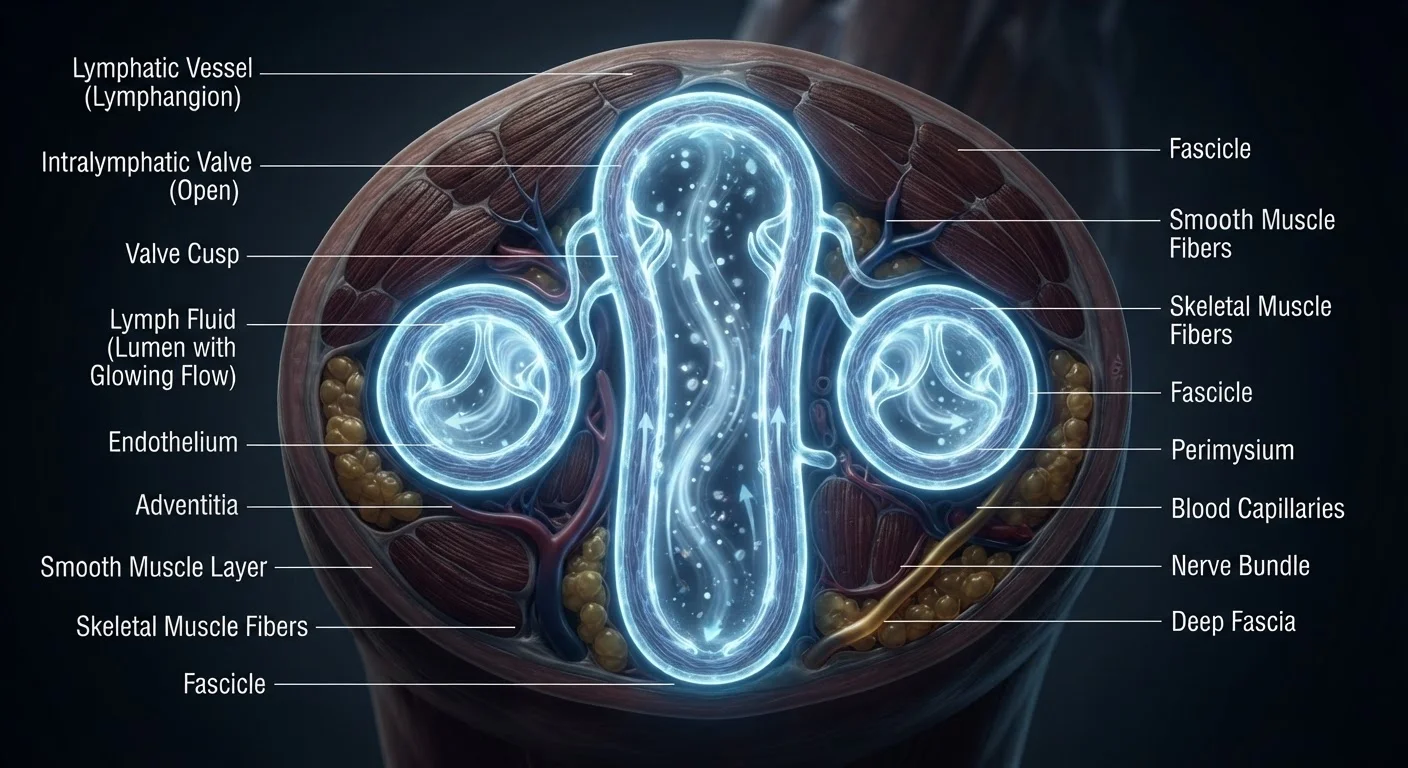
The heart pumps blood. Nothing pumps lymph. Lymphatic vessels contain one-way valves that prevent backflow, but the fluid moves forward only when external forces compress the vessels. Three mechanisms matter most during recovery: skeletal muscle contractions, respiratory pressure changes, and smooth muscle contractions in larger lymphatic vessel walls.
This dependence on movement explains why complete rest after intense exercise can prolong the clearance process. Gentle walking, for example, rhythmically compresses lymphatic capillaries in the legs, propelling fluid toward the thoracic duct. Diaphragmatic breathing creates negative pressure in the chest cavity that draws lymph upward. Physical activity drives lymph flow more than any passive intervention, which is part of the physiological rationale for active recovery protocols after intense training.
Prolonged immobility, by contrast, allows fluid to pool. This is why athletes who rest an injured limb often develop localized swelling that persists until movement is reintroduced. Controlled, low-load movement is generally preferable to full rest when the goal is managing post-exertion inflammation.
After intense training, keep moving gently
A short walk or gentle stretching session within a few hours of hard exercise can help sustain lymph flow and reduce the duration of post-exertion swelling. This does not require additional cardiovascular effort: the goal is rhythmic, low-load muscle contraction. Treat it as an extension of your cool-down rather than a separate workout.
Sleep, the glymphatic system, and recovery
Sleep does more for recovery than muscle repair alone. The brain contains its own lymph-like clearance network called the glymphatic system, a term derived from glial cells and the lymphatic system it resembles functionally. During deep non-REM sleep, cerebrospinal fluid moves through channels surrounding blood vessels, washing out metabolic byproducts including proteins associated with neurological dysfunction. This process is largely suppressed during waking hours.
For people who train hard, the glymphatic system becomes relevant because sustained physical effort generates metabolic stress in the nervous system as well as in muscle tissue. Inadequate sleep impairs this central clearance, and there is evidence that sleep deprivation is associated with elevated systemic inflammation markers. This creates a feedback loop: poor sleep slows recovery, and the soreness or fatigue from incomplete recovery can itself disrupt sleep quality.
Beyond the brain, peripheral lymphatic function also appears to stabilize during sleep, when vascular permeability decreases and the body is largely at rest. See what happens inside your body during recovery for a broader look at the biological processes active during sleep and rest.
Practical approaches to supporting lymphatic recovery
No single intervention dramatically accelerates lymph clearance in healthy people, but several evidence-informed habits appear to support it consistently.
- Low-intensity movement after training, such as a 10-to-20 minute walk, sustains skeletal muscle compression of lymphatic vessels without adding cardiovascular stress.
- Diaphragmatic breathing exercises create thoracic pressure gradients that assist lymph transport. Controlled breathing patterns also shift autonomic tone toward parasympathetic dominance, which may reduce the duration of the inflammatory response.
- Adequate hydration supports lymph fluid volume. Lymph is approximately 96 percent water, and dehydration can make the fluid more viscous and harder to move. Hydration patterns that influence lymph health covers this in detail.
- Manual lymphatic drainage, a specific massage technique used clinically for conditions such as lymphedema, has a more limited but plausible role in post-exercise recovery. Research on lymphatic massage clarifies what is and is not supported by current evidence.
Popular practices like dry brushing and rebounding are frequently promoted as lymph boosters. The evidence on these techniques is more mixed than wellness marketing suggests, and they are best viewed as supplements to movement and sleep rather than replacements.
This article is for informational purposes only and is not medical advice. Consult a qualified healthcare professional for guidance specific to your health situation, especially if you experience persistent or unusual swelling after exercise.