

Key Takeaways
Strong evidence for lymphedema management after cancer treatment
MLD is a core component of Complete Decongestive Therapy, the standard rehabilitation approach for secondary lymphedema, with Cochrane-level evidence supporting its use alongside compression bandaging.
May reduce post-surgical swelling and bruising
Several small trials report that MLD accelerates fluid reabsorption after certain surgical procedures, including orthognathic surgery, though larger confirmatory studies are still needed.
Low risk of adverse effects when properly performed
Because MLD uses very light pressure, it is generally well tolerated and carries minimal physical risk in healthy adults when administered by a trained practitioner.
May offer short-term symptom relief in fibromyalgia
Some randomized trials have reported modest reductions in pain and fatigue scores among fibromyalgia patients following MLD sessions, though results are not consistent across studies.
Weak evidence for general wellness and detox claims
Claims that MLD removes toxins or meaningfully boosts immunity in healthy people are not supported by current controlled research, and should not drive treatment decisions.
Requires a specifically trained practitioner
Effective MLD depends on precise anatomical knowledge of lymphatic pathways; a practitioner without proper certification may apply the technique incorrectly, limiting benefit or redirecting fluid inappropriately.
Contraindicated for several common conditions
People with active infections, congestive heart failure, deep vein thrombosis, or certain cancers must get medical clearance before pursuing MLD, making it unsuitable for some who seek it for wellness purposes.
Research base remains limited outside lymphedema
Most MLD trials have small sample sizes, variable methodologies, and short follow-up periods, making it difficult to draw conclusions about long-term benefits for conditions beyond lymphedema.
Our Verdict
Manual lymphatic drainage is a well-supported therapy for people managing lymphedema, particularly following cancer surgery or radiation. Outside that clinical context, the evidence for broader wellness claims is thin, though the practice carries low risk for most healthy adults when performed by a trained practitioner. Anyone with a chronic condition, active infection, or cardiovascular issue should speak with a physician before starting.
People managing secondary lymphedema after cancer treatment, or those seeking gentle supportive care under the guidance of a healthcare provider.
What manual lymphatic drainage actually involves
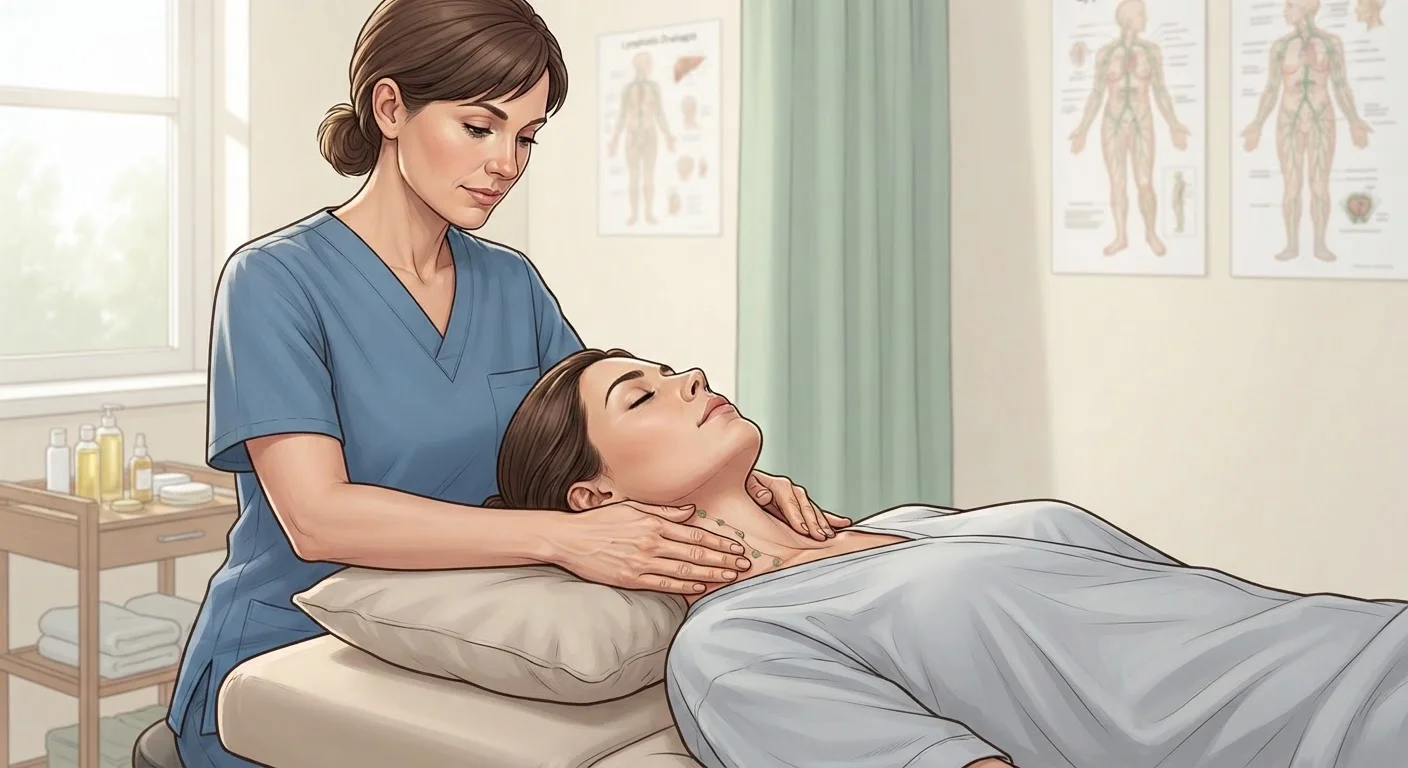
Manual lymphatic drainage (MLD) is a specialized massage technique developed in the 1930s by Danish therapists Emil and Estrid Vodder. Unlike conventional deep-tissue massage, MLD uses very light, rhythmic strokes applied to the skin's surface to stimulate movement of lymph fluid through the lymphatic vessels and toward the lymph nodes.
The lymphatic system has no central pump. It relies on muscle contractions, breathing, and tissue pressure to move fluid. MLD mimics those mechanisms with a precise sequence of hand movements, typically starting at the neck and working outward along lymphatic pathways. Sessions generally last 45 to 90 minutes and are performed by therapists with specific post-graduate training in lymphatic techniques.
For a broader overview of how this system functions day to day, see the complete lymphatic system reference guide.
Where the clinical evidence is strongest
The most robust body of research on MLD concerns secondary lymphedema, a condition in which lymph fluid accumulates in the limbs after lymph nodes are removed or damaged during cancer treatment. A 2015 Cochrane review examined MLD for breast cancer-related lymphedema and found that, when added to compression bandaging, MLD produced modest additional reductions in limb volume compared to compression alone. The effect size was small but statistically meaningful for a condition with few effective options.
MLD is now a standard component of Complete Decongestive Therapy (CDT), the multi-part rehabilitation protocol recommended by most lymphology societies in the United States. CDT combines MLD with compression garments, skin care, and exercise. This is the context in which MLD has the clearest, most replicable evidence behind it.
~20%
Breast cancer patients developing lymphedema
Estimates from lymphology literature suggest roughly 1 in 5 breast cancer survivors develop some degree of arm lymphedema following axillary lymph node dissection.
CDT
Standard therapy combining MLD with compression
Complete Decongestive Therapy, which incorporates MLD as a primary component, is recognized by major lymphology societies as the leading treatment approach for secondary lymphedema.
There is also reasonable evidence that MLD reduces postoperative swelling and bruising after procedures such as orthognathic surgery and liposuction, though the studies tend to be small. Research on MLD for fibromyalgia symptoms, including pain and fatigue, has shown mixed results, with some trials reporting modest short-term improvements but no consistent long-term benefit.
Recovery from physical exertion is another area where lymphatic function matters. The lymphatic system's role in physical recovery article covers how the system clears metabolic waste after exercise.
Claims that outpace the evidence
Wellness marketing often frames MLD as a detoxification tool that removes toxins, boosts immunity, or accelerates weight loss. These claims are not supported by current clinical research. The lymphatic system does filter pathogens and cellular waste, but there is no published evidence that MLD meaningfully speeds systemic detoxification in people with healthy lymphatic function.
Similarly, claims that MLD dramatically improves immune response in healthy adults rely on mechanistic reasoning, not controlled human trials. A few small studies have measured changes in lymphocyte counts after MLD, but sample sizes are too small and methodologies too varied to draw firm conclusions.
Strong evidence for lymphedema management after cancer treatment
MLD is a core component of Complete Decongestive Therapy, the standard rehabilitation approach for secondary lymphedema, with Cochrane-level evidence supporting its use alongside compression bandaging.
May reduce post-surgical swelling and bruising
Several small trials report that MLD accelerates fluid reabsorption after certain surgical procedures, including orthognathic surgery, though larger confirmatory studies are still needed.
Low risk of adverse effects when properly performed
Because MLD uses very light pressure, it is generally well tolerated and carries minimal physical risk in healthy adults when administered by a trained practitioner.
May offer short-term symptom relief in fibromyalgia
Some randomized trials have reported modest reductions in pain and fatigue scores among fibromyalgia patients following MLD sessions, though results are not consistent across studies.
The contrast with other popular lymph-focused practices is worth noting. Techniques such as dry brushing, rebounding, and cold showers are often grouped with MLD in wellness content. For a closer look at the evidence behind those approaches, see dry brushing, rebounding, and cold showers examined.
Weak evidence for general wellness and detox claims
Claims that MLD removes toxins or meaningfully boosts immunity in healthy people are not supported by current controlled research, and should not drive treatment decisions.
Requires a specifically trained practitioner
Effective MLD depends on precise anatomical knowledge of lymphatic pathways; a practitioner without proper certification may apply the technique incorrectly, limiting benefit or redirecting fluid inappropriately.
Contraindicated for several common conditions
People with active infections, congestive heart failure, deep vein thrombosis, or certain cancers must get medical clearance before pursuing MLD, making it unsuitable for some who seek it for wellness purposes.
Research base remains limited outside lymphedema
Most MLD trials have small sample sizes, variable methodologies, and short follow-up periods, making it difficult to draw conclusions about long-term benefits for conditions beyond lymphedema.
When MLD is not appropriate
MLD is contraindicated in several situations. Active infection, particularly cellulitis or acute inflammation, can worsen with manual stimulation of lymphatic tissue. People with congestive heart failure, active deep vein thrombosis, or certain cancers that have not been assessed by an oncologist should not receive MLD without explicit medical clearance.
For people with chronic conditions, the decision to try MLD should involve a physician or licensed lymphedema therapist, not a general wellness spa. The technique looks deceptively simple but requires anatomical knowledge of lymphatic pathways to avoid redirecting fluid incorrectly.
Finding a qualified practitioner
In the United States, certified lymphedema therapists (CLTs) complete post-graduate training programs that meet standards set by organizations such as the Lymphology Association of North America (LANA). When seeking MLD for a medical condition, look for a CLT credential rather than a general massage certification. For wellness purposes, confirm that any practitioner has completed a recognized MLD-specific training program, as the techniques differ substantially from standard Swedish or deep-tissue massage.
For those who want to support lymphatic function through daily habits rather than formal therapy, daily habits that support healthy lymph drainage and the self-care checklist for lymphatic wellness offer practical, low-risk starting points.
This article is for informational purposes only and is not medical advice. Consult a qualified healthcare professional before beginning any new therapy, particularly if you have a pre-existing health condition.