

Key Takeaways
Physical recovery
Physical recovery is the coordinated set of biological processes your body uses to repair damaged tissue, restore energy stores, and reduce inflammation after physical stress. It involves hormonal signals, immune responses, and cellular rebuilding that happen primarily during rest and sleep. Recovery is not simply the absence of activity; it is an active physiological state.
At the cellular level, recovery depends on protein synthesis, mitochondrial biogenesis, and the regulated clearance of metabolic byproducts such as lactate and reactive oxygen species.
The first hours: inflammation and immune signaling
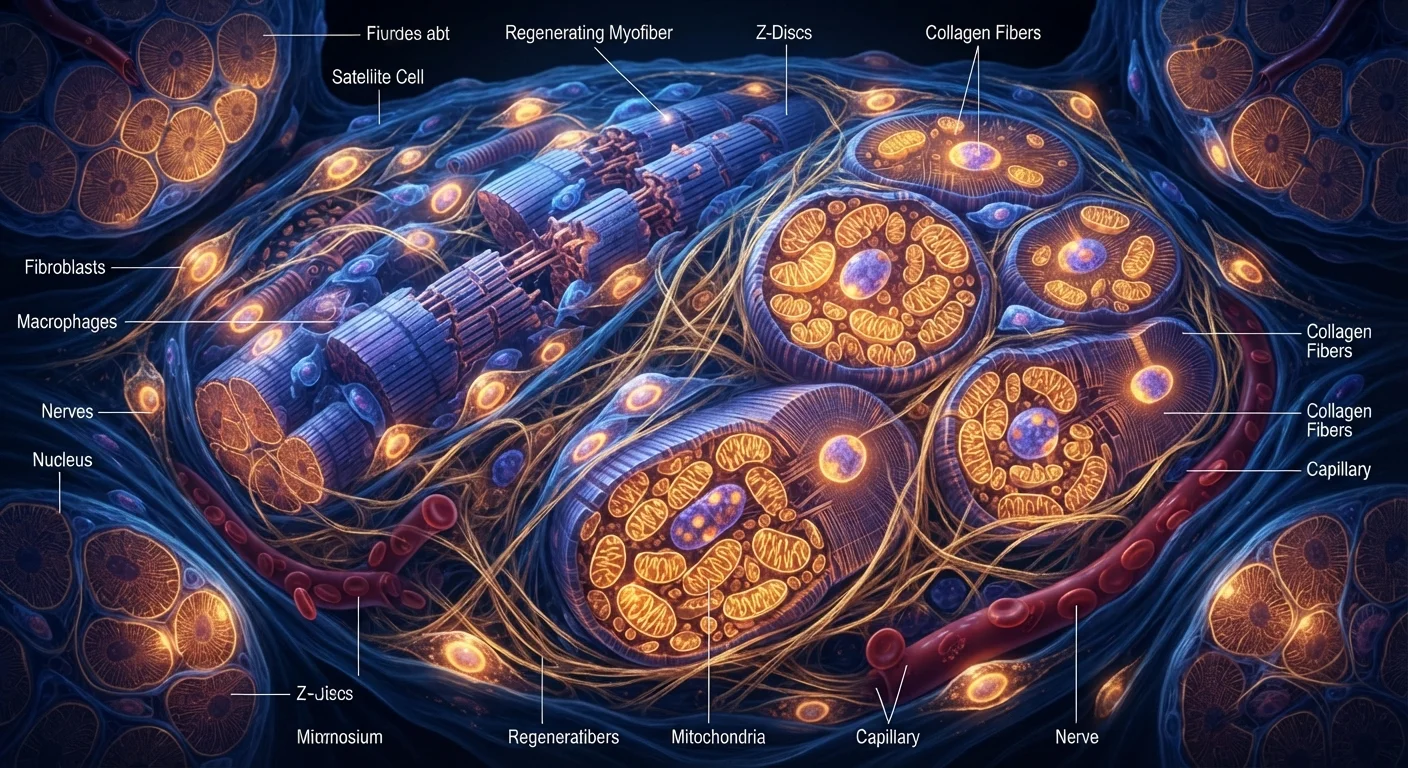
The moment physical stress ends, repair begins. Micro-tears in muscle fibers and connective tissue trigger an immediate inflammatory response. Specialized immune cells called neutrophils arrive first, clearing debris and releasing chemical signals (cytokines) that recruit the next wave of repair cells, macrophages.
Macrophages shift the repair environment from breakdown to rebuilding. They phagocytose (engulf and destroy) damaged cellular material and release growth factors that stimulate satellite cells, the muscle stem cells responsible for regenerating fiber structure. This inflammatory phase is not a problem to suppress; it is the body's opening step in reconstruction.
Pain, swelling, and localized heat during this window are signs the process is working. The inflammatory phase typically resolves within 24 to 48 hours in healthy adults following moderate exercise, though intensity and training history affect that timeline considerably.
Inflammation is not always the enemy
Popular wellness advice often frames inflammation as something to eliminate aggressively. In the context of physical recovery, acute inflammation is a controlled signal that initiates repair. Aggressive use of high-dose anti-inflammatory medications immediately after exercise may blunt the very cellular signals that drive adaptation. If you use anti-inflammatory medications regularly, discuss the implications with a healthcare provider.
Hormonal signals that drive rebuilding
Recovery depends on a precise hormonal sequence. Human growth hormone (HGH) is the primary driver of tissue repair. The pituitary gland releases the majority of its daily HGH during slow-wave (deep) sleep, which is why sleep quality directly shapes how well the body rebuilds after physical stress.
Insulin-like growth factor 1 (IGF-1), produced largely by the liver in response to HGH, stimulates satellite cell proliferation and protein synthesis directly in muscle tissue. Testosterone, in both males and females (at different concentrations), also supports protein synthesis and muscle fiber repair.
Cortisol, the body's primary stress hormone, works in the opposite direction. Elevated cortisol over time breaks down muscle protein and impairs immune resolution. Chronic sleep deprivation keeps cortisol elevated, which is one mechanism through which poor rest undermines physical recovery.
The liver's metabolic role in producing IGF-1 and processing recovery-related substrates means liver health has a real bearing on how efficiently these hormonal signals translate into tissue repair.
Cellular renewal and protein synthesis
Muscle protein synthesis (MPS) is the process by which cells build new contractile proteins, primarily actin and myosin, to replace damaged ones and add structural capacity. MPS is stimulated by both mechanical loading (exercise) and amino acid availability (dietary protein).
Ribosomes within muscle cells translate messenger RNA into new protein chains. This process requires a continuous supply of essential amino acids, particularly leucine, which acts as a molecular trigger for MPS initiation. Without adequate protein intake, the signaling for synthesis can be present but the raw materials absent.
Mitochondria, the organelles responsible for aerobic energy production, also undergo repair and replication during recovery. This process, called mitochondrial biogenesis, improves cellular energy efficiency over time and is one mechanism behind the long-term adaptations that follow consistent training and recovery cycles.
For practical guidance on supporting these processes through food, see recovery nutrition strategies that align timing and macronutrient choices with the body's repair window.
Waste clearance and the lymphatic system
Cellular metabolism during exercise generates byproducts including lactate, ammonia, and reactive oxygen species. The lymphatic system, a network of vessels and nodes running alongside the circulatory system, collects interstitial fluid (lymph) containing these metabolic byproducts and returns it to the bloodstream for filtration and excretion.
Unlike the cardiovascular system, the lymphatic system has no dedicated pump. Lymph flow depends on muscle contractions, breathing movement, and body position. This is one reason low-intensity movement after hard training can accelerate waste clearance without placing additional stress on damaged tissue.
The lymphatic system's contribution to recovery extends beyond simple waste removal. Lymph nodes filter pathogens and cellular debris, and lymphatic vessels transport immune cells to sites of tissue damage, directly supporting the repair sequence described above.
70%
Of daily growth hormone released during sleep
Research in endocrinology literature consistently identifies slow-wave sleep as the primary window for pituitary HGH secretion in adults.
48-72 hrs
Duration of elevated muscle protein synthesis after hard training
Exercise physiology research shows MPS can remain above baseline for up to three days after high-intensity resistance exercise in trained individuals.
20-40%
Reduction in MPS with chronic sleep restriction
A study published in the Journal of the American Medical Association found that sleep restriction significantly reduced lean muscle retention during caloric restriction.
Choosing how to support recovery
Understanding the biology of recovery changes how rest decisions look in practice. Complete rest reduces mechanical load on damaged tissue but can slow lymphatic clearance and modestly reduce blood flow to repair sites. Low-intensity active recovery, such as walking or gentle cycling, sustains circulation without adding new damage.
Sleep remains the most powerful single intervention. HGH release, immune cell activity, protein synthesis rates, and glycogen restoration all accelerate during adequate, quality sleep. Seven to nine hours is the range most adults require, though individual variation exists.
Hydration, protein timing, and breathwork also affect how efficiently the body moves through each repair phase. The choice between active recovery and full rest depends on workout intensity, cumulative fatigue, and individual recovery capacity, and there is no universal answer.
To assess whether current habits are actually supporting repair, a structured self-check audit can surface gaps in sleep, nutrition, and movement that undermine the biological processes described here.
This article is for informational purposes only and is not medical advice. Consult a qualified healthcare professional before making changes to your training, nutrition, or recovery practices, especially if you have an existing health condition.