
Stress and Digestion: What Happens in Your Gut When You Are Under Pressure

Key Takeaways
Stress-induced gut disruption
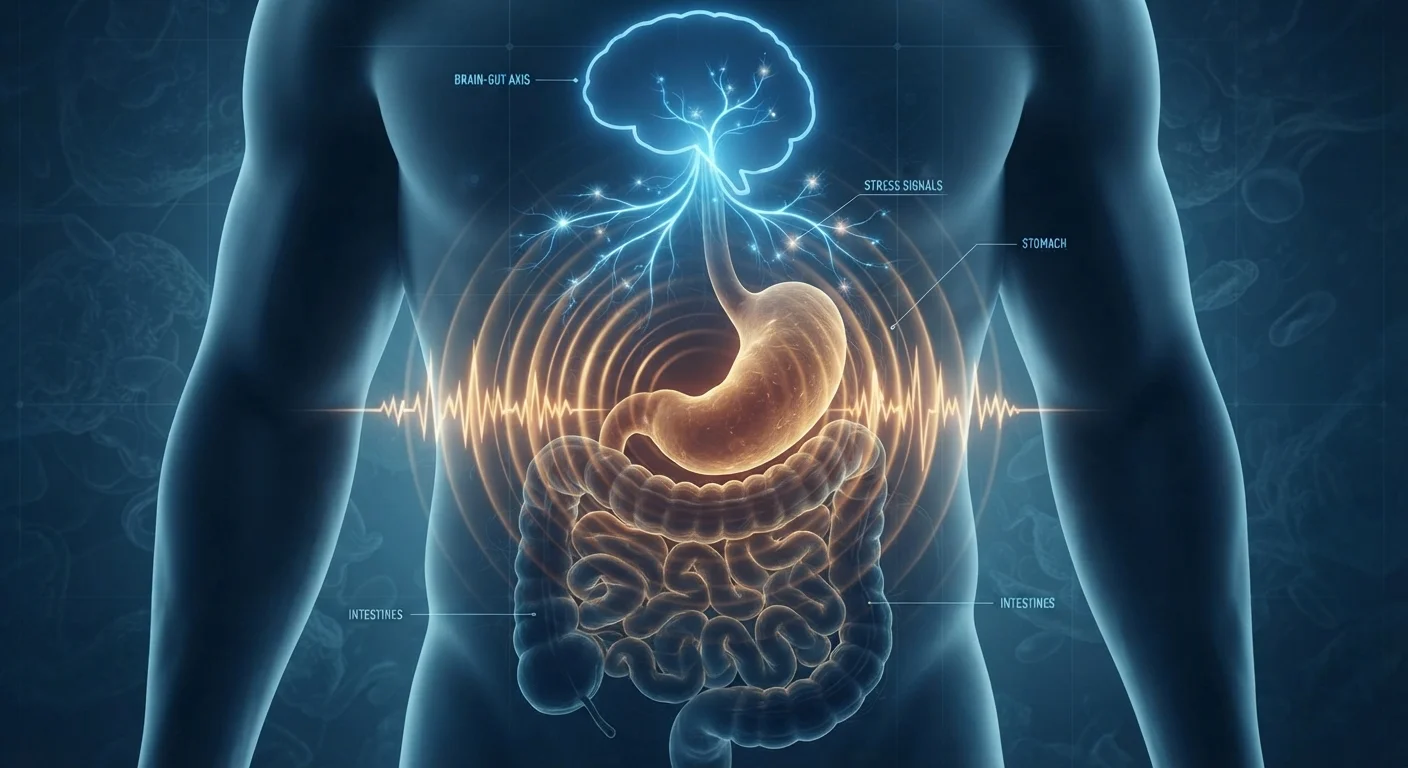
Stress-induced gut disruption describes the measurable changes that occur in the digestive system when the body activates its stress response. These changes include altered intestinal movement, changes to the gut lining's protective barrier, and shifts in the microbial community living in the colon. The gut and brain communicate through a shared signaling network, so psychological pressure has direct physiological consequences for digestion.
The enteric nervous system (ENS), sometimes called the 'second brain,' contains roughly 500 million neurons lining the gastrointestinal tract. Stress hormones such as cortisol and corticotropin-releasing factor (CRF) bind to receptors in this network, altering motility, secretion, and barrier function.
How the stress response reaches the gut
When the brain perceives a threat, real or anticipated, it activates the hypothalamic-pituitary-adrenal (HPA) axis and the sympathetic nervous system. The result is a cascade of hormones, most notably cortisol and adrenaline, designed to prepare the body for immediate action. Digestion is not a priority during that state.
The sympathetic nervous system suppresses gut motility, reduces digestive enzyme secretion, and redirects blood flow away from the intestines toward the muscles and heart. In the short term, this is a functional response. The problem is that many people today experience this activation not in brief bursts but as a sustained, low-grade state. Chronic activation of the HPA axis means the gut operates in a suppressed mode for hours or days at a time.
The enteric nervous system, which governs gut function independently of the brain, is densely connected to the central nervous system through the vagus nerve. Stress hormones traveling through the bloodstream, and signals traveling along that nerve, alter how the gut wall contracts, how fast contents move, and how much mucus the lining produces. For a deeper look at how these two systems communicate, see the gut-brain connection explained.
The bidirectional nature of gut-brain signaling
The gut does not simply receive stress signals from the brain. It sends signals back through the vagus nerve, immune molecules, and gut-derived neurotransmitters. This means a disrupted gut can amplify the perception of stress and anxiety, creating a self-reinforcing cycle. Intervening at either end of this loop, whether through stress reduction or gut-supportive dietary habits, can influence the other.
What chronic stress does to gut motility and permeability
Gut motility, the rhythmic contractions that move food through the digestive tract, is sensitive to both the speed and duration of stress signals. Acute stress often accelerates transit, which is why anxiety before a presentation can produce urgent bowel symptoms. Chronic stress tends to slow motility, contributing to bloating, constipation, and a feeling of fullness that lingers long after eating.
Intestinal permeability is a separate concern. The inner lining of the intestine is one cell layer thick, held together by protein complexes called tight junctions. Corticotropin-releasing factor (CRF), a hormone produced early in the stress response, binds to receptors on these cells and signals the tight junctions to loosen. When that happens, bacterial fragments and partially digested food particles can move into the surrounding tissue and bloodstream, triggering immune activity and low-grade inflammation.
That inflammatory response has consequences beyond the gut. Research has linked increased intestinal permeability to changes in mood, fatigue, and immune reactivity, though the precise causal relationships are still being worked out by researchers in gastroenterology and immunology.
The microbiome under pressure
The gut microbiome, the community of trillions of bacteria, fungi, and other microorganisms in the colon, is not static. Its composition shifts with diet, sleep, illness, and stress. Animal studies have consistently shown that chronic psychological stress reduces microbial diversity and alters the balance between bacterial populations that produce anti-inflammatory compounds and those that do not.
Human studies are more complicated to design, but several have found associations between self-reported chronic stress and lower relative abundance of bacteria such as Lactobacillus and Bifidobacterium, genera linked to gut barrier integrity and immune modulation. The mechanisms likely involve cortisol's direct effect on the gut environment, changes in gut motility that alter the transit time microbes depend on, and reductions in mucus production that normally support microbial communities.
This matters because the microbiome contributes to serotonin production, vitamin synthesis, and immune signaling. A less diverse microbiome produces a less stable gut environment, which in turn sends altered signals back to the brain through the vagus nerve and circulating metabolites. See signs your gut health may be affecting your mood for more on how these signals manifest.
Practical approaches to protecting gut function during stress
Managing the source of stress is the most direct intervention, but it is rarely the only lever available. Several behavioral changes are supported by research as beneficial for digestive function during periods of psychological pressure.
Regular meal timing stabilizes the gut's circadian rhythm. The digestive system has its own clock, and irregular eating disrupts it in ways that worsen motility and microbial balance. Eating at consistent times, even during stressful periods, helps maintain that rhythm.
Diaphragmatic breathing activates the parasympathetic nervous system, the rest-and-digest state that counteracts the stress response. Practicing several slow, deep breaths before meals has been shown in controlled studies to improve both digestive comfort and gastric motility. It is not a cure for chronic stress, but it is a repeatable, zero-cost tool.
Fiber from whole plant foods feeds microbial populations that produce short-chain fatty acids, which support gut barrier integrity. Reducing ultra-processed foods reduces the burden on both the gut lining and the immune system. Sleep is relevant here too: poor sleep and stress interact in ways that compound gut disruption, as covered in detail in sleep, stress, and their physiological links.
Anyone experiencing persistent digestive symptoms, whether during a stressful period or not, should consult a qualified healthcare provider. Stress-related gut changes can overlap with or worsen underlying conditions such as irritable bowel syndrome (IBS) or inflammatory bowel disease (IBD), which require clinical evaluation and management.
This article is for informational purposes only and is not medical advice. Always consult a qualified healthcare professional regarding any digestive symptoms or health concerns.