

Key Takeaways
Why lifestyle leaves a mark on your microbiome
Your gut microbiome, the collective community of bacteria, archaea, fungi, and viruses living in your digestive tract, is not static. It shifts in response to what you eat, how you sleep, whether you exercise, and the stress load you carry. Some of these shifts are transient, resolving within days when a trigger is removed. Others compound over months and years, reshaping the microbial landscape in ways that affect digestion, immune function, and broader metabolic health.
The factors below have the strongest documented associations with gut microbial composition in human studies. This is general health information, not a substitute for medical advice. Anyone managing a digestive condition or considering changes to medications should consult a qualified healthcare provider before acting on any of it.
Dietary fiber variety
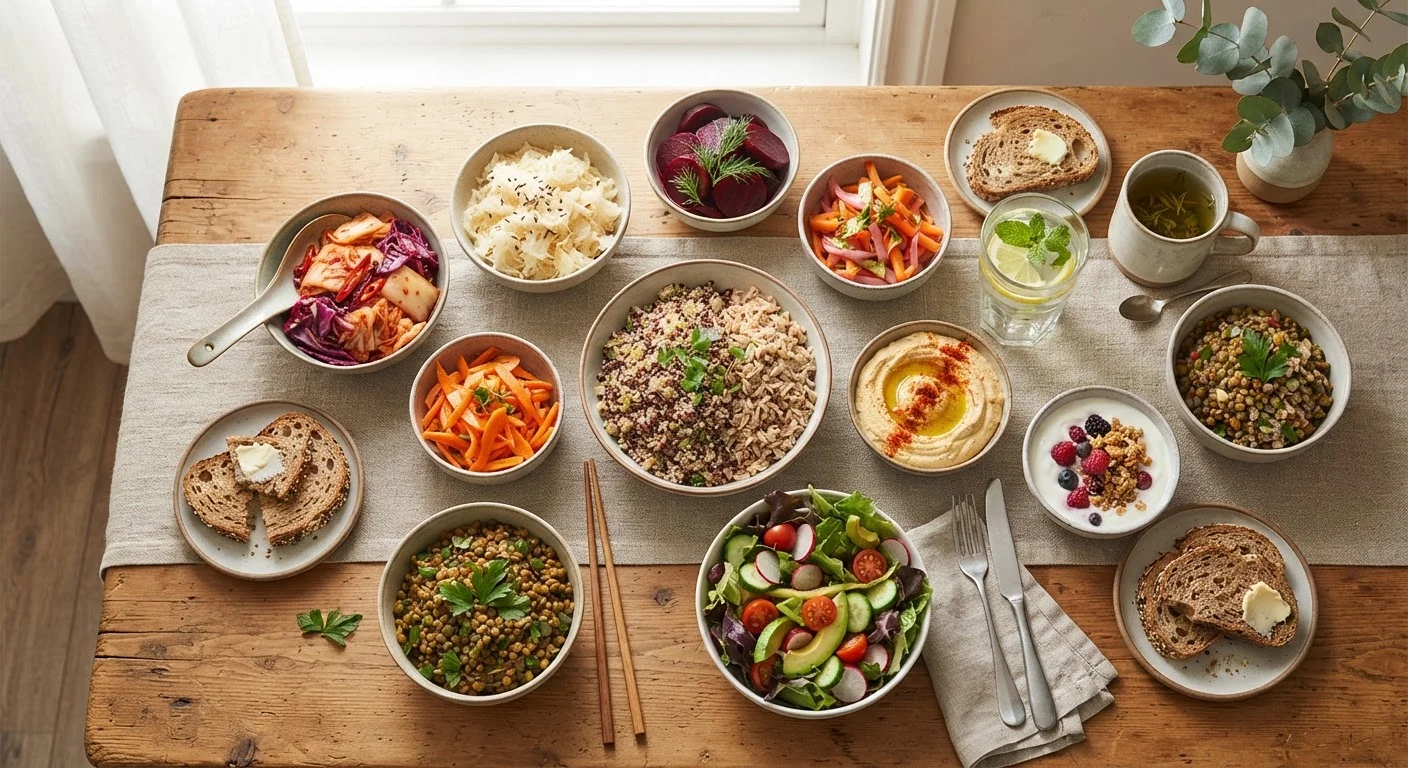
The bacteria in your colon ferment dietary fiber, producing short-chain fatty acids (SCFAs) such as butyrate, propionate, and acetate. These compounds feed the gut lining, regulate inflammation, and support mucosal immunity. Research published in Cell Host and Microbe found that people who ate a high-fiber, plant-diverse diet showed greater microbial richness than those on low-fiber diets, and the difference was detectable within weeks.
Variety matters as much as quantity. Different fiber types, such as inulin from chicory, resistant starch from cooked and cooled potatoes, and pectin from apples, feed distinct bacterial genera. Rotating fiber sources across the week gives a broader range of species a substrate to thrive on. This is directly relevant to the daily practices that support a healthy microbiome long-term.
Fiber variety, not just fiber quantity, drives measurable gains in microbial richness.
Sleep quality and duration
The gut microbiome follows circadian rhythms. Bacterial populations oscillate across a 24-hour cycle, and disrupting that cycle, through shift work, late-night eating, or consistently short sleep, alters the relative abundance of key genera. Research has linked poor sleep quality to reduced populations of Lactobacillus and Bifidobacterium, two genera associated with gut barrier integrity.
The relationship runs both directions. Microbial metabolites influence tryptophan availability, which affects serotonin and melatonin production. Protecting sleep duration and consistency is therefore relevant to microbial health in ways that go beyond general wellness advice. For a broader picture of how everyday habits quietly erode microbial balance, see the article on habits that undermine gut bacterial balance.
Gut bacteria follow circadian rhythms, and disrupting sleep shifts their populations within days.
Physical activity level
Multiple studies have compared the gut microbiomes of sedentary and physically active adults after controlling for diet, and found that exercise independently associates with higher microbial diversity and greater abundance of butyrate-producing bacteria. A study of professional rugby players found markedly higher diversity compared with matched sedentary controls, even after accounting for dietary protein intake.
The proposed mechanism involves increased intestinal transit time (reducing time for pathobionts to proliferate), changes in bile acid composition, and immune modulation triggered by exercise-induced cytokine activity. Moderate aerobic activity appears sufficient to produce these effects; intense overtraining without adequate recovery may have the opposite result.
Exercise associates with higher microbial diversity through mechanisms that operate independently of diet.
Psychological stress
The gut-brain axis is a bidirectional communication network linking the central nervous system to the enteric nervous system in the gut wall. Sustained psychological stress activates the hypothalamic-pituitary-adrenal (HPA) axis, raising cortisol. Elevated cortisol alters gut motility, increases intestinal permeability (sometimes called "leaky gut"), and changes the mucosal environment in ways that disadvantage commensal bacteria.
Animal models have demonstrated that social stress produces measurable microbial shifts within hours, and some human research supports the direction of that effect. The downstream consequence for immunity is documented in the related article on how gut bacteria influence your immune system.
Elevated cortisol from sustained stress increases gut permeability and disadvantages commensal bacteria.
Antibiotic and medication use
Broad-spectrum antibiotics are the most potent acute disruptor of gut microbial composition. A single course can reduce bacterial diversity by 25 to 50 percent within days, with some species taking six months or longer to recover, and some never fully recovering to baseline. The disruption is not uniform: resistance patterns and species-specific vulnerability determine which genera are hardest hit.
Other medications also affect microbial balance. Proton pump inhibitors (PPIs), used for acid reflux, alter the gastric pH environment and have been associated with shifts in bacterial community structure in the small intestine. Metformin, a common diabetes medication, has a documented effect on gut microbial composition, including changes in Akkermansia muciniphila abundance. These are established findings, not reasons to stop prescribed medications; any concerns about medication effects should be discussed with a prescribing clinician.
A single antibiotic course can reduce microbial diversity by up to 50 percent, with effects lasting months.
Fermented food consumption
Fermented foods such as yogurt, kefir, kimchi, sauerkraut, and miso contain live microorganisms that may transiently colonize or interact with the existing microbial community. A 2021 randomized controlled trial published in Cell found that a high-fermented-food diet increased microbial diversity and reduced markers of systemic inflammation over ten weeks, performing favorably compared with a high-fiber diet over the same period.
The effect is not simply about adding bacteria to the gut. Fermented foods also contain microbial metabolites produced during fermentation, including organic acids and bioactive peptides, that may independently influence the gut environment. Regularity appears to matter: consistent consumption produced stronger effects than sporadic intake in the available data. See the full picture of what disrupts and supports microbial recovery for context on how the microbiome responds to dietary changes.
Consistent fermented food intake increased microbial diversity and reduced inflammatory markers in controlled research.
What this means for long-term gut health
Individual variation is real
Two people following identical diets and sleep schedules can show substantially different microbial compositions. Genetics, birth mode, infant feeding history, and geographic origin all leave durable imprints on the gut community. The transitions in microbial communities across a lifetime help explain some of this variation. General lifestyle guidance applies at the population level; individual responses will differ, and a healthcare provider is best placed to interpret personal microbiome testing.
The cumulative picture from this research is that no single behavior overwhelms the others. Diet has the largest documented effect size, but sleep disruption can counteract dietary gains, and chronic stress can compromise a diet otherwise well-suited to microbial health. These factors interact rather than operate in isolation.
The gut microbiome also shifts across life for reasons unrelated to lifestyle choices. Microbial communities change considerably from infancy through older adulthood, which means age itself modifies how the lifestyle factors above play out. Understanding which habits quietly erode microbial balance is as useful as knowing which habits support it; that contrast is addressed in the article on gut health habits that are easy to undermine without realising it.
This article is for informational purposes only and is not medical advice. Consult a qualified healthcare professional for guidance specific to your health situation.