

How the gut microbiome begins
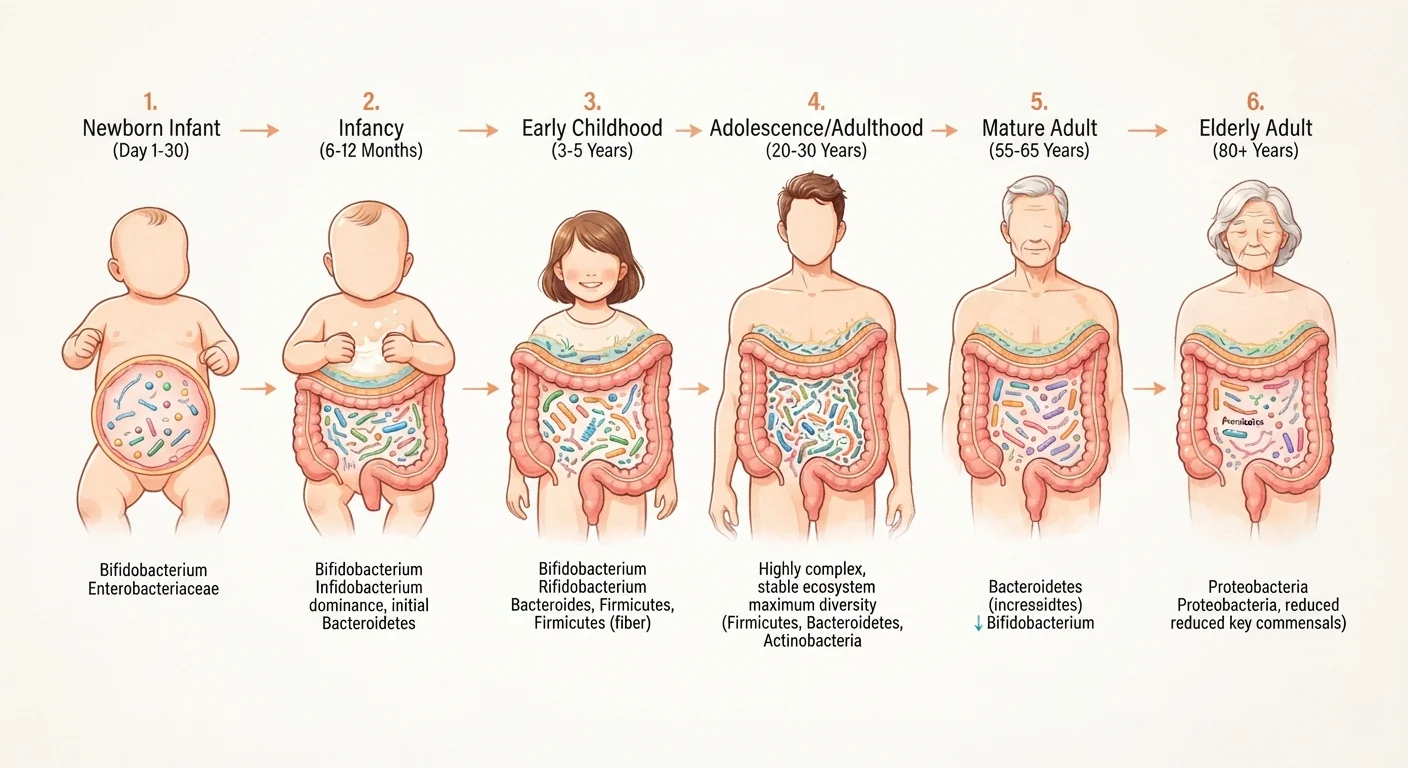
The human gut microbiome starts forming before birth and undergoes its most rapid changes in the first years of life. Research published in journals such as Cell Host and Microbe has documented that delivery mode shapes early microbial colonization: infants born vaginally acquire bacteria from the birth canal, while those born by cesarean section are colonized primarily by skin-associated and environmental microbes. This difference can persist for months.
Breast milk supplies not just nutrition but oligosaccharides that selectively feed beneficial bacteria, particularly species in the genus Bifidobacterium. Formula-fed infants generally show a different microbial profile, though the gap narrows once solid foods are introduced.
By around age three, most children have a gut microbiome that resembles an adult's in basic composition. The diversity and stability achieved in these early years appear to carry long-term significance for immune education, metabolic programming, and protection against certain chronic conditions, according to research in this area. Because these are still active areas of scientific investigation, absolute causal claims should be understood as emerging rather than settled.
Childhood through early adulthood: a period of relative stability
Once the microbiome matures around toddlerhood, it enters a phase of greater compositional stability that generally persists through childhood and into early adulthood. Diet is the single strongest documented driver of microbial composition during this window. Children and adolescents who consume more dietary fiber support greater populations of short-chain fatty acid (SCFA)-producing bacteria, including genera such as Faecalibacterium and Roseburia. SCFAs are metabolites that feed the gut lining and may support immune regulation.
Antibiotic use during childhood can disrupt this stability, sometimes reducing microbial diversity for weeks or months after a course ends. The long-term effects on microbial balance from repeated antibiotic exposure remain an active area of research.
Puberty and hormonal shifts in adolescence are also associated with measurable changes in microbial composition. Sex-based differences in the microbiome become more pronounced after puberty, possibly due to the influence of sex hormones on gut physiology. For context on how hormonal changes interact with body systems over time, see our companion article on hormonal fluctuations across a lifetime.
Middle adulthood: lifestyle as the main variable
In middle adulthood, the microbiome's composition is less determined by developmental biology and more by accumulated lifestyle choices. Diet, sleep quality, physical activity, alcohol use, and chronic stress all leave measurable imprints on gut bacteria at this stage. For a detailed breakdown of how these factors interact, our editorial team has covered lifestyle factors that shape your gut microbial community over time.
Geographic location and dietary patterns both produce distinct microbial signatures in midlife populations. People whose diets are high in plant-based fiber generally show greater microbial diversity, which researchers associate with more resilient gut ecosystems. Western dietary patterns, heavy in ultra-processed foods and low in fermentable fiber, tend to correlate with lower diversity and reduced SCFA production, though individual variation is substantial.
The liver also interacts with gut microbial metabolism through the gut-liver axis. Bacteria in the colon produce metabolites that travel to the liver via the portal vein. Conditions that alter microbial balance can affect this communication pathway, which is why liver health and gut health are often discussed together in gastroenterology research.
Short-chain fatty acids (SCFAs)
Metabolites produced when gut bacteria ferment dietary fiber. They help fuel the cells lining the colon and appear to support immune regulation.
Microbial diversity
The number and variety of different bacterial species in the gut. Greater diversity is generally associated with a more resilient microbial ecosystem, though this relationship is not fully linear.
Inflammaging
A term used in aging research to describe a chronic low-grade inflammatory state that appears to accompany biological aging. It is distinct from acute inflammation caused by infection or injury.
Gut-liver axis
The bidirectional communication pathway between the gut microbiome and the liver, primarily through metabolites traveling via the portal vein. Microbial imbalances can influence liver function through this route.
Oligosaccharides
Complex carbohydrates found in breast milk that the infant's gut cannot digest but that selectively feed beneficial bacteria, particularly Bifidobacterium species.
Older adulthood: diversity, fragility, and what the evidence shows
After age 65, the gut microbiome tends to shift again, often in ways associated with reduced resilience. Studies have consistently found lower microbial diversity in older adult populations compared with younger cohorts, though causation is difficult to establish given the many confounding variables, including medication use, reduced physical activity, and changes in diet and dentition that affect food choices.
Populations of bacteria associated with inflammation, such as certain Proteobacteria species, tend to increase in older adults. At the same time, beneficial groups like Bifidobacterium and SCFA producers often decline. This shift has been studied in the context of what some researchers term "inflammaging", a low-grade chronic inflammatory state associated with biological aging.
Certain centenarian populations in research cohorts have shown microbial profiles with relatively high diversity and preserved populations of beneficial species, though whether this reflects cause or consequence of longevity is not established. Avoiding habits that further erode diversity matters at this stage. Our overview of habits that undermine gut bacterial balance covers common and often overlooked contributors.
This article is for informational purposes only and is not medical advice. Consult a qualified healthcare professional before making any changes to your diet, medications, or health routine, particularly if you have an existing health condition.