

Key Takeaways
DASH eating pattern
DASH stands for Dietary Approaches to Stop Hypertension. It is a structured eating pattern designed to lower blood pressure by emphasizing vegetables, fruits, whole grains, low-fat dairy, lean proteins, and nuts while limiting sodium, added sugars, and saturated fat. The pattern was developed through federally funded clinical research in the United States and is now recommended by major cardiovascular health guidelines.
The original DASH trial measured blood pressure changes over 8 weeks using controlled feeding designs; subsequent research has confirmed its effects in free-living populations and across different sodium intake levels.
What the DASH pattern actually involves
The DASH eating pattern is not a restrictive fad or a short-term cleanse. It is a long-term dietary framework developed through controlled clinical research in the 1990s under the National Heart, Lung, and Blood Institute. The trial compared a standard American diet against a diet rich in fruits, vegetables, and low-fat dairy, and found clear blood pressure reductions in the DASH group without changing sodium levels or body weight.
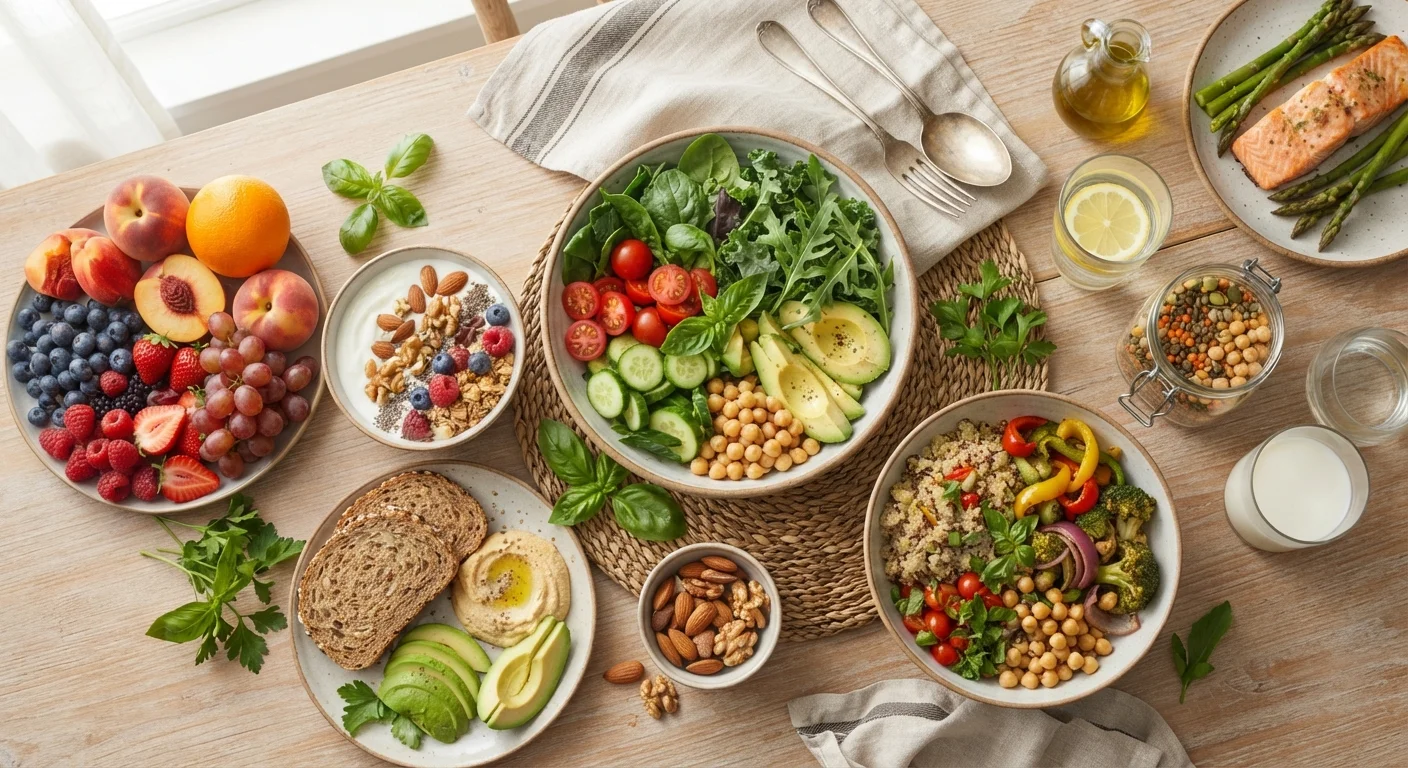
In practice, the pattern prioritizes:
- Vegetables and fruits at most meals
- Whole grains over refined grains
- Low-fat or fat-free dairy products
- Lean proteins, including poultry, fish, and legumes
- Nuts and seeds in moderate amounts
- Limited red and processed meats
- Limited added sugars and sweets
- Reduced sodium across all food choices
What makes DASH distinct from simply eating more vegetables is its deliberate attention to specific minerals: potassium, magnesium, and calcium. These three minerals appear consistently in research as regulators of blood vessel tone and fluid balance, both of which affect blood pressure directly.
The physiological link between DASH nutrients and blood pressure
Blood pressure is determined by how hard the heart pumps and how much resistance the blood encounters in the vessels. Several dietary factors influence both sides of that equation.
Sodium is the most widely discussed variable. High sodium intake causes the body to retain water, increasing blood volume and, with it, the pressure in vessel walls. Reducing sodium is the most immediate dietary lever most people can pull.
Potassium works in the opposite direction. It helps the kidneys excrete sodium and relaxes blood vessel walls. Most Americans consume well below the adequate intake for potassium because the richest sources, fruits, vegetables, and legumes, are underrepresented in typical diets. DASH corrects that imbalance directly.
Magnesium is involved in smooth muscle function in blood vessels. Calcium, another mineral DASH supplies through low-fat dairy and leafy greens, helps regulate vascular contraction. When all three minerals are present in adequate amounts, vessels are better able to dilate appropriately.
Dietary fiber, abundant in the whole grains, legumes, and vegetables central to DASH, has an independent association with lower blood pressure in observational research, though its mechanisms are less fully characterized than those of the minerals above.
DASH affects more than blood pressure
Because the DASH pattern limits saturated fat and added sugars while increasing fiber, it also influences LDL cholesterol and fasting blood sugar. These effects are relevant to anyone managing overall cardiovascular or metabolic risk, not only those focused on blood pressure specifically. The pattern overlaps in many ways with dietary approaches linked to liver health, which similarly emphasize whole plant foods and reduced processed food intake.
The DASH pattern also reduces saturated fat, which affects LDL cholesterol independently of blood pressure. This makes DASH relevant to overall cardiovascular risk, not just one number on a blood pressure cuff. See how common lifestyle habits can push blood pressure higher for context on the full picture.
What the research shows
The original DASH trial, published in the New England Journal of Medicine in 1997, found that the DASH diet reduced systolic blood pressure by an average of 5.5 mmHg and diastolic pressure by 3.0 mmHg compared with a control diet. Among participants with hypertension, the reductions were larger: 11.4 mmHg systolic and 5.5 mmHg diastolic.
5.5 mmHg
Average systolic blood pressure reduction with DASH
Observed in the original DASH clinical trial published in the New England Journal of Medicine in 1997, compared with a control diet, without changing body weight or sodium intake.
11.4 mmHg
Systolic reduction in participants with hypertension
Participants in the original DASH trial who had hypertension at baseline showed larger reductions than those with normal blood pressure.
1,500 mg
Daily sodium target for maximum DASH benefit
The DASH-Sodium trial found that combining the DASH diet with this lower sodium level produced the greatest blood pressure reductions across all participant groups.
The DASH-Sodium trial, published in 2001, went further by testing the DASH pattern at three sodium levels. Combining the DASH diet with a lower sodium intake (1,500 mg per day) produced the largest reductions. That study also demonstrated that sodium reduction and dietary pattern change have additive effects, meaning doing both produces more benefit than either alone.
Research since then has extended these findings to diverse populations and longer time horizons. Meta-analyses consistently place DASH among the best-studied dietary interventions for blood pressure management. Its effects remain consistent across age groups, though the magnitude differs by individual characteristics.
DASH has also been associated with lower rates of cardiovascular events and improved markers of metabolic health, including fasting blood sugar and LDL cholesterol, in observational studies. These associations do not prove causation, but they align with the known effects of the individual food components the pattern emphasizes.
Putting DASH into daily practice
Translating a clinical feeding protocol into ordinary meals requires practical translation. The core shift is proportional: more of the plate goes to vegetables, fruits, and whole grains, and less goes to processed foods, cured meats, and salty packaged products.
Sodium reduction is often the hardest adjustment because processed and restaurant foods contribute the majority of sodium in the American diet, not the salt added at the table. Reading nutrition labels for sodium per serving, choosing lower-sodium canned goods, and cooking more meals at home are the practical steps most consistent with DASH recommendations.
For potassium, concrete sources include bananas, oranges, sweet potatoes, spinach, white beans, and low-fat yogurt. These are ordinary grocery store staples, not specialty ingredients.
Building a daily routine that supports healthy blood pressure covers how dietary choices fit alongside other lifestyle factors such as sleep, movement, and stress. DASH does not operate in isolation; its effects are most consistent when the broader context of daily habits supports cardiovascular health.
People managing kidney disease, diabetes, or who are pregnant should consult a healthcare provider before significantly increasing potassium or changing their eating pattern, as individual needs vary and some medical conditions alter how the body handles these minerals.
This article is for general informational and educational purposes only and does not constitute medical advice. Consult a qualified healthcare professional before making significant changes to your diet, especially if you have a diagnosed health condition or take prescription medication.