

Key Takeaways
Why daily timing matters for blood pressure
Blood pressure is not a fixed number. It follows a circadian rhythm, typically lower overnight, rising sharply in the early morning hours as the body prepares to wake, then fluctuating through the day in response to meals, movement, stress, and rest. This predictable pattern matters because the morning surge is associated with higher cardiovascular event risk, and habitual behaviors that blunt or amplify that surge have real physiological consequences.
Understanding this rhythm is the starting point for building a routine that works with your physiology rather than against it. The goal is not perfection on any single day, but a sequence of repeatable habits that reduce unnecessary spikes and support the parasympathetic nervous system's ability to bring pressure back down between demands.
For context on which common behaviors tend to push readings in the wrong direction, see our guide to habits that elevate blood pressure. This article focuses on what to do instead, structured across a full day.
What you will need
What you need before you start
No specialized equipment is required to follow this routine, but a few items and a baseline of knowledge will help you track progress and make adjustments meaningfully.
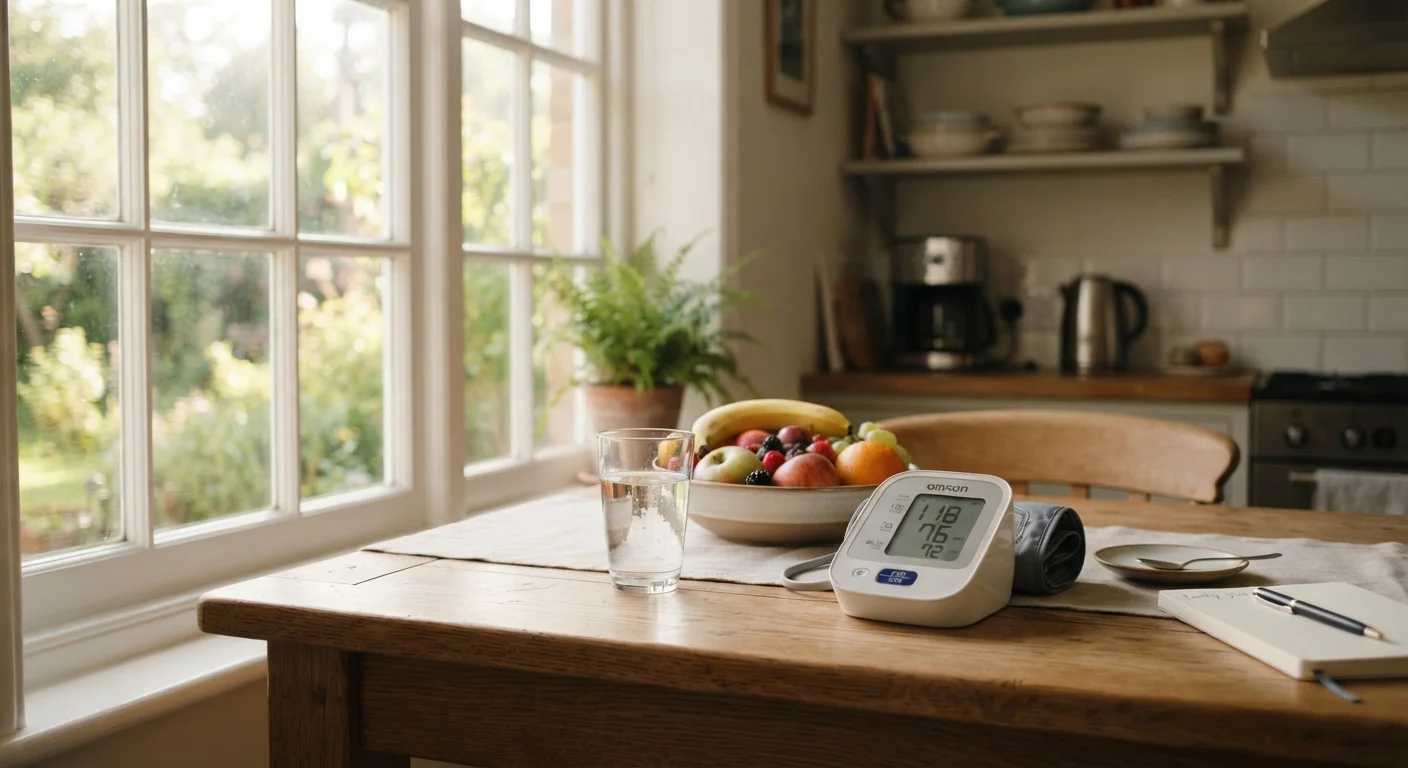
Validated home blood pressure monitor
Tracks readings at consistent times so you can observe how daily habits affect your numbers over days and weeks.
A simple food log or notes app
Records meals and sodium-dense foods to help identify patterns between diet and readings.
A fitness tracker or basic pedometer
Measures daily movement and helps maintain the moderate activity levels associated with lower blood pressure.
If you are already taking medication for blood pressure or a related condition, discuss any new exercise or dietary changes with your doctor before starting. The steps below describe general wellness habits, not a treatment plan.
The step-by-step daily routine
Follow these steps in order across your waking hours. None requires more than a few minutes of preparation, and most can fit into an existing schedule without restructuring your day.
Take your morning reading before caffeine or food
Blood pressure is most informative when measured under consistent conditions. In the morning, before you eat, drink coffee, or take medications, sit quietly for five minutes and take a reading. This is called your resting morning blood pressure and it gives a reliable baseline that a post-activity or post-meal reading cannot.
Record the result. Over several weeks, patterns become visible that a single clinic measurement never would. See our preparation checklist before a blood pressure check for what else to avoid in the minutes before any reading.
Hydrate before reaching for caffeine
After several hours of sleep, mild dehydration is common. Blood volume drops slightly when the body is underhydrated, which can cause the vascular system to compensate with increased peripheral resistance, a mechanism that raises pressure. Drinking a glass of plain water before coffee or tea is a simple habit that gives the cardiovascular system an easier start.
Caffeine itself causes a temporary blood pressure rise in most people. This does not mean coffee is harmful in moderation, but timing it after hydration and after your morning reading removes it as a confounding variable.
Move within the first 90 minutes of waking
Moderate aerobic activity, even a 20-minute walk, is associated with measurable reductions in blood pressure that can persist for several hours afterward. This effect, sometimes called post-exercise hypotension, is well documented in the research literature. Morning movement also helps counteract the cortisol-driven vascular tone that peaks in the first hour after waking.
The activity does not need to be intense. A brisk walk, light cycling, or a short bodyweight routine is enough to trigger the effect. Consistency across the week matters more than intensity on any single day.
Structure meals to limit sodium accumulation
Sodium intake has a direct effect on blood volume and, for many people, on blood pressure. The relationship is not identical in everyone, but population-level data consistently show that higher average sodium intake correlates with higher average blood pressure. The primary sources in the typical US diet are processed foods, canned goods, restaurant meals, and packaged snacks, not the salt shaker on the table.
Structuring meals to lean toward whole or minimally processed foods reduces sodium intake without requiring calorie counting or strict dietary rules. Pairing this with adequate potassium from vegetables and legumes supports the kidney's ability to regulate sodium balance.
Build a 30-minute wind-down before bed
The body's transition into sleep involves a drop in blood pressure that allows the cardiovascular system to rest and recover. This nocturnal dip is considered a healthy sign, and people who do not experience it, a pattern called non-dipping, tend to have higher overall cardiovascular risk. A consistent evening routine helps the nervous system shift toward parasympathetic dominance, which supports this drop.
Practical steps include dimming lights an hour before bed, avoiding screens or using a blue-light filter, and keeping the bedroom cool and quiet. Alcohol, though sometimes perceived as relaxing, disrupts sleep architecture and tends to blunt the nocturnal dip. Our overview of building an evening wind-down sequence covers the sleep science behind this in more detail.
Keep your wake and sleep times consistent
Sleep duration and regularity appear in clinical guidelines as independent lifestyle factors for blood pressure management. Both short sleep (fewer than six hours) and irregular sleep timing are associated with elevated average blood pressure and disrupted circadian rhythm. The mechanism involves the interplay between cortisol, the renin-angiotensin-aldosterone system, and autonomic nervous system tone.
Choosing consistent bed and wake times, even on weekends, anchors the circadian rhythm. This does more than support sleep quality; it stabilizes the morning cortisol and blood pressure pattern that the rest of your day's habits are built around.
For accurate context on how to read your own numbers, our article on home blood pressure monitoring covers proper technique in detail.
Connecting blood pressure habits to the rest of your health
Blood pressure does not exist in isolation. The same hormonal rhythm that drives the morning pressure surge also governs cortisol and energy levels throughout the day. If you want to understand how that overlap works, the article on structuring your day around hormonal rhythms covers the physiology clearly.
Diet is another point of connection. The DASH (Dietary Approaches to Stop Hypertension) eating pattern is one of the most consistently cited dietary frameworks in blood pressure research. Our overview of the DASH eating pattern and blood pressure explains what the pattern actually involves and the evidence supporting it.
Blood sugar stability and cardiovascular health are also closely linked. Many of the habits described in this routine overlap with the practices outlined in our guide on building daily habits for stable blood sugar. Small, consistent actions tend to benefit multiple systems at once.
This article is for informational purposes only and is not medical advice. Consult a qualified healthcare professional before making changes to your diet, exercise habits, or any existing treatment plan, particularly if you have a diagnosed cardiovascular condition or take blood pressure medication.