
Soluble Fibre, Plant Sterols, and Other Dietary Factors Linked to Cholesterol

Key Takeaways
Why diet affects cholesterol, and by how much
Cholesterol in the bloodstream comes mostly from what the liver makes, not from food directly. Even so, what you eat changes the signals the liver receives and alters how much cholesterol the intestine absorbs. The result is that diet can shift LDL (low-density lipoprotein) cholesterol by a meaningful but bounded amount, typically in the range of 5 to 15 percent for most people following a consistent dietary change, though individual responses vary widely depending on genetics and baseline levels. For context on how the liver manages this process, see how the liver produces and regulates cholesterol.
The compounds below each work through a distinct mechanism. Understanding those mechanisms helps set realistic expectations and clarifies why no single food is a treatment for elevated cholesterol.
Soluble fibre
Soluble fibre dissolves in water to form a gel in the digestive tract. That gel binds bile acids, which the body makes from cholesterol, and carries them out in stool. The liver then draws more cholesterol from the blood to replenish bile acids, which lowers circulating LDL. This mechanism is well-documented and forms part of established dietary guidance from major cardiology organizations.
Rich sources include oats and oat bran, barley, psyllium husk, apples, citrus fruits, and legumes such as lentils and black beans. Psyllium has been studied most extensively in supplement form, with consistent evidence of modest LDL reduction at doses used in clinical trials. Oat beta-glucan, the specific soluble fibre in oats, has also been reviewed favorably by regulatory bodies in the US and Europe in relation to heart health claims.
The effect is dose-dependent: larger amounts of soluble fibre produce larger changes, but most adults consume well below recommended fibre intakes, so there is practical room for improvement. See what the research shows about diet and cholesterol levels for a broader view of how fibre fits into overall dietary evidence.
Soluble fibre binds bile acids in the gut, prompting the liver to pull more cholesterol from the blood.
Plant sterols and stanols
Plant sterols (and their chemically reduced form, stanols) are naturally occurring compounds in vegetable oils, nuts, seeds, and whole grains. Structurally similar to cholesterol, they compete for absorption sites in the small intestine, reducing how much dietary and biliary cholesterol the body absorbs.
At intakes of about 2 grams per day, plant sterols have been shown to reduce LDL cholesterol by roughly 8 to 10 percent in multiple controlled trials. They are now added to certain margarines, yogurts, and orange juice products specifically to reach this dose, since natural food sources provide only a fraction of that amount.
Sterols do not appear to affect HDL (high-density lipoprotein) or triglycerides meaningfully, and their long-term cardiovascular outcome data are less extensive than data for drugs such as statins. Their effect is additive to statin therapy in some studies, which makes them of interest for people already on medication, but any such use should be discussed with a physician.
Plant sterols compete with cholesterol for absorption sites, cutting LDL by roughly 8 to 10 percent at effective doses.
Unsaturated fats
Replacing saturated fat with unsaturated fat is one of the most consistently supported dietary strategies for improving the LDL-to-HDL ratio. Saturated fat, found in fatty cuts of meat, full-fat dairy, and tropical oils like coconut and palm, increases LDL production in the liver. Swapping some of that intake for monounsaturated fats (olive oil, avocado, most nuts) or polyunsaturated fats (sunflower oil, walnuts, flaxseed) lowers LDL without the same suppressive effect on HDL.
Omega-3 polyunsaturated fatty acids, found in fatty fish such as salmon and mackerel and in plant sources like flaxseed and chia, have well-established triglyceride-lowering effects at higher intakes, though their direct LDL effect is modest and sometimes slightly increases LDL particle size in a way considered less harmful.
For a direct comparison of how these fat types differ in their cholesterol effects, the comparison of saturated and unsaturated fats covers the evidence in detail.
Replacing saturated fat with unsaturated fat lowers LDL while preserving HDL, making it one of the more consistent dietary levers.
Soy protein
Soy protein drew substantial research interest after early meta-analyses suggested it could lower LDL by around 10 percent. Later, larger analyses revised that estimate downward to approximately 3 to 4 percent, a modest but real effect at typical dietary intakes of 25 grams per day or more.
The mechanism is not fully resolved. Soy isoflavones may have some independent effect on cholesterol metabolism, but the current consensus is that much of the benefit comes from replacing animal protein, which carries saturated fat, with plant protein. Tofu, edamame, tempeh, and soy milk are common whole-food sources.
The US Food and Drug Administration has revisited its 1999 health claim linking soy protein to reduced heart disease risk, citing the more modest effect sizes seen in updated evidence. Soy remains a nutritious protein source, but its cholesterol effects are now understood to be smaller than initially reported.
Soy protein modestly lowers LDL, though more recent data put the effect closer to 3 to 4 percent than early estimates suggested.
Dietary patterns over individual foods
Individual compounds rarely operate in isolation, and the overall dietary pattern shapes cholesterol more than any single addition. The DASH (Dietary Approaches to Stop Hypertension) eating plan and the Mediterranean-style diet have both been associated with favorable lipid profiles in population studies and controlled trials. Both patterns emphasize vegetables, fruits, whole grains, legumes, fish, and olive oil while limiting processed meats and refined carbohydrates.
Refined carbohydrates and added sugars deserve mention here because they raise triglycerides and can lower HDL, particularly when consumed in excess. Total caloric excess leading to excess body weight also has an independent effect on LDL and triglycerides. These factors mean that cholesterol is sensitive to overall diet quality, not simply to the presence or absence of one nutrient.
For a broader view of how cholesterol connects to inflammation and arterial risk, the relationship between cholesterol and inflammation explains mechanisms that dietary patterns influence simultaneously. And understanding where cholesterol fits in overall cardiovascular health puts dietary changes in appropriate context alongside other risk factors.
Overall dietary pattern influences cholesterol more reliably than adding or removing any single food or compound.
Putting it all together
Each compound covered here operates through a different pathway, and their effects can be additive when combined within a coherent eating pattern. A diet built around whole grains, legumes, vegetables, nuts, and plant oils provides soluble fibre, sterols, and unsaturated fats simultaneously, which is why broad dietary patterns tend to produce larger cholesterol changes than adding any one food.
Build a pattern, not a checklist
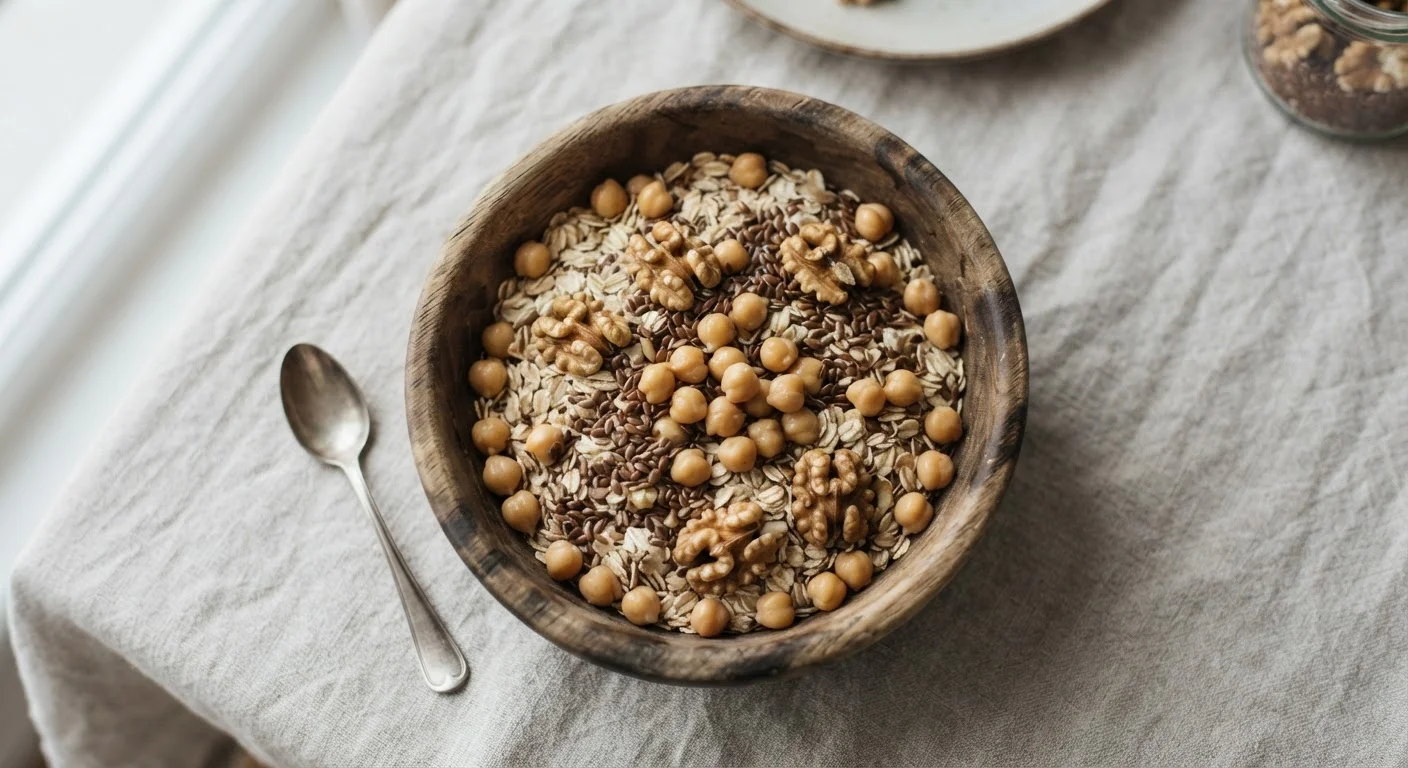
Instead of adding individual foods in isolation, try building meals that combine several of these elements: oats with flaxseed and walnuts, lentil soup with olive oil, or a vegetable stir-fry with tofu. This approach captures additive effects and fits within a sustainable eating routine. Tracking changes in cholesterol with your doctor over time gives the clearest picture of what is working for you specifically.
Diet is one factor among several. Physical activity also affects lipid levels, and for some people, genetic conditions drive high cholesterol regardless of diet. Anyone managing elevated cholesterol should discuss the full picture, including diet, activity, and medication if indicated, with a qualified healthcare professional before making significant changes.
This article is for informational purposes only and is not medical advice. Consult a licensed healthcare provider for guidance specific to your health situation.