

Key Takeaways
Why movement matters in foot recovery
The instinct to rest a painful foot completely is understandable, but prolonged immobilization can weaken the intrinsic muscles of the foot, reduce tendon resilience, and slow tissue remodeling. Rehabilitation science has shifted toward progressive loading, a model in which carefully graded movement stimulates healing tissue without overloading it. Understanding that framework helps explain why each practice below works.
If you are managing an active foot injury, consult a physical therapist or podiatrist before starting any new exercise program. The information here is general education, not a treatment plan. For guidance on when to move versus when to rest after physical strain, see when each approach is appropriate.
Evidence-informed practices for lasting foot health
The practices below are drawn from physical rehabilitation principles and are appropriate for adults managing common foot conditions such as plantar fasciitis, Achilles tendinopathy, or post-injury stiffness. They are not a substitute for individualized clinical care.
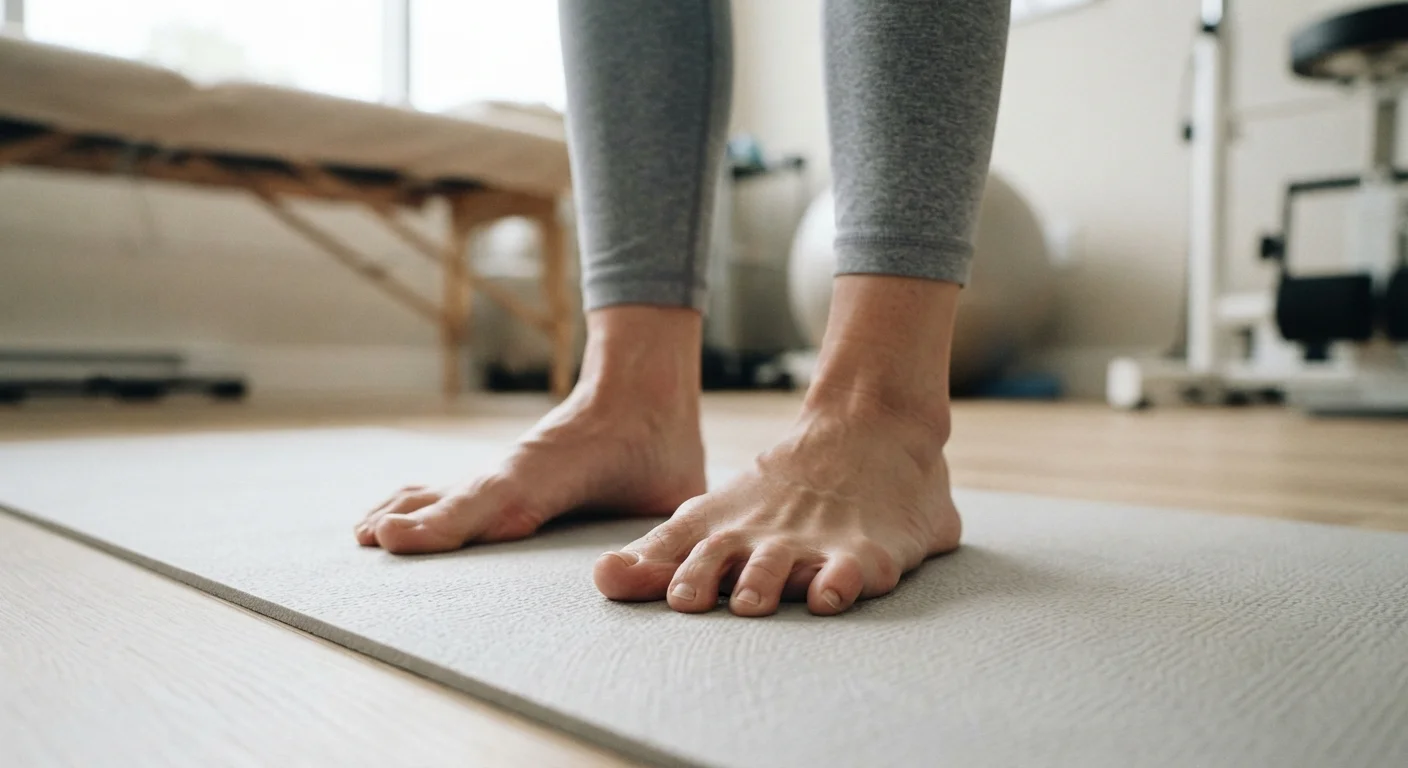
Train intrinsic foot muscles with short-foot and toe-spread exercises daily.
The small muscles within the foot, including the flexor digitorum brevis and abductor hallucis, stabilize the arch and absorb ground reaction forces. Weakness in these muscles shifts load to passive structures like the plantar fascia, increasing injury risk. Regular activation exercises rebuild this protective layer.
Load the Achilles tendon progressively through eccentric heel drops.
Eccentric loading, where the muscle lengthens under tension, is among the most studied interventions for Achilles tendinopathy and plantar fascia recovery. It stimulates collagen remodeling in the tendon and gradually increases load tolerance. Starting on flat ground before progressing to a step reduces re-injury risk.
Maintain calf flexibility through sustained, low-force stretching.
Tightness in the gastrocnemius and soleus muscles restricts ankle dorsiflexion (the ability to bend the ankle upward). Limited dorsiflexion forces the foot into compensatory mechanics that increase stress on the arch and forefoot. Holding a stretch for 30 to 60 seconds, rather than brief bouncing, better targets the connective tissue.
Use gait observation to identify and correct compensatory movement patterns.
After a foot injury, the nervous system learns protective movement habits, such as limping or toe-striking, that can persist even after tissue healing is complete. These compensations redistribute load to the knee, hip, and lower back. Walking with deliberate attention to heel-to-toe progression and symmetric stride length helps reset normal mechanics.
Incorporate balance training on a single leg to rebuild proprioceptive control.
Proprioception, the body's ability to sense joint position, is disrupted by foot injury and is a predictor of re-injury risk. Single-leg standing exercises re-train the sensory pathways between the foot and the brain. Research in sports medicine consistently shows that balance training reduces lower-extremity injury recurrence.
Getting started: quick actions you can take now
The practices above are most effective when they become habits rather than temporary interventions. The following actions are a practical starting point for adults who have clearance to exercise and want to build a consistent routine.
For a broader look at how movement and recovery habits protect joints over time, the evidence-informed recovery habits guide covers complementary strategies including sleep and hydration. You can also explore the full Mobility and Recovery hub for additional structured guidance.
This article is for informational purposes only and is not medical advice. Always consult a qualified healthcare professional before beginning any new exercise program, particularly if you are managing an injury or chronic condition.