

Key Takeaways
Our Verdict
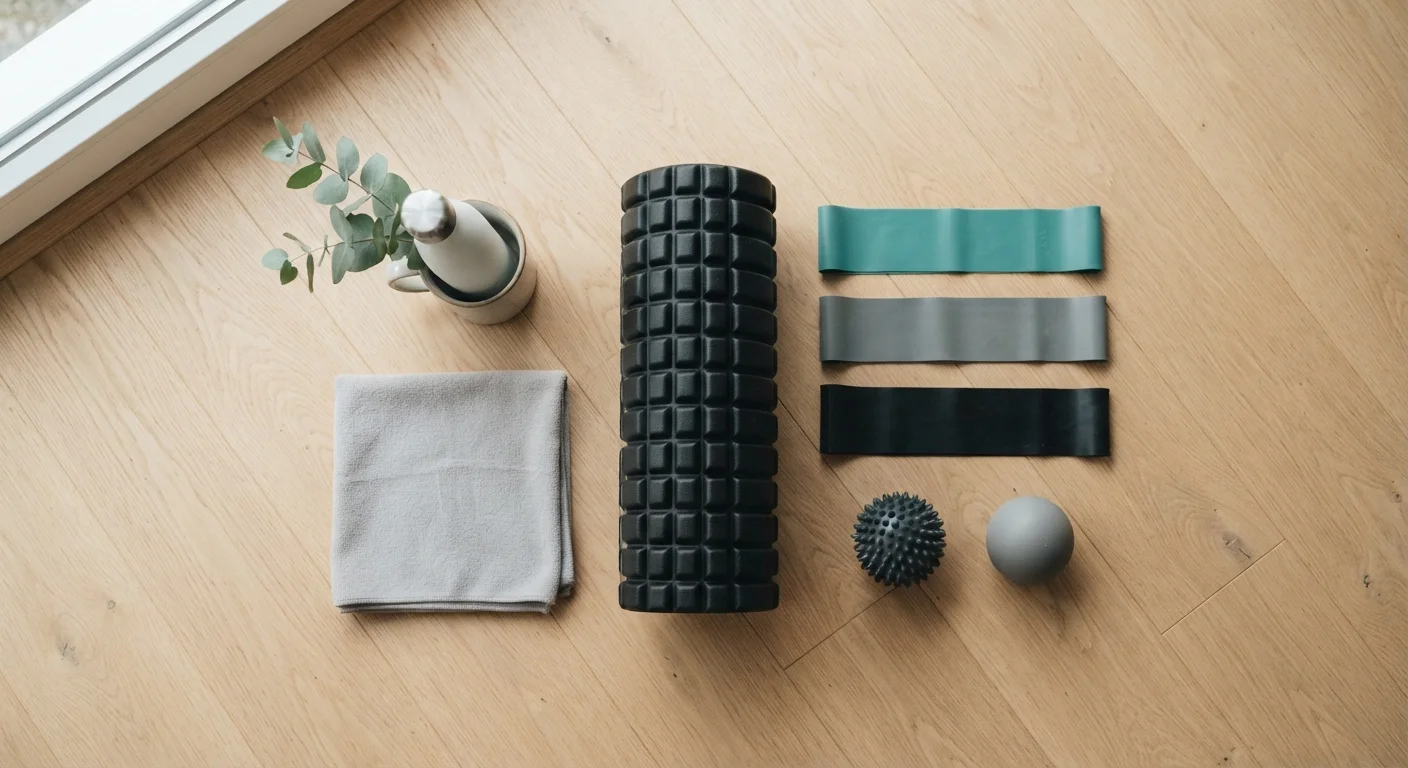
Foam rollers, massage balls, and resistance bands address different components of mobility. Rollers work best for broad soft-tissue preparation, balls for targeted pressure on small structures, and bands for building controlled joint range of motion. The right choice depends on the body region, the recovery phase, and whether the goal is tissue preparation or active strength through range.
| Best for | Recommended |
|---|---|
| Broad soft-tissue preparation before exercise or after prolonged sitting | Foam roller |
| Targeted pressure on the foot, glutes, or thoracic spine | Massage ball |
| Building active joint range of motion and neuromuscular control | Resistance bands |
| Comprehensive mobility routine addressing tissue quality and joint control | All three tools used in sequence |
What each tool is actually doing to your body
These three tools are often grouped under the label 'mobility equipment,' but they work through different mechanisms. Understanding those differences prevents wasted effort and sets realistic expectations.
A foam roller applies compressive force across a relatively wide surface. Rolling slowly over a muscle belly creates temporary changes in tissue extensibility and may reduce perceived soreness. The current evidence, reviewed in detail at what research says about foam rolling, suggests these effects are real but modest and short-lived. The primary mechanism is likely neurological: sustained pressure appears to reduce muscle tone temporarily rather than permanently restructuring fascial tissue.
A massage ball concentrates the same compressive force onto a much smaller surface area. This allows it to reach structures a roller cannot load adequately, including the plantar fascia, the piriformis, and the muscles running along the thoracic spine. The tradeoff is that precision is harder to control, and excess pressure on bony structures or nerves can cause discomfort or irritation.
Resistance bands work differently altogether. They create external load through elastic tension, which the muscles must resist or control. This trains active range of motion, meaning the nervous system learns to coordinate movement through a fuller range under load. That is distinct from what rollers and balls do. Mobility differs from flexibility in exactly this way: it requires muscular control, not just tissue length.
Foam rollers: broad coverage with practical limitations
Foam rollers cover large surface areas efficiently, which makes them well-suited to the quadriceps, hamstrings, calves, and thoracic spine. A common protocol involves rolling at a slow pace (roughly one inch per second) and pausing for a few seconds on areas that feel dense or tender.
Pre-exercise use can improve short-term range of motion without the strength reductions sometimes associated with prolonged static stretching. Post-exercise use may reduce delayed-onset muscle soreness, though the magnitude of this effect varies across individuals and has not been shown to accelerate structural recovery.
Rollers are less effective on smaller or deeper structures. The gluteus medius, the piriformis, and the intrinsic foot muscles are difficult to load adequately with a standard roller because the surrounding tissue absorbs most of the pressure before it reaches the target. Density and texture also vary across rollers, and firmer surfaces are not always better: a texture that provokes sharp or shooting pain should not be used.
| Foam Roller | Massage Ball | Resistance Band | |
|---|---|---|---|
| Primary mechanism | Broad compressive pressure on large muscles | Targeted compressive pressure on small structures | Elastic load through active range of motion |
| Best target areas | Quads, hamstrings, calves, thoracic spine | Plantar fascia, glutes, shoulder blade | Hips, ankles, shoulders, knees |
| Mobility type addressed | Passive tissue extensibility | Passive tissue extensibility | Active neuromuscular control |
| Skill level required | Low to moderate | Moderate (pressure control needed) | Moderate (form awareness needed) |
| Portability | Bulky, less portable | Highly portable | Highly portable |
| Limitation | Cannot reach small or deep structures | Risk of excess pressure on sensitive areas | Does not directly address soft-tissue tension |
Massage balls: precision work for smaller structures
A massage ball (typically lacrosse-ball or slightly softer) can reach the plantar fascia on the sole of the foot, the suboccipital muscles at the base of the skull, and the space around the shoulder blade. For people managing foot pain, standing on a ball and applying controlled body weight to tender points along the arch is a commonly used technique in physical rehabilitation settings.
See how this fits into a broader foot care strategy at movement strategies for foot recovery.
The key variable is pressure control. Because the contact area is small, body weight alone can create more compressive force than the tissue tolerates, particularly near bony prominences or inflamed structures. Starting with minimal body weight and progressing gradually is a reasonable approach. Sitting rather than standing is a lower-load option for sensitive areas.
Massage balls are portable and inexpensive, but they require more body awareness to use safely than a roller. Anyone with a confirmed stress fracture, acute tendon tear, or peripheral nerve injury in the target area should not use one without clearance from a healthcare provider.
Resistance bands: building range, not just releasing tension
Resistance bands do not address soft-tissue tension directly. Their function is to load joints through movement, which trains the muscles to control and access range that may already exist passively but cannot be used actively under load.
Common applications include banded hip flexor mobilizations, ankle dorsiflexion drills, and shoulder internal and external rotation work. In each case, the band provides either assistance (allowing the limb to move into range with less muscular effort) or resistance (requiring the muscles to work against elastic tension through the full arc of motion).
This distinction matters for recovery. Mobility work differs from stretching because it requires the nervous system to participate actively. Passive stretching can increase tissue length temporarily; banded drills train the body to use that length in functional movement patterns. For people managing chronic pain, building this active control is often more durable than tissue work alone.
Band resistance is measured in pounds of tension at a given length. Starting with a lighter band and maintaining form through the full range produces better neuromuscular adaptation than using heavier resistance with a shortened or compensated arc. If pain changes character or location during a banded drill, stop and consult a physical therapist.
Sequence your tools for better results
A practical order for a mobility session is: foam roller or massage ball first to reduce tissue tension, then resistance band drills to reinforce active control through the newly available range. Skipping the tissue preparation step can make banded drills harder than necessary; skipping the band work leaves the range gain mostly passive and less durable. Review common mobility misconceptions to avoid habits that slow this process.
This article is for general informational purposes only and is not a substitute for professional medical advice. Consult a qualified healthcare provider before beginning any new self-care or exercise program, particularly if you have an existing injury or chronic condition.