

Key Takeaways
Sleep and physical recovery
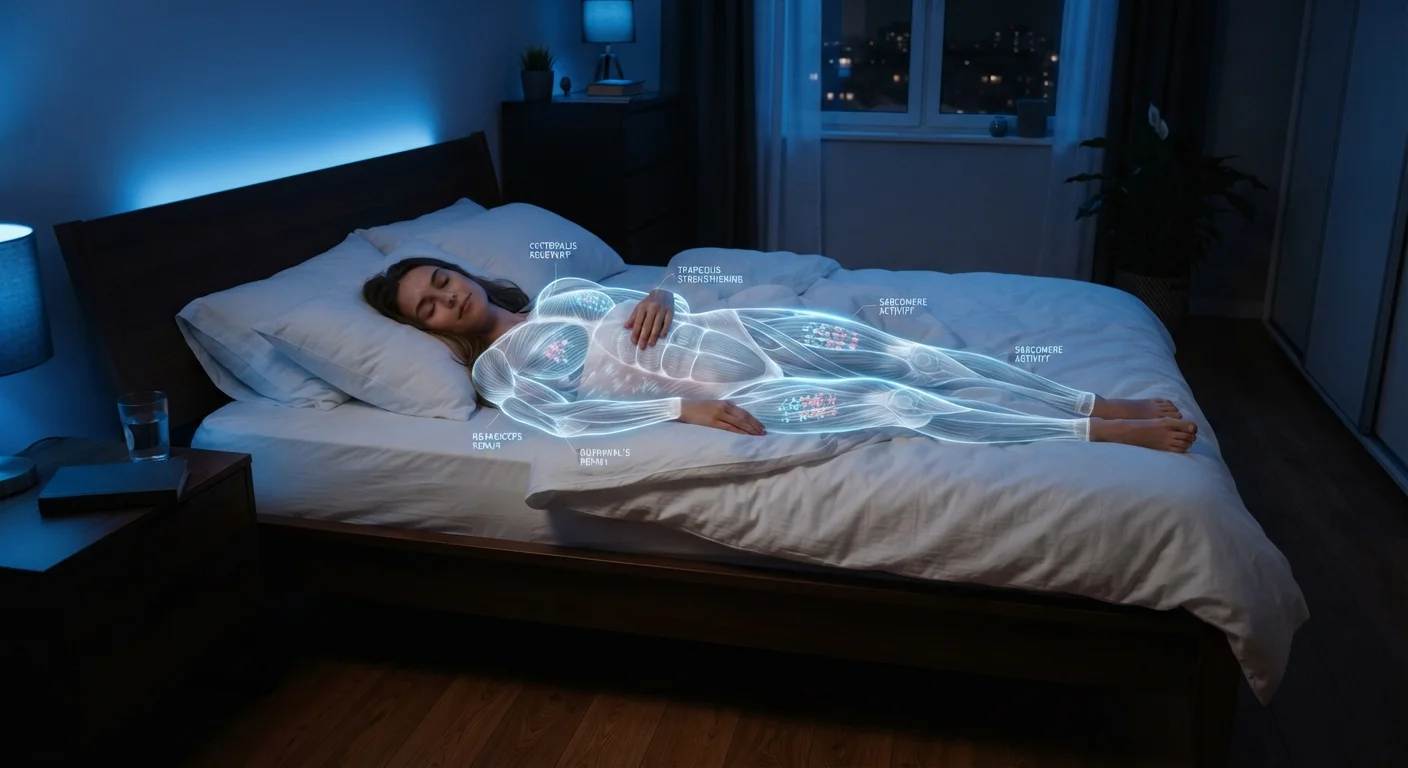
Physical recovery during sleep refers to the biological processes your body carries out while you rest, including muscle repair, hormone release, and inflammation regulation. These processes directly affect how well your joints, muscles, and connective tissues function the next day. Without adequate sleep, the body cannot complete these cycles, which reduces mobility and raises pain sensitivity.
Slow-wave sleep (stages N2 and N3 of non-REM sleep) is when growth hormone secretion peaks, driving the majority of muscle protein synthesis and tissue remodeling.
Why sleep is the body's primary repair window
During waking hours, physical activity generates microscopic damage in muscle fibers, compresses spinal discs, and stimulates inflammatory signaling. Sleep is when the body addresses that damage. The process is not passive. Multiple hormonal and cellular systems activate in sequence across the sleep cycle to rebuild what exertion broke down.
Growth hormone, which drives muscle protein synthesis and connective tissue repair, is secreted primarily during slow-wave sleep (the deepest non-REM stages). Cortisol, a stress hormone that can inhibit repair when chronically elevated, drops to its lowest nightly levels during this same window. The combined effect creates a biological environment where tissue rebuilding outpaces breakdown.
For a detailed look at the specific cellular processes involved, see what happens inside your body during recovery.
Anchor recovery with a consistent wake time
If you can only change one sleep habit, make it your wake time. Rising at the same hour every day, including weekends, stabilizes the circadian timing of growth hormone release more reliably than adjusting bedtime alone. Within two to three weeks, many people notice improved sleep depth and less morning stiffness.
The inflammation connection: sleep loss and pain sensitivity
Sleep deprivation raises circulating levels of pro-inflammatory cytokines, including interleukin-6 and tumor necrosis factor-alpha. These molecules signal tissue damage and recruit immune responses. When elevated without corresponding repair, they produce widespread soreness, joint stiffness, and heightened sensitivity to mechanical pressure.
This matters for anyone managing musculoskeletal conditions. People with sciatica, tendinopathy, or chronic low back pain already have elevated baseline inflammation. Poor sleep amplifies that signal, which many people experience as a noticeably worse pain day after a rough night.
Central sensitization adds another layer. Sleep deprivation alters how the spinal cord and brain process pain signals, lowering the threshold at which normal sensations register as painful. This is not psychological; it reflects measurable changes in pain-processing pathways. Adequate sleep does the opposite, supporting descending inhibitory controls that modulate pain perception.
~28%
Adults reporting regularly insufficient sleep
The Centers for Disease Control and Prevention report that roughly 1 in 3 U.S. adults sleeps fewer than the recommended seven hours per night.
50-70 million
U.S. adults affected by sleep disorders
The American Sleep Association estimates that 50 to 70 million Americans have a chronic sleep disorder, many of whom also report musculoskeletal pain.
Up to 25%
Reduction in pain tolerance after one night of poor sleep
Research published in the Journal of Sleep Research found that even a single night of disrupted sleep can reduce experimental pain tolerance by measurable margins in healthy adults.
How disrupted sleep impairs movement capacity over time
Short-term sleep loss produces noticeable fatigue and stiffness. Chronic poor sleep creates compounding deficits in tissue repair that accumulate across weeks and months. Muscles that do not fully recover between training or daily activity sessions lose tensile strength. Connective tissues, including tendons and ligaments, become more vulnerable to overuse injury when repair cycles are consistently incomplete.
Range of motion is also affected. Synovial fluid production and joint capsule mobility depend partly on overnight rest cycles. People who sleep poorly often report morning stiffness that persists longer than it did when their sleep was consistent, a pattern that reflects incomplete overnight tissue maintenance rather than progressive joint disease alone.
Stress compounds the problem. Chronic stress disrupts both sleep architecture and hormonal repair cycles through sustained cortisol elevation. For more on that mechanism, see how chronic stress disrupts the body's ability to recover.
Practical steps to improve sleep for better mobility recovery
Improving sleep for physical recovery does not require expensive tools. The most consistent evidence supports behavioral strategies that stabilize circadian rhythm and promote deeper sleep stages.
- Set a fixed wake time, even on weekends. Circadian anchoring is built around the morning light signal, not bedtime. A consistent wake time is the most reliable lever for stabilizing your sleep architecture.
- Keep your sleeping environment cool (around 65 to 68 degrees Fahrenheit for most adults). Core body temperature must drop to initiate slow-wave sleep, and a warm room works against that process.
- Limit bright light, especially blue-spectrum screens, for 60 to 90 minutes before bed. Light suppresses melatonin secretion and delays sleep onset.
- Short movement breaks during the day, sometimes called movement snacks, support circulation and reduce the overnight tissue fluid accumulation that worsens morning stiffness. See movement snacks and their role in recovery for practical ideas.
- Align daytime recovery choices with your sleep strategy. The relationship between active recovery and complete rest affects how prepared your body is to benefit from each night's sleep.
People managing chronic pain conditions, or those in special populations including older adults and individuals with cardiovascular or metabolic conditions, should discuss sleep concerns with a qualified healthcare provider before making significant changes to medication, supplements, or treatment plans.
This article is for informational purposes only and is not medical advice. Consult a qualified healthcare professional for personal guidance regarding pain, sleep disorders, or any health condition.