

Key Takeaways
Why natural antifungal claims spread so quickly
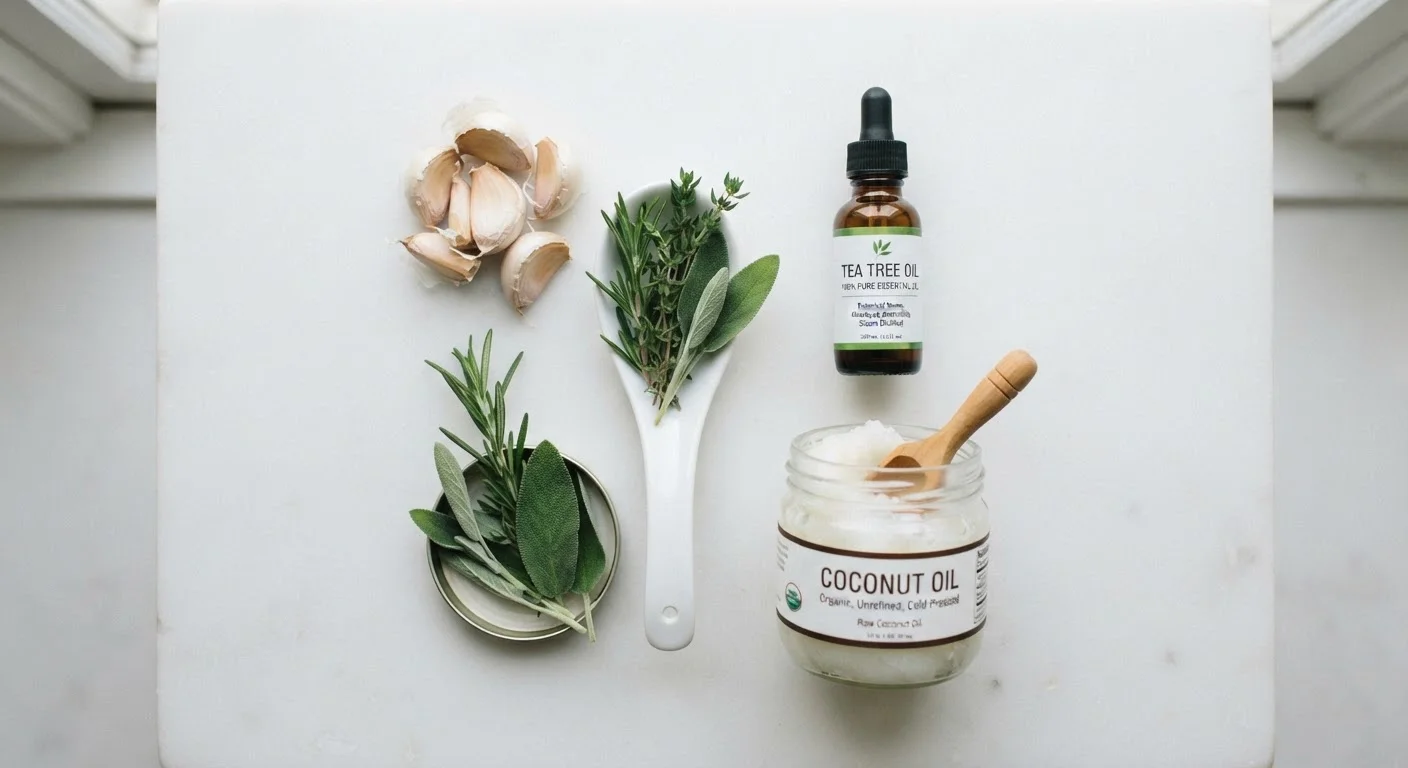
Online wellness spaces treat natural antifungal remedies as settled science. Tea tree oil, garlic, oregano oil, and coconut oil appear in blog posts and social media threads as reliable alternatives to prescription treatment. The reality is more complicated. Lab studies do confirm that certain plant compounds disrupt fungal cell membranes or interfere with fungal enzymes, but a positive result in a petri dish does not automatically translate to a meaningful clinical outcome in a living person. Skin penetration, concentration, formulation, and the specific fungal species involved all shape whether a substance works in practice.
This article examines what peer-reviewed research actually shows for the most commonly discussed natural antifungals, and where the evidence runs thin. For a broader grounding in how fungal infections develop and who is most at risk, see our complete overview of fungal skin health.
Common myths and what the research shows
The following pairs address the misconceptions most likely to affect how people manage fungal conditions at home.
Myth
Tea tree oil is a proven antifungal treatment backed by strong clinical evidence.
Fact
Tea tree oil shows antifungal activity in laboratory studies, but human clinical trials are few, small, and produce inconsistent results.
Terpinen-4-ol, the main active component in tea tree oil, does disrupt fungal cell membranes in vitro. A small number of randomized trials have tested diluted tea tree oil preparations against conditions such as onychomycosis (nail fungus) and tinea pedis (athlete's foot). Results have been modest at best, and most trials had significant methodological limitations. No large, high-quality randomized controlled trial has established tea tree oil as a reliable standalone treatment. It is also a known skin sensitizer: undiluted application causes contact dermatitis in some people.
Myth
Eating garlic will clear a fungal infection from the inside out.
Fact
Allicin and related compounds in garlic inhibit fungal growth in lab settings, but oral garlic has not demonstrated consistent clinical efficacy against fungal infections in humans.
Allicin, produced when raw garlic is crushed, does interfere with fungal sulfhydryl enzymes in petri dish studies. However, allicin is unstable and degrades quickly during digestion, which limits how much reaches target tissues. The few human trials examining garlic for fungal conditions have been small and produced variable results. Topical garlic preparations have shown some activity against tinea infections in limited studies, but skin irritation is a real concern at effective concentrations. Garlic supplements vary widely in allicin content, and no standardized dosing has been established for antifungal purposes.
Myth
Coconut oil is an effective antifungal because it contains lauric acid.
Fact
Lauric acid does have antifungal properties in laboratory conditions, but the concentration in coconut oil is generally too low to replicate those effects reliably on skin or mucous membranes.
Lauric acid makes up roughly 45 to 50 percent of coconut oil by weight, and it does disrupt fungal cell membranes in vitro. One small clinical trial found that virgin coconut oil reduced Candida colony counts in the mouth compared to baseline, but the study lacked a rigorous control group. Coconut oil's main role in skin care is as an emollient that supports the skin barrier. A healthy skin barrier itself resists fungal colonization, so there is indirect plausibility to its use, but this is not the same as a direct antifungal treatment. Applying coconut oil to occluded, moist areas may also worsen certain fungal conditions by retaining moisture.
Myth
If a natural remedy has antifungal properties in a lab, it will work the same way on your skin or nails.
Fact
Lab results measure activity under controlled conditions that rarely reflect the biology of living tissue, skin pH, penetration barriers, or the immune environment.
In vitro studies measure minimum inhibitory concentration (MIC), which is the lowest concentration of a substance that stops fungal growth in a controlled medium. Skin and nails present barriers that most topical substances penetrate poorly, particularly the nail plate, which can be several millimeters thick at the site of onychomycosis. Systemic conditions like immune suppression or poor circulation further change how any treatment performs. Translating a promising MIC into a working topical treatment requires formulation science, stability testing, and clinical trials. Positive lab findings are a starting point, not a conclusion.
Myth
Natural antifungals are always safer than prescription options because they are plant-derived.
Fact
Plant-derived substances can cause allergic reactions, skin irritation, drug interactions, and organ stress, particularly with prolonged or high-dose use.
Essential oils such as tea tree and oregano oil are concentrated compounds that cause contact dermatitis and chemical burns when applied undiluted. Prolonged oral use of some herbal antifungals, including high-dose oregano oil, has been associated with gastrointestinal distress and potential effects on the gut microbiome. Some plant compounds also interact with medications metabolized by cytochrome P450 enzymes in the liver. The word "natural" does not indicate a safety profile. Anyone taking prescription medications or managing a chronic health condition should discuss any supplement or topical remedy with their healthcare provider before use.
What the gaps in research mean for practical decisions
Most natural antifungal studies are short, small, and conducted on specific fungal strains under controlled conditions. A compound that inhibits Candida albicans in a lab may behave differently against Trichophyton rubrum, the dermatophyte behind athlete's foot and nail fungus. Species variation, infection depth, and immune status all affect outcomes that no in vitro study can capture.
Hygiene also shapes risk in ways that no remedy, natural or pharmaceutical, can substitute for. Consistent practices reduce fungal load on skin surfaces and in shared environments. Hygiene habits that reduce fungal infection risk outlines what dermatologists generally recommend on that front.
For conditions involving Candida specifically, health claims online far outpace what the research supports. Common misconceptions about Candida separates established science from speculative theory so readers can evaluate those claims more critically.
This article is for informational purposes only and is not medical advice. Anyone experiencing a persistent or worsening fungal infection should consult a qualified healthcare provider for diagnosis and appropriate treatment.