
A Complete Overview of Fungal Skin Health: Causes, Types, and Evidence-Based Care

Key Takeaways
How fungi interact with human skin
The human skin hosts hundreds of fungal species as part of its normal microbiome. The genus Malassezia, for instance, lives on nearly every adult scalp without causing harm under ordinary circumstances. Problems arise when the local environment shifts in ways that favor rapid fungal growth: elevated moisture, disrupted pH, or a weakened immune response.
Fungi that infect the skin fall into three broad biological categories. Dermatophytes (organisms such as Trichophyton and Epidermophyton) feed on keratin, the protein that makes up the outermost skin layers, hair, and nails. Yeasts, including Candida and Malassezia, are opportunistic: they coexist harmlessly until conditions tip in their favor. Molds are less common skin pathogens but can infect damaged or immunocompromised tissue.
The skin's physical barrier, its slightly acidic pH, and the immune cells beneath the surface all work together to keep fungal populations in check. When any of those defenses are reduced, colonization can shift to active infection. See our guide to Candida and gut ecology for more on how internal microbiome balance connects to surface-level fungal behavior.
The most common fungal skin conditions
Dermatophyte infections are grouped under the clinical term tinea, with the affected body site appended to the name. Tinea pedis (athlete's foot) affects the soles and between the toes. Tinea corporis (ringworm) produces circular, scaly patches on the trunk or limbs. Tinea cruris (jock itch) involves the inner thighs and groin. Tinea capitis infects the scalp and is most common in children. Onychomycosis refers specifically to nail infections, which are slower to treat because the nail plate limits drug penetration.
Candida infections concentrate in skin folds: under the breasts, in the armpits, around the groin, and in the corners of the mouth (angular cheilitis). They typically appear as red, raw patches with a distinct border and sometimes satellite lesions just outside the main rash.
Pityriasis versicolor, caused by Malassezia overgrowth, produces patches of lighter or darker pigmentation, most visible on the chest, back, and upper arms. It is not harmful but can be cosmetically distressing and tends to recur.
For a body-site breakdown, the fungal infections body-map reference covers each condition's location-specific features in detail.
When applying a topical antifungal to a skin-fold area, let it dry completely before closing the fold. Moisture trapped against treated skin slows the drug's action and keeps conditions favorable for regrowth.
Antifungal agents work more effectively on dry skin surfaces; residual moisture in occluded areas reduces drug contact time and maintains the environment fungi prefer.
Do not stop a topical antifungal course the day symptoms disappear. Continue for the full recommended duration, which is usually one to two weeks after the rash appears to clear, to eliminate remaining fungal spores.
Premature discontinuation is one of the most common reasons for recurrence; residual organisms below the visible lesion can re-establish growth once treatment stops.
Who is most at risk
Anyone can develop a fungal skin infection, but several factors raise that likelihood substantially. Occlusive clothing, prolonged sweating, shared showers, and communal changing rooms all increase exposure and create the moisture-rich conditions fungi prefer.
At a biological level, immune function is the single most important variable. People managing HIV, those undergoing chemotherapy, and anyone taking long-term corticosteroids have reduced capacity to contain even low-level fungal colonization. Diabetes amplifies risk through a combination of elevated skin glucose (which feeds fungi), impaired circulation, and nerve damage that delays recognition of early lesions. The article on conditions that raise fungal infection risk explores these mechanisms in more depth.
Antibiotic use alters the bacterial competition that normally keeps Candida in check, which is why yeast infections sometimes follow a course of broad-spectrum antibiotics. Obesity increases skin-fold depth, trapping moisture. Pregnancy shifts hormone levels in ways that favor Candida overgrowth, particularly vaginally.
The lymphatic system also connects to susceptibility: adequate lymphatic drainage supports local immune surveillance in the skin. Similarly, metabolic health supported by a functioning liver affects how the body handles inflammatory responses triggered by fungal colonization.
What the evidence supports for treatment
Topical antifungal agents are the first-line treatment for most superficial infections. Azoles (such as clotrimazole and miconazole) and allylamines (such as terbinafine) are both well-studied and widely available. Allylamines generally show higher mycological cure rates for dermatophyte infections in randomized controlled trials, though both classes are effective when used consistently for the recommended duration.
Nail infections are the exception. The nail plate creates a physical barrier that topical agents often cannot fully penetrate, so oral antifungal therapy (typically terbinafine or itraconazole, prescribed by a clinician) is standard for confirmed onychomycosis. Treatment courses run 6 to 12 weeks for fingernails and up to 12 months for toenails, and recurrence is common.
Scalp ringworm (tinea capitis) also requires oral treatment because topical agents cannot reach fungal elements deep in the hair follicle.
For pityriasis versicolor, topical selenium sulfide shampoos and azole-based preparations reduce the organism load. Pigmentation changes can persist for months after the fungus clears because melanin production takes time to normalize.
Hygiene adjustments are not a substitute for antifungal treatment once an infection is established, but they support recovery and reduce recurrence. Keeping affected areas dry, wearing moisture-wicking fabrics, and avoiding shared towels are all supported by clinical guidance. The hygiene habits guide covers preventive practices in detail.
When to seek professional guidance
Self-care with over-the-counter topical antifungals is appropriate for mild, clearly identifiable cases of athlete's foot or ringworm in adults without complicating health conditions. Most uncomplicated dermatophyte infections improve within two to four weeks of consistent treatment.
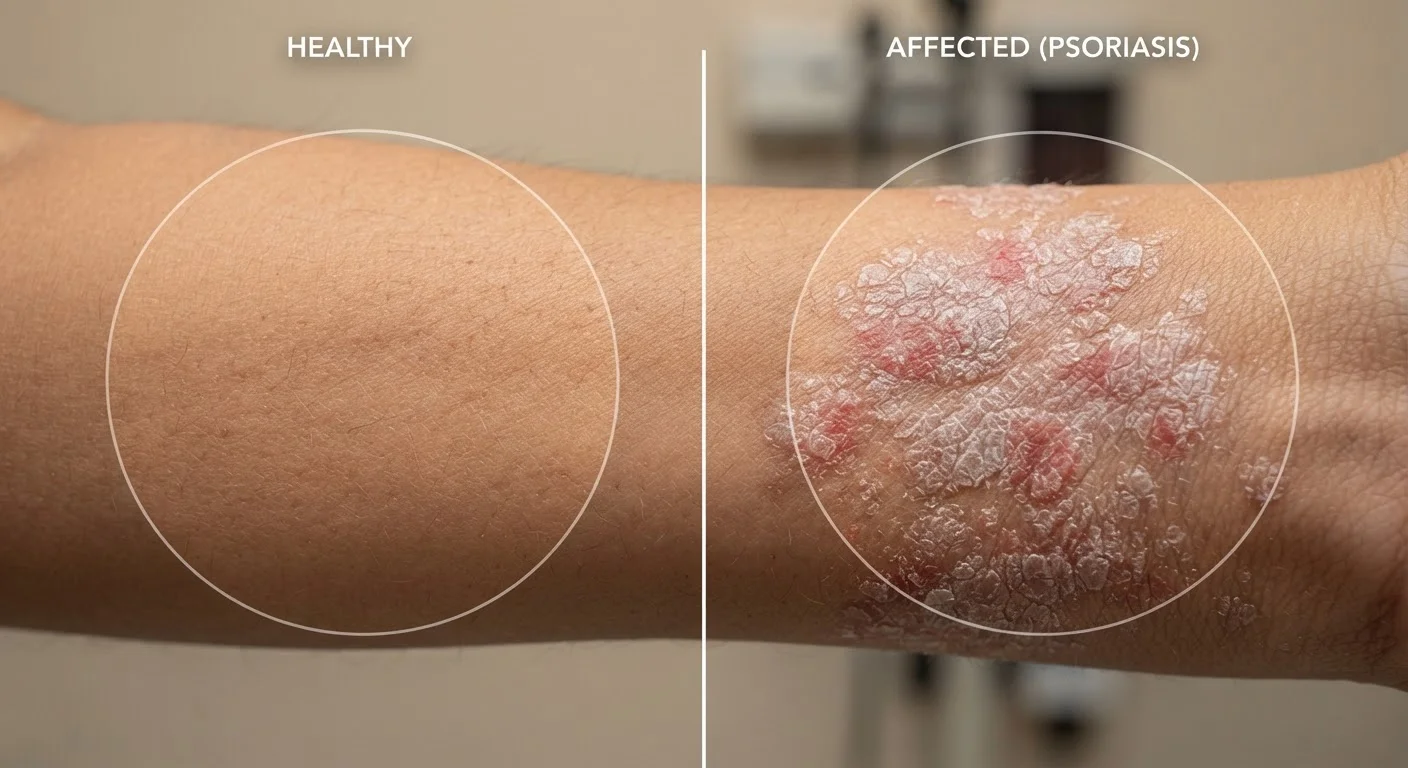
A clinician's evaluation becomes necessary when the rash spreads despite treatment, does not improve after two to four weeks of appropriate antifungal use, involves the scalp or nails, covers a large body surface area, or appears in someone with diabetes, a suppressed immune system, or another chronic condition. Skin conditions can mimic each other: eczema, psoriasis, and contact dermatitis can all produce scaly or red patches that resemble fungal infection. Treating the wrong diagnosis delays recovery and may worsen the underlying condition.
Laboratory confirmation through skin scraping and microscopy or culture is the standard method for diagnosis when the presentation is atypical. A clinician may also order blood tests if a systemic or deeply invasive fungal infection is suspected, though this is rare in otherwise healthy adults.
This article is for informational purposes only and is not a substitute for professional medical advice, diagnosis, or treatment. Always consult a qualified healthcare provider with any questions about a medical condition.