
The Gut-Fungal Connection: How Candida Overgrowth Relates to Digestive Health

Key Takeaways
Candida overgrowth
Candida is a genus of yeast that naturally lives in the digestive tract alongside bacteria and other microorganisms. Under normal conditions, competing bacteria and immune defenses keep its population contained. Candida overgrowth refers to a state in which this yeast expands beyond its typical range, potentially disrupting gut ecology and producing symptoms. It is distinct from invasive candidiasis, which is a serious systemic infection requiring immediate medical treatment.
Candida albicans is the most studied species and can shift between a harmless yeast form and a hyphal (filamentous) form that is associated with tissue adherence and inflammation when conditions favor it.
Candida in a healthy gut
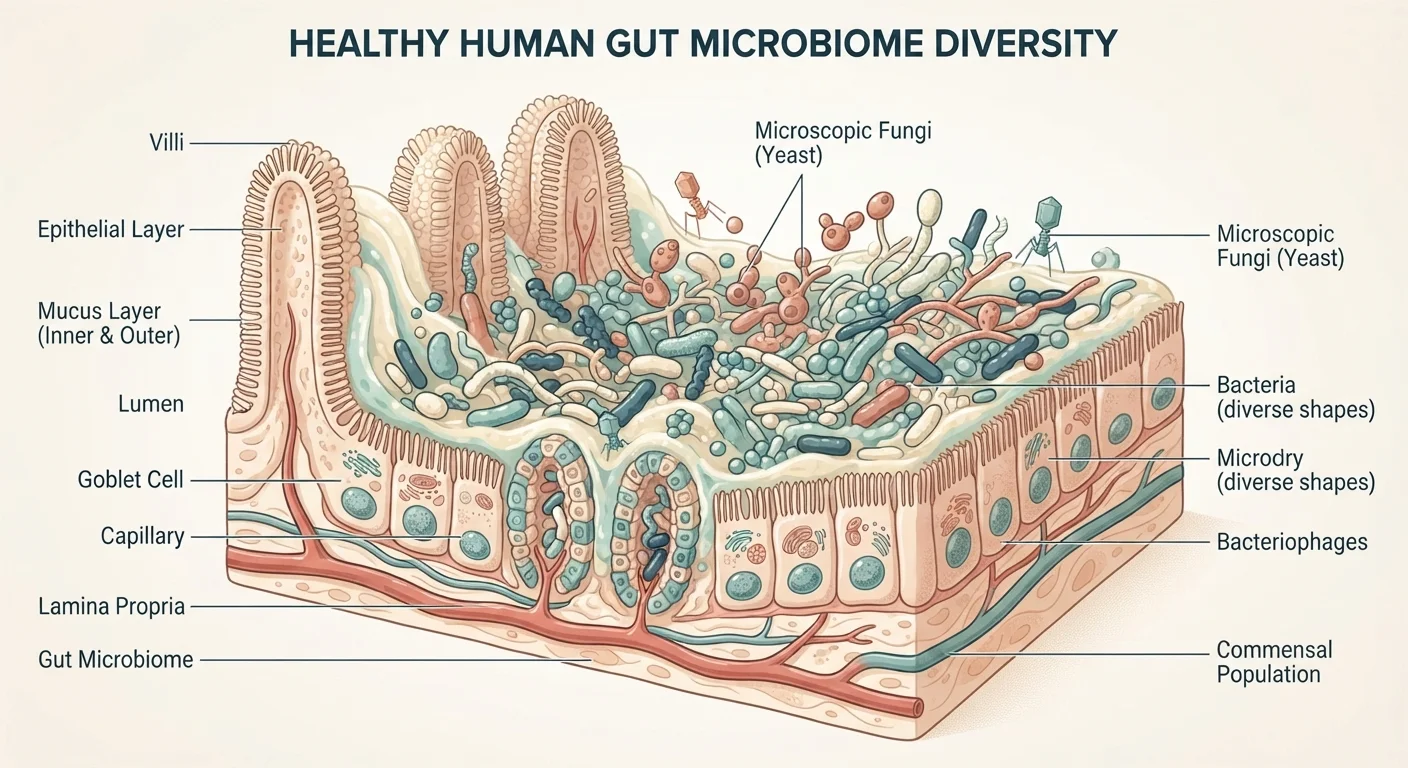
The gut microbiome is a community of bacteria, fungi, viruses, and other microorganisms living in the digestive tract. Candida species, particularly Candida albicans, are ordinary members of this community. Their presence in a stool sample or on a swab is not, by itself, evidence of illness. What matters is proportion and context.
In a balanced gut environment, bacterial populations and immune mechanisms keep Candida from expanding unchecked. The gut's bacterial residents compete for nutrients and space, and immune cells in the intestinal lining monitor for any sign that a commensal organism is overstepping. This competition and surveillance are what distinguish a healthy coexistence from an overgrowth scenario. Fungi are one part of a much larger microbial ecosystem that includes bacteria and viruses, each group occupying a functional role.
What shifts the balance
Several conditions can reduce the bacterial populations that keep Candida in check. Broad-spectrum antibiotics are among the most clearly documented causes; they eliminate beneficial bacteria alongside harmful ones, opening space for yeast expansion. Immune suppression from corticosteroid therapy, chemotherapy, or conditions like uncontrolled diabetes creates a similar vulnerability. Certain chronic conditions consistently raise fungal infection risk in documented clinical populations.
Diet is a more complex factor. Candida thrives on glucose in laboratory conditions, and diets very high in refined carbohydrates are often discussed as a contributing element. The research on direct causation in humans is not settled, but supporting a diverse gut microbiome through varied whole-food intake is broadly consistent with current understanding of gut health. The liver also processes metabolic byproducts of microbial activity, which is one reason metabolic organ health connects to broader gut ecology discussions.
Support bacterial diversity first
The most consistent research finding in gut fungal ecology is that bacterial diversity constrains Candida. Eating a varied diet with fiber from vegetables, legumes, and whole grains supports the bacterial populations that keep yeast in check. This is not a treatment for confirmed overgrowth, but it is a sound general practice for gut health.
Recognizing possible symptoms
Symptoms attributed to Candida overgrowth include bloating, gas, loose stools or constipation, fatigue, and recurrent yeast infections at other sites such as the mouth (thrush) or genitals. The challenge is that these symptoms overlap extensively with irritable bowel syndrome, small intestinal bacterial overgrowth (SIBO), food intolerances, and other conditions.
This overlap is clinically significant. Self-diagnosing Candida overgrowth from a symptom checklist is unreliable, and some online resources overstate the certainty of the connection between these symptoms and yeast. Separating established science from speculative claims about Candida is worth doing before drawing conclusions.
Oral thrush (white patches in the mouth), documented recurrent vaginal candidiasis, and invasive candidiasis in hospitalized or immunocompromised patients have clear clinical definitions. Nonspecific gut symptoms without these markers require professional evaluation before attributing them to fungal overgrowth.
The gut-body feedback loop
The gut microbiome communicates with the immune system, the nervous system, and other organs. A disrupted microbial balance can influence inflammatory signaling, intestinal permeability, and even mood-regulating pathways. The gut shapes whole-body health in ways that extend well beyond digestion, and fungal imbalance is one thread within that larger picture.
When Candida shifts to its hyphal form under stressful gut conditions, some research suggests it can adhere more readily to intestinal tissue and interact with immune cells. Whether this contributes to measurable systemic effects in people without immune compromise is still an area of active investigation. The gut-brain axis, explored in research on gut-brain communication, may also be influenced by shifts in fungal populations, though this remains a developing field.
~70%
Adults who carry Candida in the gut
Population studies estimate that Candida species are detectable in the gut of roughly 70% of healthy adults, confirming its status as a common commensal organism rather than an inherently pathogenic one.
1 in 3
Women with at least one lifetime vaginal yeast infection
CDC data indicate that about 75% of women will have at least one vaginal yeast infection in their lifetime, with Candida albicans the most common cause, illustrating how common site-specific overgrowth is even without systemic disease.
10x
Increased candidiasis risk with broad-spectrum antibiotics
Research in hospitalized patients has found that broad-spectrum antibiotic exposure substantially raises the risk of Candida colonization escalating to infection, with risk estimates varying by antibiotic class and patient immune status.
What the evidence supports for management
Antifungal medications are the established treatment for clinically confirmed Candida infections and are prescribed based on a diagnosis, not symptoms alone. For intestinal overgrowth without a confirmed diagnosis, no protocol has been validated in large, well-controlled trials.
Dietary fiber and fermented foods support bacterial diversity, which in turn supports the competitive environment that keeps Candida contained. The research on fermented foods and gut health covers what is and is not supported by current evidence. Probiotic strains, particularly certain Lactobacillus species, have shown inhibitory effects on Candida in some studies, but the clinical picture is still incomplete.
Anyone with persistent digestive symptoms, a history of immune suppression, or recurrent fungal infections should work with a clinician who can order appropriate testing and discuss options. Understanding fungal health more broadly provides context for how fungi behave in different body environments.
This article is for informational purposes only and is not medical advice. Consult a qualified healthcare professional for personal health concerns, symptoms, or before making changes to any treatment or diet.