

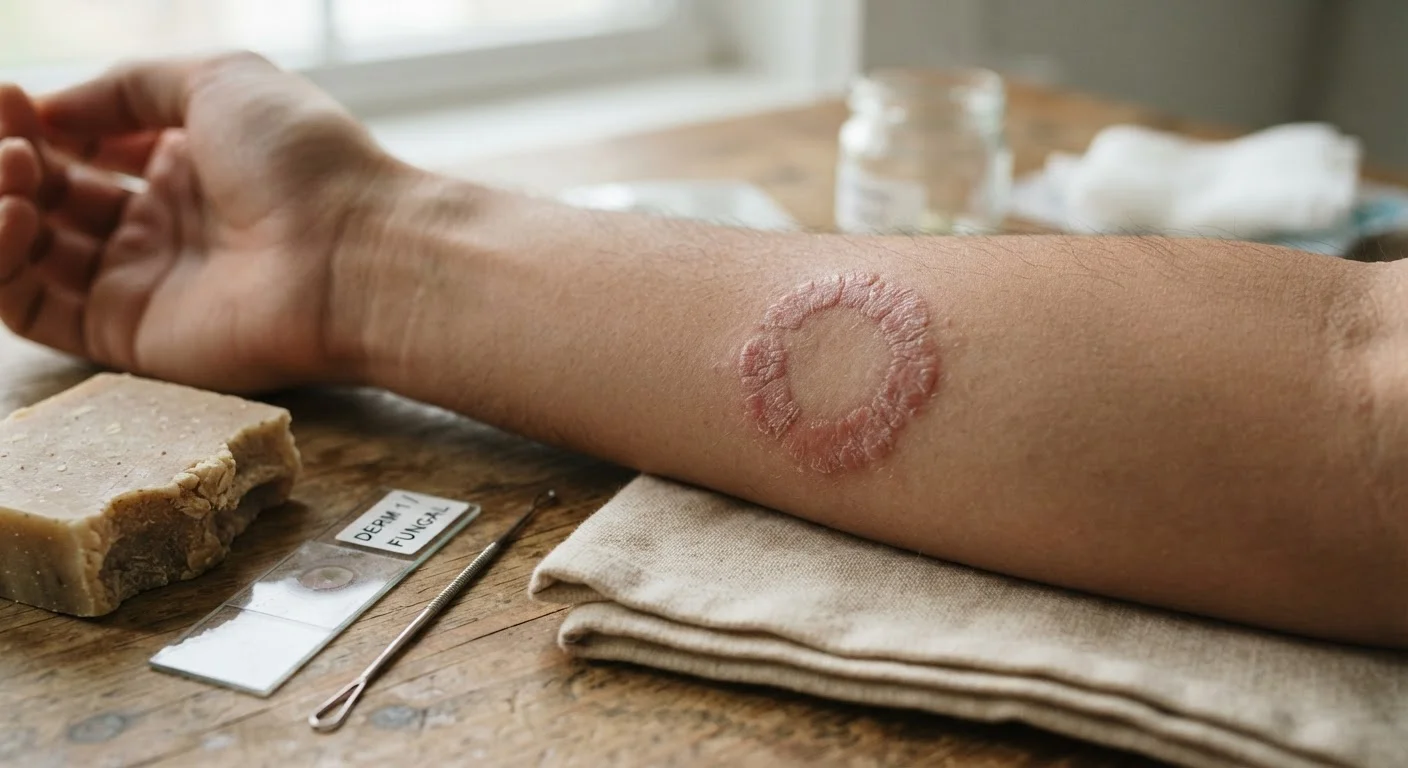
Key Takeaways
Recurrent fungal infection
A recurrent fungal infection is one that returns after appearing to clear, either because treatment was incomplete, the underlying conditions that allowed fungi to thrive were never addressed, or the person was re-exposed to a fungal source. Fungi such as dermatophytes, Candida, and Malassezia can persist in low numbers on skin, nails, or mucous membranes and reactivate when conditions favor their growth. Recurrence is distinct from a new infection, though the two can look identical.
In clinical settings, true recurrence implies the same organism and site; re-infection implies a new acquisition, often from an environmental or human source. Both patterns can occur in the same individual.
The biology behind fungal persistence
Fungi are not passive organisms. Many species that cause common skin and nail infections can survive on host tissue in a low-metabolic state, waiting for conditions to shift in their favor. Dermatophytes, the group responsible for athlete's foot, ringworm, and nail fungus, are particularly adept at persisting in the outer layers of skin and the keratin matrix of nails, where blood-delivered immune responses have limited reach.
This biological reality means that surface-level clearance of symptoms does not equal eradication. A short or interrupted course of antifungal medication may reduce the fungal load enough that itching and redness resolve, but residual organisms can recolonize once treatment stops. For a fuller picture of how fungi establish themselves in the first place, see what fungal infections are and why they happen.
Complete the full treatment course
Antifungal treatment should continue for the full duration prescribed or indicated, even when symptoms resolve early. Visible clearing of redness or itching reflects reduced inflammation, not elimination of the organism. Stopping treatment too soon is the most common, and most avoidable, reason fungal infections return.
Treatment errors that set the stage for return
Incomplete treatment is the most preventable driver of recurrence. Many people stop applying a topical antifungal when the visible rash fades, which typically happens before the fungal population is genuinely suppressed. The same pattern occurs with oral antifungals: clinical improvement arrives well before microbiological clearance.
Misidentification is a related problem. Eczema, psoriasis, and contact dermatitis can resemble fungal infections closely enough to lead someone to self-treat with an antifungal that has no effect on their actual condition, while the real cause progresses. Conversely, using a combination product that contains a corticosteroid alongside an antifungal may briefly suppress inflammation and mask symptoms without resolving the infection. Common errors in treating fungal infections covers these missteps in detail.
How underlying health conditions sustain recurrence
Certain systemic conditions change the biological environment in ways that favor fungal growth. Elevated blood glucose, as seen in poorly controlled diabetes, raises glucose levels in sweat, skin surface secretions, and mucosal tissue, providing more substrate for fungal metabolism. Immune suppression, whether from medication, HIV, or certain autoimmune treatments, reduces the body's ability to contain even small fungal populations.
Hormonal shifts also matter. Changes in estrogen levels, for example during pregnancy or with oral contraceptive use, alter the vaginal microbiome in ways that predispose some people to recurrent Candida infections. Chronic skin conditions that compromise the skin barrier, such as eczema, create entry points and microenvironments where fungi establish more easily. Conditions that raise fungal infection risk examines these mechanisms more closely.
Recurrence does not always mean treatment failure
A returning infection may be re-infection from an external source rather than true recurrence of the original episode. Distinguishing between the two requires attention to exposure history, not just symptom pattern. A clinician can help determine whether the source is internal persistence, re-exposure, or an underlying susceptibility that needs to be addressed directly.
Environmental re-exposure and the role of reservoirs
Even when treatment is complete and well-executed, re-exposure from an environmental reservoir can restart the cycle. Dermatophytes survive on shed skin cells in shower stalls, locker room floors, and pool surrounds for extended periods. Wearing shoes or socks worn during an active infection without decontaminating them can reintroduce the organism immediately after a course of treatment ends.
Household transmission is another factor. Athlete's foot and nail fungus spread readily between family members who share bathing facilities or go barefoot on the same floors. Treating one person while leaving an infected household member or contaminated environment unchanged will often produce repeated episodes. Practical hygiene strategies for interrupting this cycle are outlined in hygiene habits that reduce fungal infection risk.
Antifungal resistance as a contributing factor
Antifungal resistance is less common in skin infections than in systemic fungal disease, but it is not negligible, particularly for Candida species. Repeated, incomplete treatment courses can select for fungal strains with reduced drug sensitivity. A person who has used multiple short courses of the same over-the-counter agent may eventually encounter a population of organisms that responds poorly to that drug class.
Resistance does not always present with obvious treatment failure. An infection may appear to improve, then return in a pattern that gradually becomes harder to resolve with the same approach. If recurrence persists despite appropriate treatment duration, a clinician may request a culture and sensitivity test to identify whether resistance is a factor. Why antifungal resistance is a growing concern provides broader context on this issue.
This article is for informational purposes only and is not medical advice. If you experience recurrent fungal infections, consult a qualified healthcare professional for diagnosis and appropriate treatment guidance.