
Sun Exposure and Skin Ageing: Separating Protective Biology From Cumulative Damage

Key Takeaways
Our Verdict
Moderate, informed sun exposure supports vitamin D production and circadian health. Unprotected, prolonged exposure accelerates structural skin damage independent of any benefit it provides. The two outcomes are not symmetrical: the biological benefit of UV light can be obtained with relatively brief, intermittent exposure, while damage accumulates with each unprotected session over a lifetime.
| Best for | Recommended |
|---|---|
| Those focused on maintaining adequate vitamin D through lifestyle | Brief, regular, unprotected midday exposure on smaller body surface areas, with photoprotection for extended time outdoors |
| Those managing visible skin ageing or at elevated skin cancer risk | Consistent broad-spectrum photoprotection combined with dietary and supplemental vitamin D sources |
| Older adults or those with chronic health conditions | Personalised guidance from a healthcare provider, given altered skin synthesis efficiency and medication interactions |
What UV radiation actually does to skin
Sunlight reaches skin as a spectrum. The two biologically active bands are UVA (320-400 nm) and UVB (280-320 nm). UVB photons carry enough energy to convert 7-dehydrocholesterol in the epidermis into previtamin D3, which the body then processes into the active hormone calcitriol. This is the mechanism behind the widely cited link between sun exposure and vitamin D status.
UVA penetrates more deeply into the dermis. It generates reactive oxygen species that oxidise lipids and proteins, including the collagen fibres that give skin its structural firmness. UVB causes direct DNA damage in keratinocytes and melanocytes, triggering the cellular repair pathways that, over time and with repeated insult, can fail. Both wavelengths contribute to photoageing, which is structurally distinct from the intrinsic ageing that occurs with chronological time alone.
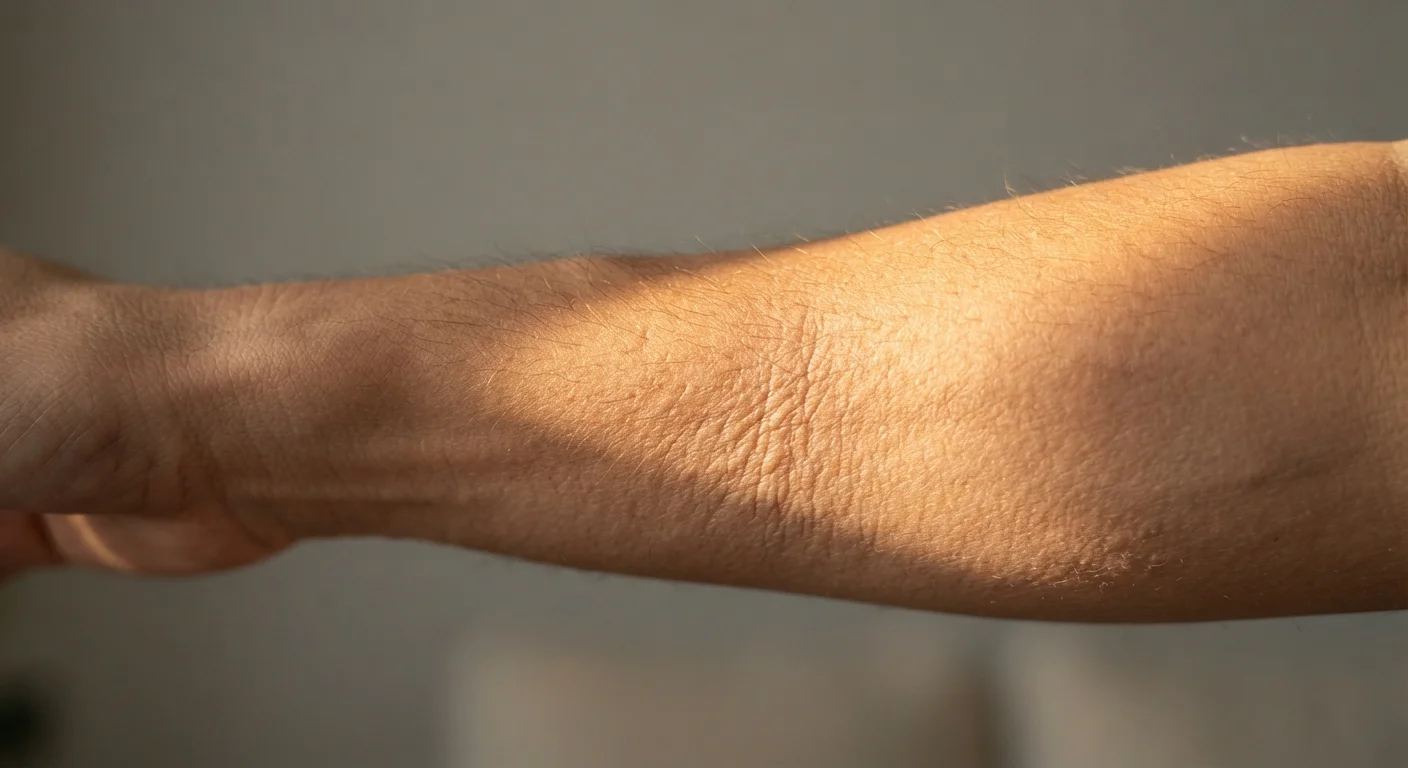
Photoageing produces coarser wrinkles, uneven pigmentation, telangiectasias (dilated small blood vessels), and thickened or atrophied skin depending on cumulative dose and skin biology. Intrinsic ageing, by contrast, produces fine lines and gradual thinning, driven by declining collagen synthesis and slower cell turnover. The two processes overlap in practice, but UV exposure consistently accelerates and exaggerates the structural changes seen with age. See also how pigmentation changes can reflect UV history.
The vitamin D argument: benefit without unlimited exposure
Vitamin D deficiency is associated with a range of health concerns, including impaired immune function, bone density loss, and disrupted cell cycle regulation. UV-triggered synthesis in skin remains the most efficient natural source for most people, particularly in regions with limited dietary sources.
The amount of UVB exposure needed to generate meaningful previtamin D3 is smaller than many people assume. Research published in journals including the British Journal of Dermatology indicates that exposing the face, arms, and hands for a fraction of the time it would take to cause minimal erythemal dose (the threshold for sunburn) several times per week, during midday hours when UVB penetrates the atmosphere more directly, can maintain adequate serum 25-hydroxyvitamin D levels in fair to medium skin tones.
Critically, vitamin D synthesis plateaus. Once previtamin D3 is produced in sufficient quantity, continued UV exposure does not increase output; it degrades the product. This means extended unprotected exposure beyond the synthesis threshold delivers additional DNA damage without proportional benefit. Latitude, season, time of day, cloud cover, and melanin content all affect this threshold, which varies considerably between individuals.
Vitamin D levels can be measured directly
A serum 25-hydroxyvitamin D blood test gives a precise picture of current vitamin D status, removing guesswork from sun exposure decisions. If levels are low, a healthcare provider can recommend whether dietary changes or supplementation are appropriate. This is particularly relevant for older adults, people with limited outdoor time, and those with darker skin tones who require longer UV exposure for equivalent synthesis.
People who have limited sun access, darker skin tones (which require longer exposure for equivalent synthesis), or who are older (skin synthesis efficiency declines with age) may have difficulty meeting vitamin D needs through sun exposure alone. Dietary sources such as fatty fish, fortified foods, and supplementation are established alternatives. A serum 25-hydroxyvitamin D test can clarify actual status before adjusting habits. See how nutritional factors influence skin repair for related context.
Comparing the outcomes: protective biology versus cumulative damage
| Brief, regular UV exposure | Extended unprotected UV exposure | Consistent photoprotection with dietary vitamin D | |
|---|---|---|---|
| Vitamin D synthesis | Adequate for most fair to medium skin tones | No additional gain beyond threshold | Relies on diet or supplementation |
| Collagen and elastin damage | Minimal at low doses | Cumulative and irreversible over time | Substantially reduced |
| DNA damage to skin cells | Low at brief, sub-erythemal doses | Accumulates with each session | Minimised with broad-spectrum protection |
| Skin cancer risk contribution | Low with moderate practice | Elevated with chronic unprotected exposure | Reduced risk with consistent use |
| Practical flexibility | Requires timing and dose awareness | No special management needed | Requires daily application habit |
| Effectiveness across skin tones | Variable; darker skin needs longer exposure | Damage occurs across all skin tones | Effective for all skin tones |
The comparison above reflects the asymmetry between benefit and harm. Vitamin D synthesis requires only brief, low-dose UV exposure and can be supplemented through diet or oral forms. Photoageing and DNA damage, by contrast, accumulate irreversibly across a lifetime and cannot be offset by any single compensatory habit. This does not make sun exposure categorically harmful; it means the dose-response curves for benefit and harm point in different directions after a modest threshold.
Melanin is worth addressing directly. Darker skin tones have more eumelanin, which absorbs and scatters UV photons, providing a natural SPF equivalent that can range from approximately 8 to 13 in very dark skin. This reduces but does not eliminate UV damage. Photoageing in darker skin tones often presents differently, with pigment changes more prominent than wrinkling in early stages, but structural collagen damage still occurs. No skin tone operates outside the biology of UV-induced oxidative stress.
How internal health modifies sun-related skin outcomes
Skin is not a passive barrier. Its capacity to manage UV-induced damage depends partly on the same internal systems that govern overall repair and inflammation. Nutritional status affects how well skin cells respond to oxidative stress. Antioxidants such as vitamin C and E, carotenoids, and polyphenols are present in the dermis and epidermis and influence the magnitude of UV-induced oxidative damage. Dietary nutrients directly affect skin barrier integrity and repair capacity.
Chronic psychological stress also modifies skin biology. Elevated cortisol suppresses collagen synthesis and impairs the skin's immune surveillance, which may reduce its ability to clear UV-damaged cells. Stress hormones alter skin repair at a cellular level, compounding the effects of environmental exposures.
Ageing itself reduces the skin's UV resilience. Collagen production declines with age, DNA repair enzyme activity slows, and the immunological surveillance that identifies and eliminates pre-cancerous cells becomes less efficient. Repair capacity changes across the lifespan in ways that make consistent photoprotection increasingly relevant with age, not less.
This article is for informational purposes only and is not medical advice. Consult a qualified healthcare professional for guidance specific to your health history, skin type, and individual circumstances.