

Key Takeaways
Metabolic syndrome
Metabolic syndrome is a cluster of five interconnected conditions: high blood pressure, elevated blood sugar, excess abdominal fat, high triglycerides, and low HDL (good) cholesterol. A person is diagnosed with metabolic syndrome when three or more of these are present at the same time. The liver sits at the center of this cluster because it regulates fat storage, glucose output, and cholesterol production.
Insulin resistance is the primary driver linking metabolic syndrome to nonalcoholic fatty liver disease (NAFLD), now increasingly termed metabolic dysfunction-associated steatotic liver disease (MASLD) in clinical guidelines.
Why the liver is central to metabolic syndrome
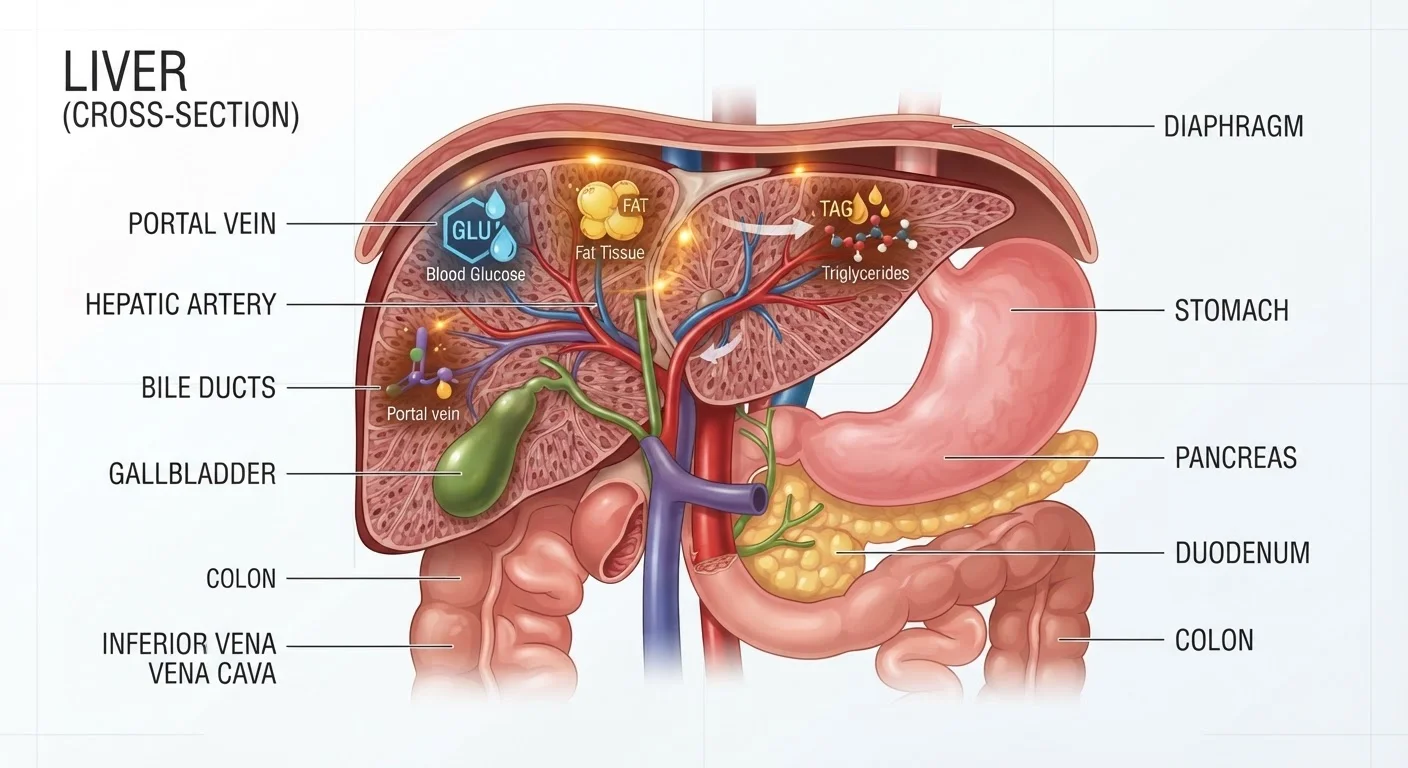
The liver is not a passive bystander in metabolic syndrome. It actively processes nearly every metabolic signal in the body: it converts dietary carbohydrates and fats into usable fuel, packages cholesterol for transport, and regulates how much glucose enters the bloodstream between meals. When the five conditions of metabolic syndrome develop, each one places additional load on these liver functions.
Excess abdominal fat, particularly visceral fat around the organs, releases fatty acids and inflammatory signals directly into the portal vein, which drains into the liver. The liver then has to process an abnormal volume of these fatty acids, and the excess gets stored as fat within liver cells. This is the mechanism behind metabolic fatty liver disease. High triglycerides and low HDL cholesterol follow in part from this same overload, because the liver compensates by packaging and releasing more triglyceride-rich particles into the blood.
For a broader foundation on liver function, the beginner's guide to liver health covers what the liver does and why it matters across organ systems.
Insulin resistance: the thread connecting the components
Insulin is the hormone that signals cells to absorb glucose from the blood. In insulin resistance, cells respond poorly to that signal, so the pancreas produces more insulin to compensate. Elevated insulin levels promote fat storage, suppress fat breakdown, and instruct the liver to produce more glucose, driving blood sugar higher even in a fasted state.
The liver itself becomes insulin resistant in metabolic syndrome. Normally, insulin tells the liver to stop releasing glucose after a meal. When that signal fails, the liver keeps producing glucose, contributing to fasting hyperglycemia. At the same time, insulin resistance promotes the conversion of excess carbohydrates into triglycerides in the liver, a process called de novo lipogenesis. Both pathways increase liver fat and worsen the overall metabolic picture.
This connection extends beyond the liver. Metabolic health and blood sugar explores how insulin sensitivity links to cardiovascular risk and systemic inflammation in more detail.
Small dietary shifts can reduce liver fat
Replacing sugar-sweetened beverages with water or unsweetened drinks is one of the most direct ways to reduce fructose delivery to the liver. Even a partial reduction in added sugar intake, without a complete diet overhaul, has been associated with measurable decreases in liver fat in short-term studies. Talk with a dietitian if you want personalized guidance.
Evidence-based habits that support liver function
Physical activity is one of the best-studied interventions for liver fat. Both aerobic exercise and resistance training reduce liver fat independent of weight loss, though combining them with modest calorie reduction produces the most consistent results in clinical research. The mechanism involves improved insulin sensitivity in muscle tissue, which reduces the glucose and fatty acid burden on the liver.
Dietary patterns matter considerably. Diets high in added sugars, particularly fructose, accelerate hepatic fat accumulation because the liver processes fructose almost exclusively, unlike glucose, which is distributed across many tissues. Replacing ultra-processed foods and sugar-sweetened beverages with whole foods, vegetables, legumes, and unsaturated fats reduces this burden. The dietary patterns most linked to liver health section of this site covers Mediterranean and plant-forward eating in more detail.
Alcohol adds a separate metabolic load. Even moderate regular alcohol use can worsen liver fat in people who already have metabolic syndrome, so clinicians often recommend limiting or avoiding it in this context.
25%
Global prevalence of MASLD (metabolic fatty liver)
Estimates from multiple population studies suggest roughly 1 in 4 adults worldwide has some degree of metabolic fatty liver disease, with higher rates in people who also meet criteria for metabolic syndrome.
5-10%
Weight loss shown to reduce liver fat measurably
Clinical trials have consistently found that losing 5 to 10 percent of body weight through diet and exercise reduces liver fat content and improves liver enzyme levels in people with MASLD.
3x
Increased MASLD risk with metabolic syndrome
People who meet criteria for metabolic syndrome have been found in observational research to have substantially higher rates of liver fat accumulation compared to those without the condition.
When to seek medical guidance
Metabolic syndrome and early liver fat accumulation typically produce no symptoms. Many people are unaware they have either condition until a routine blood panel or imaging study reveals the finding. Signs that the liver may be under stress such as persistent fatigue, right-sided upper abdominal discomfort, or unexplained changes in skin color warrant prompt evaluation by a clinician.
Blood markers commonly assessed include fasting glucose, hemoglobin A1c, a lipid panel, liver enzymes (AST and ALT), and sometimes a fasting insulin level. Imaging such as abdominal ultrasound can detect liver fat. These assessments guide whether lifestyle change alone is sufficient or whether additional clinical management is appropriate.
The complete picture of liver health covers the full range of monitoring, lifestyle, and medical considerations across the lifespan.
This article is for informational purposes only and is not medical advice. Consult a qualified healthcare professional for personal assessment, diagnosis, or treatment decisions.