

Key Takeaways
Lymphatic function under stress
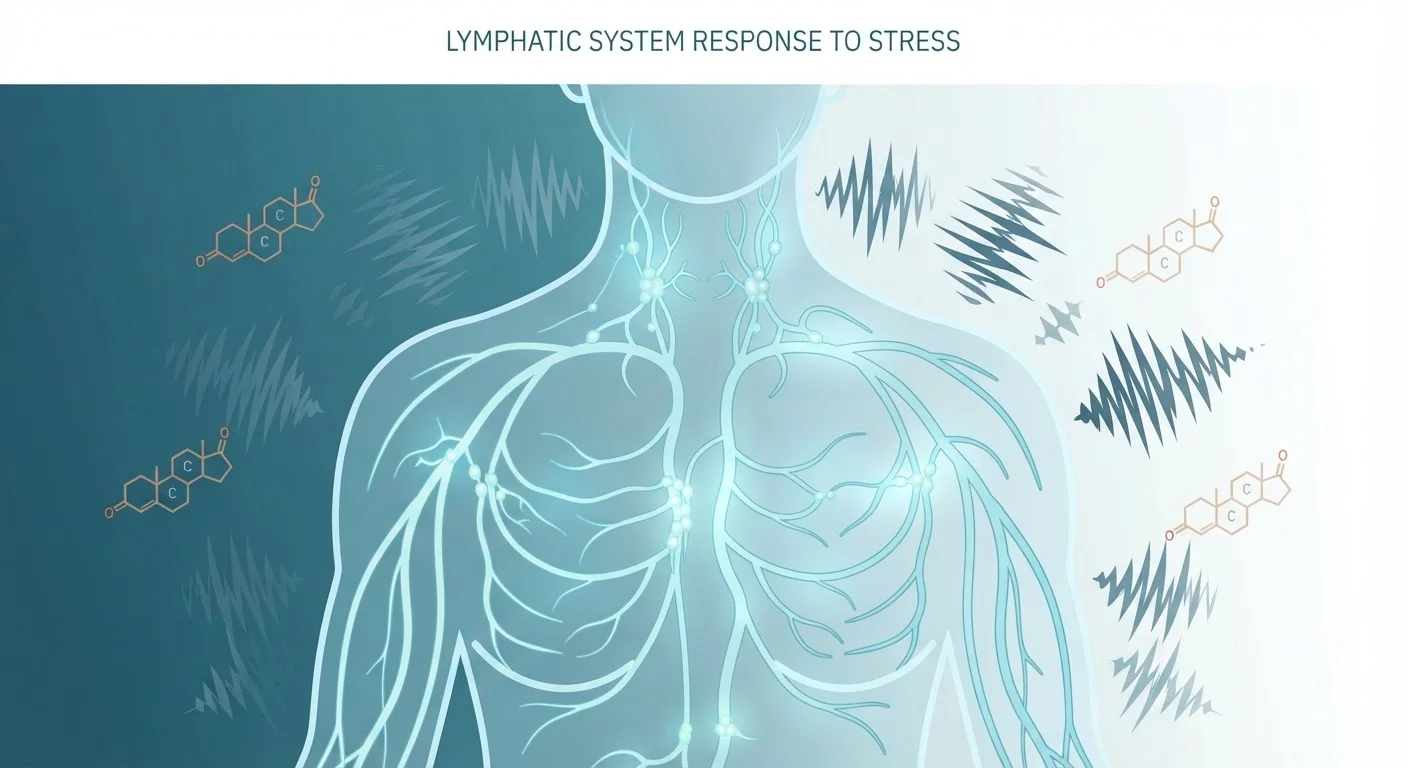
The lymphatic system is a network of vessels, nodes, and organs that drains excess fluid from tissues, filters pathogens, and moves immune cells throughout the body. Under chronic psychological stress, sustained release of hormones such as cortisol alters how lymphatic vessels contract, how immune signals travel, and how efficiently fluid and waste products are cleared. The result is a system that operates below its normal capacity for weeks or months at a time.
Lymphatic vessel smooth muscle cells express glucocorticoid receptors, meaning cortisol can directly reduce the frequency and force of the intrinsic pumping contractions that propel lymph fluid centrally.
What the lymphatic system does and why stress matters
The lymphatic system runs parallel to the circulatory system, draining fluid that leaks from blood capillaries into surrounding tissue. It also filters bacteria, cellular debris, and other particles through lymph nodes, and it transports immune cells to wherever they are needed. Unlike blood, lymph has no dedicated pump. It relies on the rhythmic contraction of lymphatic vessel walls, pressure from breathing, and the mechanical squeeze of surrounding muscles to keep fluid moving.
Psychological stress activates the hypothalamic-pituitary-adrenal (HPA) axis, producing cortisol and other stress hormones. A brief stress response is normal and recoverable. Chronic stress, meaning sustained activation over weeks or months, maintains hormone levels at a range the lymphatic system was not designed to tolerate indefinitely. The broader physiological consequences of prolonged stress extend well beyond mood, touching fluid regulation, immune surveillance, and tissue repair.
How cortisol slows lymphatic vessel contractions
Lymphatic vessels contain smooth muscle cells that contract spontaneously to generate the pressure needed to move fluid forward. Research in vascular physiology shows that glucocorticoid receptors are present on these cells, which means cortisol can bind directly to the lymphatic vessel wall and reduce contraction frequency. When contractions slow, lymph pools in tissues. The earliest signs are subtle: mild puffiness in the hands or ankles, a sense of heaviness in the limbs, or skin that indents slightly when pressed.
Cortisol also suppresses the production of certain cytokines (chemical messengers) that lymphatic endothelial cells use to regulate their permeability and tone. The combined effect is a vessel network that is both less contractile and less responsive to the immune signals that normally fine-tune its activity. Because sustained stress reshapes hormone production over months, these changes are not temporary.
30-40%
Reduction in lymphocyte count during acute psychological stress
Research in psychoneuroimmunology shows cortisol-driven lymphocyte redistribution can reduce circulating counts within hours of a significant stressor.
Up to 50%
Decrease in lymphatic pumping frequency with glucocorticoid exposure
Animal model studies on isolated lymphatic vessels show contraction frequency drops substantially when glucocorticoid concentrations rise to levels seen during chronic stress.
3x
Greater inflammatory marker elevation in chronically stressed adults
Population studies examining interleukin-6 levels consistently find chronic stress groups show sustained pro-inflammatory cytokine elevation compared to low-stress controls.
Inflammation, immune cells, and lymph node congestion
Chronic stress promotes a state of low-grade systemic inflammation. Pro-inflammatory cytokines such as interleukin-6 and tumor necrosis factor-alpha remain mildly but persistently elevated. Lymph nodes filter lymph and coordinate immune responses, and when inflammatory signals are constant, nodes can become chronically activated. This sustained activity taxes the node's filtering capacity without a true infection present to resolve.
Immune cell transit also slows. Lymphocytes (a class of white blood cell) circulate through lymphatic vessels to patrol tissues and return to the bloodstream. Cortisol interferes with this trafficking, reducing the number of lymphocytes available at peripheral tissues. The practical consequence is a slower initial immune response when a real pathogen arrives. Gut health and lymphatic health overlap considerably here: the gut-associated lymphatic tissue is one of the body's largest immune compartments, and stress-driven changes in gut permeability can increase the antigenic load that lymphatic tissue must process.
Lifestyle factors that compound the problem
Three behaviors that stress promotes independently each reduce lymphatic flow on their own.
- Shallow thoracic breathing, common during anxiety, reduces the diaphragmatic pressure changes that help draw lymph toward the thoracic duct, the main drainage vessel in the chest.
- Prolonged sitting removes the muscle contractions that serve as an external pump for lymphatic vessels in the legs and abdomen.
- Sleep disruption, a near-universal feature of chronic stress, cuts the tissue clearance period that the lymphatic system uses most efficiently at night.
Skin changes under chronic stress can reflect this compounding effect: impaired lymphatic clearance contributes to the low-grade dermal inflammation that alters sebum production and barrier integrity.
Start with breathing before anything else
If movement or sleep changes feel difficult to implement immediately, diaphragmatic breathing is accessible anywhere and at no cost. Breathing slowly into the lower abdomen for five to ten minutes creates meaningful pressure changes in the thoracic duct and can be done seated at a desk. Treating breath work as a daily habit rather than a crisis response gives the lymphatic system consistent mechanical support throughout the day.
Practical strategies to support lymphatic flow
No lifestyle habit reverses the effects of clinical lymphatic disease, but several practices reduce the physiological burden that chronic stress places on a healthy lymphatic system.
Diaphragmatic breathing: Slow, deep abdominal breaths increase thoracic pressure swings, which act as the primary suction mechanism drawing lymph toward central drainage points. Breathing exercises used in stress reduction practices such as diaphragmatic training or structured breath work have a dual benefit here.
Regular low-to-moderate movement: Walking, swimming, or yoga each generate the rhythmic muscle contractions that propel lymph mechanically. The movement and recovery strategies that reduce everyday discomfort overlap with those that keep lymphatic vessels active.
Sleep consistency: Maintaining a regular sleep schedule supports the restorative tissue clearance that the lymphatic system performs most efficiently during sleep. Reducing cortisol output through better sleep also attenuates the direct vessel-suppressing effects described above.
Hydration: Adequate fluid intake maintains the volume and viscosity of lymph, making it easier for vessels to transport. Dehydration thickens interstitial fluid and adds mechanical resistance.
This article is for informational purposes only and is not medical advice. If you have persistent swelling, frequent infections, or other symptoms that concern you, consult a qualified healthcare professional for evaluation and guidance.