

Key Takeaways
Stress-induced gut disruption
Stress-induced gut disruption describes the measurable physical changes that occur in the gastrointestinal tract when the body activates its stress response. These changes include altered movement of food through the intestines, weakening of the gut's protective lining, and shifts in the microbial communities that live there. Over time, these effects can contribute to digestive symptoms and broader health problems.
The process is mediated primarily through the hypothalamic-pituitary-adrenal (HPA) axis and the autonomic nervous system, both of which interact directly with enteric neurons and gut-associated immune tissue.
The physiological chain from stress to gut
When the brain perceives a threat, real or anticipated, it activates the hypothalamic-pituitary-adrenal (HPA) axis. The adrenal glands release cortisol and catecholamines into circulation. These hormones prepare the body for urgent action by redirecting blood flow toward large muscles and away from organs deemed non-essential in an emergency, including the gastrointestinal tract.
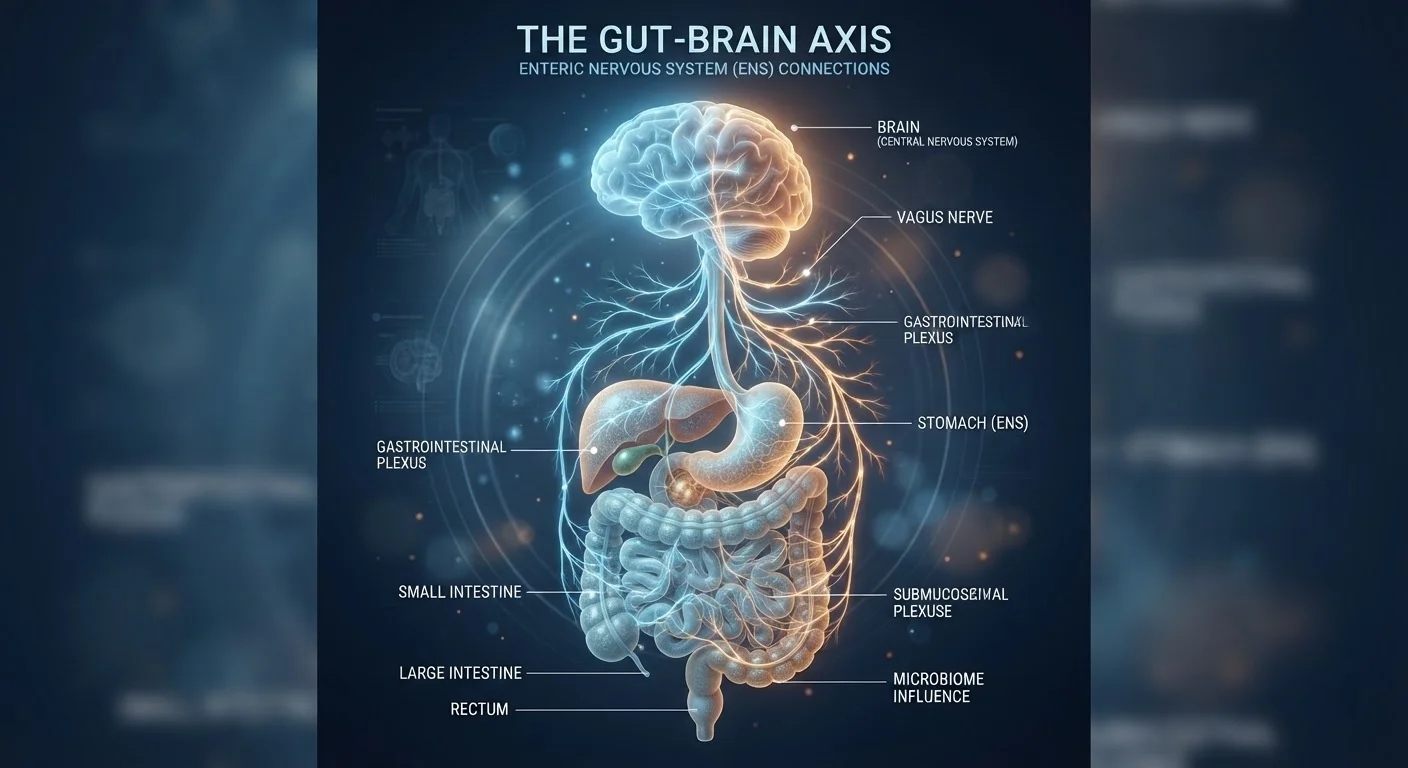
The gut has its own nervous system, the enteric nervous system, sometimes called the second brain. It contains roughly 500 million neurons and normally coordinates the entire process of digestion autonomously. When the central nervous system signals threat, the autonomic nervous system overrides normal enteric function. Parasympathetic activity (the "rest and digest" state) drops. Sympathetic activity rises. The result is a gut operating in a physiologically suppressed state.
This is not a malfunction. In the short term, the body is correctly prioritizing survival over digestion. The problem arises when the stress response stays activated for weeks or months. The gut was not designed to run in that suppressed state continuously, and the consequences accumulate across three measurable domains: motility, barrier integrity, and microbial balance.
For a broader look at how sustained stress affects hormone production well beyond the acute phase, see how chronic stress affects the endocrine system over time.
What stress does to gut motility
Motility refers to the coordinated muscular contractions that move food and waste through the intestines. Stress disrupts this coordination in two opposing ways, depending on where in the gut the disruption occurs and the individual's baseline nervous system response.
In the upper gastrointestinal tract, stress generally slows gastric emptying. Food stays in the stomach longer, producing early fullness, nausea, and upper abdominal discomfort. In the lower tract, the picture often reverses. Stress-related corticotropin-releasing hormone (CRH), released in the gut itself, accelerates colonic transit. This is the physiological basis for stress-induced diarrhea and urgency.
Some individuals experience predominantly constipation under chronic stress, particularly when sympathetic nervous system dominance reduces peristaltic activity throughout the colon. Others cycle between both patterns. The variation is partly genetic, partly dependent on which stress hormones predominate, and partly shaped by prior gut history.
~500 million
Neurons in the enteric nervous system
The enteric nervous system, embedded in the gut wall, contains roughly 500 million neurons, enabling largely autonomous digestive control that stress can override.
Up to 40%
IBS patients with comorbid anxiety or depression
Research in gastroenterology consistently finds elevated rates of anxiety and depression among people with irritable bowel syndrome, reflecting the gut-brain stress overlap.
30-50%
Reduction in microbial diversity under chronic stress
Animal model studies have reported significant declines in gut microbial diversity following sustained psychological stress exposure.
How stress weakens the gut barrier
The intestinal lining is a single layer of epithelial cells held together by proteins called tight junctions. This barrier selectively allows nutrients to pass into the bloodstream while keeping bacteria, undigested food particles, and microbial byproducts out. Cortisol and stress-activated mast cells (immune cells embedded in the gut wall) degrade tight junction proteins, increasing what researchers call intestinal permeability.
When permeability rises, bacterial fragments such as lipopolysaccharide (LPS) can cross into circulation. The immune system treats LPS as a pathogen signal, triggering low-grade systemic inflammation. This inflammation does not stay confined to the gut. It travels. Research has linked elevated circulating LPS to fatigue, mood disturbance, and metabolic changes in multiple organ systems.
The liver receives a large share of portal blood from the gut, so it is among the first organs to encounter this increased microbial load. For context on how the liver handles systemic toxin burden, see the liver health hub. The lymphatic system, which drains gut-associated immune tissue, is also affected, as outlined in how chronic stress affects lymphatic function.
Microbial disruption and the feedback it creates
The gut microbiome, the community of bacteria, fungi, and other microorganisms living in the intestines, is sensitive to both the hormonal and immune changes that stress produces. Elevated cortisol alters the chemical environment of the gut, and stress-related changes in mucus production and motility shift the physical habitat these organisms occupy.
Studies in both animal models and human populations have found that chronic stress reduces microbial diversity, a pattern associated with poorer health outcomes across multiple conditions. Species that produce short-chain fatty acids (SCFAs), including butyrate, decline. SCFAs are the primary energy source for colonocytes (the cells lining the colon) and have anti-inflammatory properties. Their reduction compounds the barrier problem described above.
The disruption then loops back. A less diverse microbiome with fewer SCFA producers generates less of the signaling molecules that the enteric nervous system and the vagus nerve use to communicate with the brain. This is the feedback pathway that connects gut disruption to mood and cognitive changes. The article on the gut-brain connection covers these bidirectional mechanisms in detail. For a look at what else disrupts microbial balance, see what disrupts the gut microbiome and how it tries to recover.
This article is for informational purposes only and is not medical advice. Consult a qualified healthcare professional for any digestive symptoms, treatment decisions, or concerns about your health.