

Key Takeaways
Gut microbiome disruption
Gut microbiome disruption, often called dysbiosis, refers to a shift in the normal balance of bacteria and other microorganisms living in the digestive tract. This imbalance can reduce microbial diversity, allow potentially harmful species to grow, and interfere with the gut's ability to digest food, produce essential compounds, and support immunity. Many common factors, including antibiotics, stress, and diet, can trigger these shifts.
Dysbiosis is not a single defined state but a spectrum of compositional and functional changes assessed through tools such as 16S rRNA gene sequencing and metagenomic analysis.
What dysbiosis means and why it matters
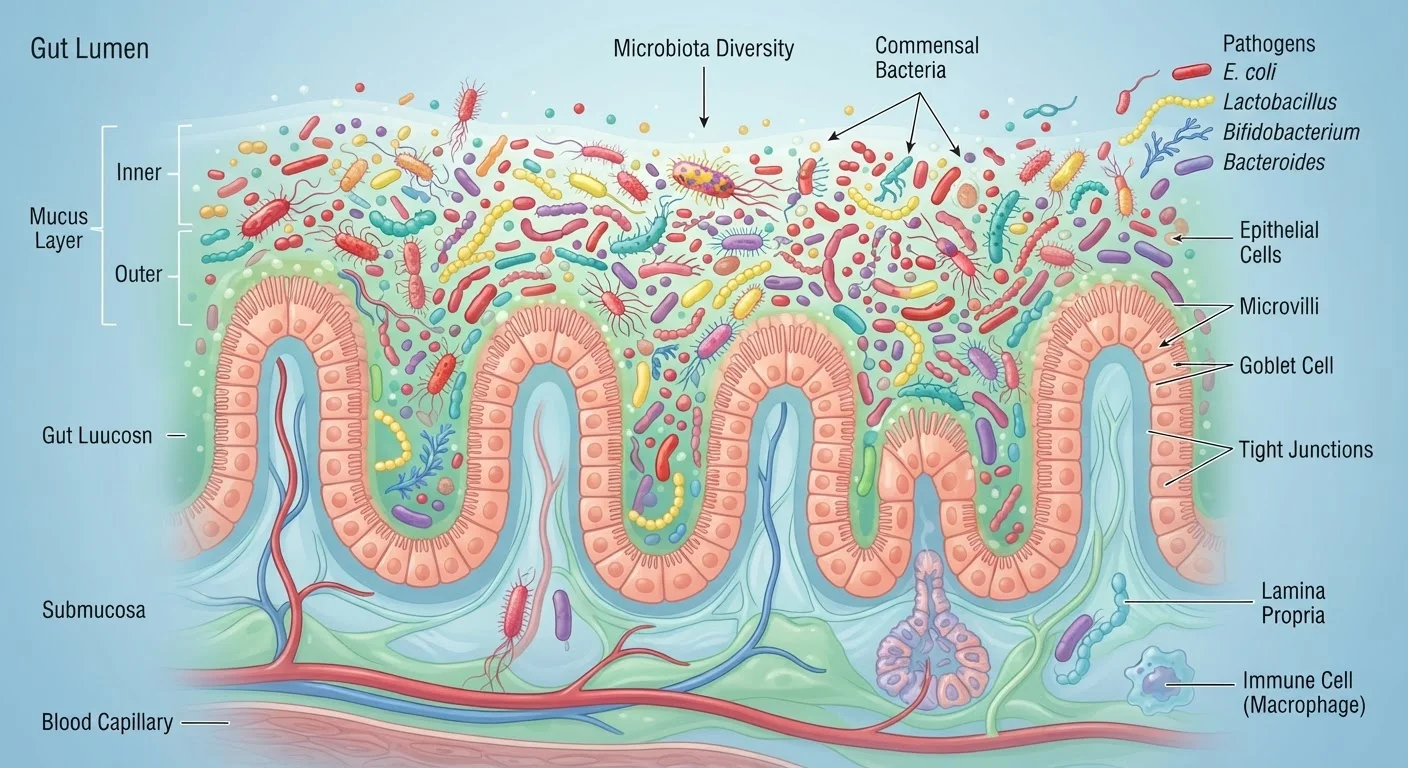
The gut microbiome is a community of trillions of bacteria, fungi, viruses, and archaea that live primarily in the large intestine. Under healthy conditions, this community is diverse, with many different species filling different functional roles: fermenting dietary fiber, producing short-chain fatty acids (SCFAs), synthesizing certain vitamins, and supporting the gut's immune barrier.
Dysbiosis occurs when that balance is disturbed. It can involve a loss of diversity, a drop in beneficial species like Bifidobacterium and Lactobacillus, or an overgrowth of species that cause inflammation or compromise the gut lining. The term does not describe a single condition; it covers a range of microbial states that differ by cause, severity, and individual baseline. For a clear breakdown of the vocabulary used in this field, see the microbiome science glossary.
The consequences of sustained dysbiosis extend beyond digestion. Because roughly 70 percent of immune tissue is associated with the gut, microbial imbalances are studied in connection with immune function, inflammation, and metabolic health. More on that relationship is covered in how gut bacteria influence your immune system.
The most documented disruptors
Antibiotics are the most thoroughly studied acute disruptors. They work by killing bacteria without fully distinguishing between harmful pathogens and beneficial residents. Broad-spectrum antibiotics can reduce microbial diversity within days, with some studies documenting losses that persist for months after a single course. Repeated antibiotic use compounds these effects.
Diet shapes the microbiome continuously. Beneficial bacteria ferment dietary fiber to produce SCFAs like butyrate, which feeds colonocytes (the cells lining the colon) and helps maintain gut barrier function. Diets consistently low in fiber reduce SCFA production and can allow less desirable species to expand into the space left by reduced commensal bacteria. Ultra-processed foods and high intakes of certain fats have also been associated with shifts in microbial composition in observational research.
Chronic stress acts through the gut-brain axis. Stress hormones, particularly cortisol, affect gut motility and can increase intestinal permeability, changing the local environment for bacteria. How stress disrupts the gut covers this physiological pathway in detail.
Sleep disruption and sedentary behavior also influence microbial composition. Research has shown measurable differences in microbial diversity between people with regular sleep patterns and those with chronic sleep disruption. Physical activity is associated with higher levels of SCFA-producing bacteria in several human cohort studies. These lifestyle connections are explored further in lifestyle factors that shape your gut microbial community.
Supporting recovery through diet
Eating a wide variety of fiber-rich plant foods, including vegetables, legumes, and whole grains, gives beneficial bacteria the substrate they need to repopulate after a disruption. Diversity of plant foods appears to matter as much as total fiber quantity in human microbiome research. If you are managing a specific health condition or recovering from illness, a registered dietitian can help you build an appropriate dietary plan.
How the microbiome responds to disruption
The microbiome is not static. It has a property researchers call resilience, meaning the capacity to return toward a previous composition after a disturbance. This works through several mechanisms: remaining bacterial populations reproduce to fill vacated ecological niches, dietary inputs continue to select for certain species, and the immune system interacts with the microbial community to help stabilize it.
Resilience varies considerably between individuals. Age, baseline diversity, genetics, and diet all influence how quickly and completely recovery occurs. In studies of antibiotic-induced dysbiosis, some participants regained near-baseline diversity within a month, while others showed persistent gaps at six months. There is no universal recovery timeline.
Not all disruptions are equally reversible. A single short course of one antibiotic in a generally healthy adult is a different scenario from repeated broad-spectrum courses in someone with an already-limited microbial baseline. Similarly, the microbiome appears more adaptable to short-term dietary shifts than to years of a fiber-depleted diet.
Eating a wide variety of plant foods supplies the fiber substrate that supports bacterial recovery. Fermented foods have been studied for their potential to introduce live microorganisms and increase microbial diversity, with some positive results in short-term human trials, though this is an area of ongoing research. For habits that can work against recovery without obvious signs, see habits that undermine gut bacterial balance.
This article is for informational purposes only and is not medical advice. Consult a qualified healthcare provider for personal health concerns, diagnosis, or treatment decisions.