

Key Takeaways
Option A
Soluble fibre
The gel-forming, microbiome-feeding type.
Best for: People looking to support blood sugar regulation, cholesterol management, and beneficial gut bacteria.
Option B
Insoluble fibre
The structural, transit-regulating type.
Best for: People looking to improve bowel regularity, reduce constipation, and support colon health.
If you experience frequent constipation or slow transit
Insoluble fibre
Insoluble fibre adds physical bulk to stool and speeds colonic transit, which tends to reduce constipation more directly than soluble fibre.
If you are managing blood sugar or cholesterol levels
Soluble fibre
Soluble fibre forms a viscous gel in the gut that slows glucose absorption and binds bile acids, both of which support glycaemic and lipid management.
If you want to support a diverse gut microbiome
Soluble fibre
Most fermentable prebiotics are soluble fibres; gut bacteria ferment them into short-chain fatty acids that nourish the colon lining and modulate immune function.
If your overall digestive health is your primary concern
Soluble fibre
Eating a wide range of plant foods that deliver both fibre types is the most evidence-supported approach for long-term digestive function.
If you have irritable bowel syndrome with diarrhea
Soluble fibre
Soluble fibre can help normalise stool consistency, whereas a sudden increase in insoluble fibre may worsen symptoms in some individuals. Always consult a healthcare provider for personal guidance.
How soluble and insoluble fibre differ at a basic level
Dietary fibre is the portion of plant food that the human body cannot break down with its own digestive enzymes. Beyond that shared characteristic, soluble and insoluble fibre behave in fundamentally different ways once they enter the digestive tract.
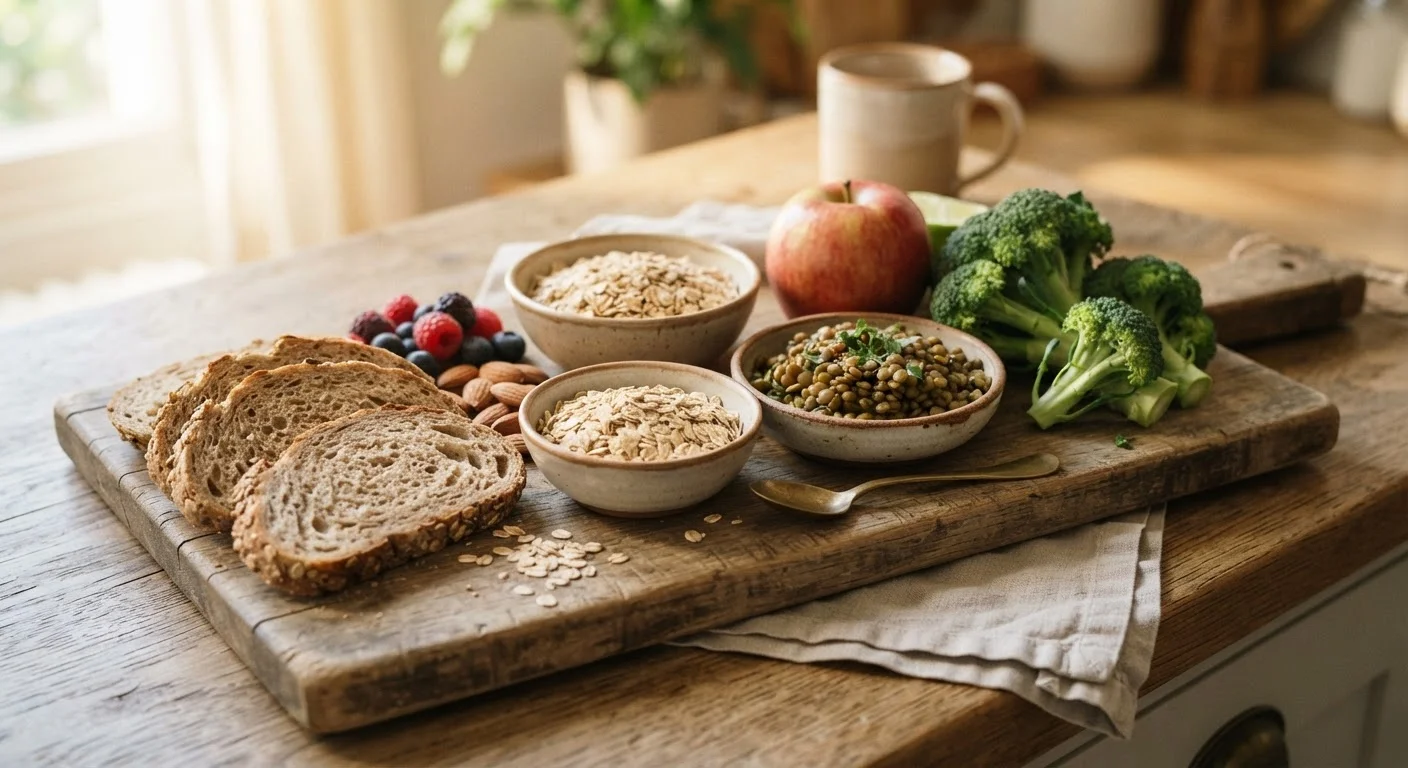
Soluble fibre dissolves in water to form a thick, gel-like substance. This gel coats the inner wall of the small intestine, slowing the movement of food and the absorption of nutrients, including glucose and dietary cholesterol. Common sources include oats, barley, legumes, apples, and psyllium husk. Once the gel reaches the large intestine, gut bacteria ferment much of it, producing short-chain fatty acids such as butyrate, propionate, and acetate. These compounds are described in more detail in our guide to short-chain fatty acids.
Insoluble fibre does not dissolve. It retains its physical structure throughout the gut, absorbing water as it travels and adding bulk and softness to stool. This bulk stimulates the muscular contractions of the colon wall, which move waste through more efficiently. Wheat bran, the skins of vegetables and fruit, whole grain cereals, and nuts are concentrated sources.
| Criterion | Soluble fibre | Insoluble fibre |
|---|---|---|
| Behaviour in water | Dissolves, forms a gel | Does not dissolve, absorbs water |
| Primary location of action | Small intestine and colon | Colon |
| Effect on transit time | Slows gastric emptying | Speeds colonic transit |
| Fermented by gut bacteria | Yes, highly fermentable | Partially, lower fermentation yield |
| Blood sugar effect | Moderates post-meal glucose rise | Minimal direct effect |
| Cholesterol effect | Binds bile acids, lowers LDL | Minimal direct effect |
| Key food sources | Oats, legumes, apples, psyllium | Wheat bran, vegetable skins, nuts |
| Primary digestive benefit | Microbiome support, glycaemic control | Stool bulk, regularity, constipation relief |
What soluble fibre does once it reaches your gut
The gel soluble fibre forms in the small intestine has measurable effects on several metabolic processes. By slowing gastric emptying, it moderates the rate at which glucose enters the bloodstream, which can reduce post-meal blood sugar spikes. This mechanism is one reason dietary patterns high in soluble fibre are associated with lower type 2 diabetes risk in large observational studies.
Soluble fibre also interacts with bile acids, the compounds the liver produces to digest fat. The gel binds bile acids in the small intestine, preventing their reabsorption. The liver then draws more cholesterol from the blood to make replacement bile acids, which lowers circulating LDL cholesterol levels. This connection between soluble fibre and liver function is worth noting; liver health depends partly on how efficiently the body cycles bile acids.
In the colon, the fermentation of soluble fibre feeds beneficial bacteria such as Bifidobacterium and Lactobacillus species. That relationship between fibre and the microbiome is covered in depth in our article on fibre and gut bacteria. Not all soluble fibres feed the same bacterial populations, which is why dietary variety matters as much as total fibre quantity. See why fibre variety counts more than quantity for the full picture.
What insoluble fibre does for bowel health
Insoluble fibre works through physical rather than chemical means. Its primary function is to increase stool bulk and reduce transit time, which is the time food waste spends in the colon. Shorter transit time is associated with lower exposure of the colon wall to potentially harmful compounds in stool.
The water-absorbing capacity of insoluble fibre softens stool while simultaneously adding volume, making passage easier and reducing the straining associated with constipation. Chronic constipation affects a substantial portion of the adult population and is linked to haemorrhoids, anal fissures, and reduced quality of life.
Insoluble fibre is not entirely inert in the colon. Some types, particularly those in whole grains, contain fermentable components that gut bacteria can partially metabolise. However, its fermentation yield is lower than that of soluble fibre, and its primary value remains mechanical: it keeps waste moving.
For people managing conditions that involve the lymphatic system's role in waste removal, lymphatic health and gut motility are connected through systemic fluid balance, which adequate fibre intake can support indirectly.
Getting both types from food
Most whole plant foods contain both fibre types in varying proportions. Oats are high in soluble beta-glucan but also contain insoluble cellulose. Apples have pectin (soluble) in the flesh and cellulose (insoluble) in the skin. This natural overlap means that eating a broad range of vegetables, fruits, legumes, and whole grains generally delivers adequate amounts of both.
The Dietary Guidelines for Americans set a general reference intake of 14 grams of fibre per 1,000 calories consumed, though individual needs vary. Most US adults fall well short of this. Increasing fibre intake gradually, alongside adequate water consumption, reduces the bloating and gas that can accompany sudden large increases.
For a practical look at which foods reliably support digestive function, see our overview of foods linked to better digestive function.
A note on fibre and digestive conditions
People with conditions such as irritable bowel syndrome (IBS), inflammatory bowel disease (IBD), or diverticular disease may respond differently to soluble and insoluble fibre. For example, high insoluble fibre intake can worsen symptoms in some people with IBS-D (diarrhea-predominant IBS). Anyone managing a diagnosed digestive condition should work with a registered dietitian or gastroenterologist before adjusting fibre intake significantly.
This article is for informational purposes only and is not medical advice. Anyone with a digestive condition, chronic illness, or specific dietary concern should consult a qualified healthcare provider before making significant changes to their diet.