
Short-Chain Fatty Acids: The Metabolic Byproducts That Connect Diet to Gut Health

Key Takeaways
Short-chain fatty acids
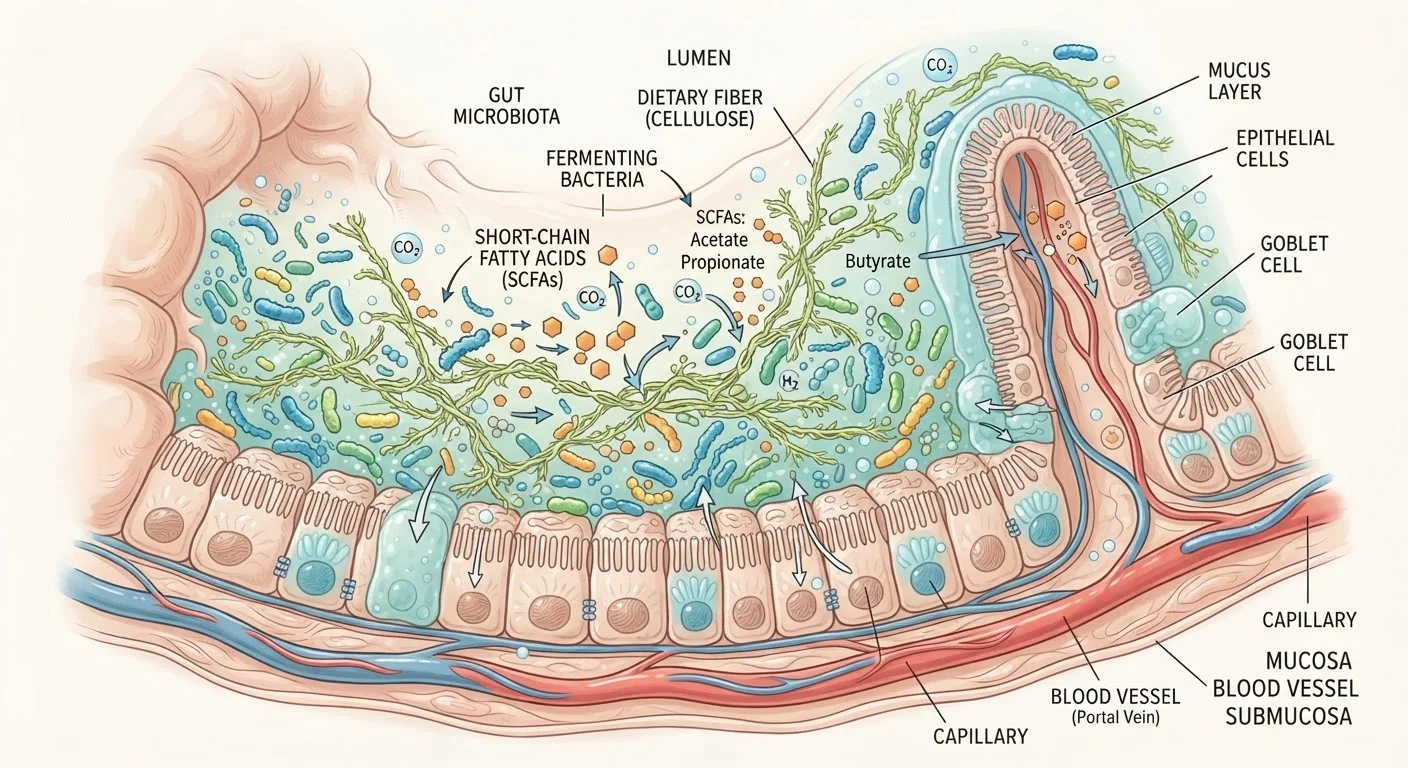
Short-chain fatty acids (SCFAs) are small organic compounds produced when certain gut bacteria break down dietary fibre through fermentation. The three main SCFAs are acetate, propionate, and butyrate. They are absorbed by cells in the colon and circulate through the body, where they interact with multiple physiological systems.
SCFAs are classified as fatty acids with fewer than six carbon atoms. Butyrate, in particular, is the primary energy source for colonocytes (the cells lining the colon) and has been studied extensively for its role in colonic barrier function.
How SCFAs are made in the gut
Dietary fibre that the human digestive system cannot break down reaches the large intestine largely intact. There, specific strains of gut bacteria ferment these fibres as an energy source. The byproducts of that fermentation are short-chain fatty acids.
Not all fibre ferments equally. Soluble fibres such as inulin, fructooligosaccharides, and resistant starch are fermented more readily than insoluble fibre like cellulose. The type of bacteria present also determines which SCFAs are produced and in what proportion. Bacteroidetes tend to produce acetate and propionate, while Firmicutes, particularly Clostridium species, are prominent producers of butyrate.
Once produced, SCFAs are absorbed rapidly by colonocytes. The colon itself uses butyrate as its preferred fuel. Propionate travels to the liver, where it interacts with glucose production pathways. Acetate enters the bloodstream and reaches peripheral tissues. See the broader relationship between fibre and gut bacteria for more on how fermentation fits into digestive physiology.
What acetate, propionate, and butyrate each do
Acetate is the most abundant SCFA in the colon. It passes into systemic circulation and is taken up by muscle and adipose tissue, where it functions as a metabolic substrate. Some research also links acetate to appetite regulation through interactions with the nervous system, though this area remains under investigation.
Propionate is produced mainly in the colon from the fermentation of certain plant fibres. The liver receives most propionate and uses it in gluconeogenesis, the process of generating glucose from non-carbohydrate sources. Researchers have studied propionate for its potential role in cholesterol metabolism, though conclusions remain mixed. For readers interested in how the liver handles these compounds, the liver health hub provides relevant background.
Butyrate receives the most research attention. It is the primary energy source for colonocytes and appears to support the tight junctions between intestinal cells, which form the gut barrier. Some research suggests butyrate also interacts with immune signalling in the gut, though the clinical implications are not fully understood. Eating a wide variety of plant fibre sources is associated with more diverse SCFA-producing bacteria.
Fibre variety matters for SCFA diversity
Different fibre types feed different bacterial species, and different species produce different ratios of SCFAs. Eating a range of plant foods including legumes, whole grains, vegetables, and fruit supports a broader bacterial community than relying on any single high-fibre food. Gradual increases in fibre intake are generally better tolerated than sudden large changes.
SCFAs beyond the gut: systemic connections
SCFAs interact with receptors found throughout the body, including in adipose tissue, the immune system, and the nervous system. This is why researchers studying gut health often look beyond the colon itself.
In the immune system, SCFAs, particularly butyrate, are thought to modulate inflammatory signalling by inhibiting certain enzymes involved in gene expression. This mechanism has attracted interest in conditions with an inflammatory component, though translating findings from laboratory models to clinical outcomes in humans remains an ongoing process.
The gut-brain axis is another area where SCFAs appear relevant. Gut bacteria and their metabolites, including SCFAs, communicate with the brain through the vagus nerve, immune channels, and hormonal signals. The gut-brain connection article examines that relationship in more depth. Separately, SCFAs may interact with hormonal pathways linked to appetite and energy balance; the hormonal balance hub covers how those regulatory systems work.
~95%
SCFAs absorbed before reaching the stool
Fermentation research indicates that the vast majority of SCFAs produced in the colon are absorbed by colonocytes or enter systemic circulation rather than being excreted.
60-70%
Colonocyte energy from butyrate
Estimates in gastrointestinal physiology literature suggest colonocytes derive the majority of their energy from butyrate oxidation rather than from blood glucose.
3:1:1
Approximate acetate:propionate:butyrate ratio
Studies of colonic fermentation consistently find acetate is produced in the greatest quantity, with propionate and butyrate at lower but roughly comparable levels.
Diet, SCFAs, and practical implications
The most direct way to support SCFA production is through adequate and varied dietary fibre intake. A consistent pattern of eating legumes, whole grains, vegetables, and fruit provides the fermentable substrates that SCFA-producing bacteria need. Low-fibre diets, which are common in Western eating patterns, reduce fermentation activity in the colon and lower SCFA output.
Fermented foods such as yogurt, kefir, and kimchi are often discussed alongside gut health, though their relationship to SCFAs is indirect. They may support the microbial communities that produce SCFAs, but they do not contain significant quantities of SCFAs themselves. What the research shows about fermented foods and the microbiome is a separate question from SCFA production directly.
Eating patterns that restrict food intake windows, such as time-restricted eating, may also affect SCFA production by altering microbial activity cycles, though evidence is preliminary. See intermittent fasting and digestive health for a balanced look at what is established versus uncertain in that area.
This article is for informational purposes only and is not medical advice. Consult a qualified healthcare professional before making significant changes to your diet, especially if you have a digestive condition or chronic health concern.