
Insulin Resistance Explained: How It Develops and Why It Matters Before Diabetes Appears

Key Takeaways
Insulin resistance
Insulin resistance is a condition in which the body's cells stop responding normally to insulin, the hormone that moves glucose from the bloodstream into cells for energy. When cells resist insulin's signal, the pancreas compensates by producing more of it. Over time, this compensation can fail, allowing blood glucose to rise to levels associated with prediabetes and type 2 diabetes.
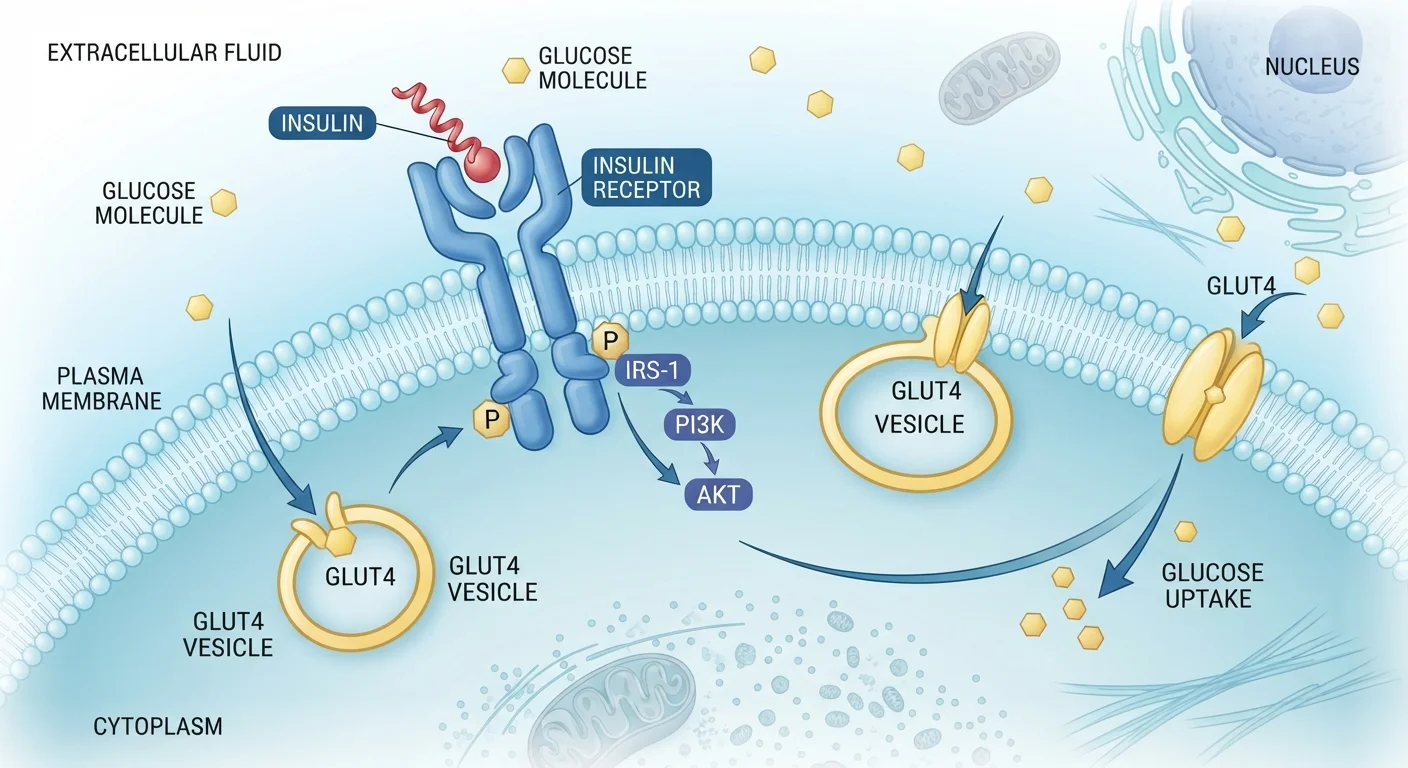
At the molecular level, insulin resistance often involves impaired signaling through the IRS-1/PI3K/Akt pathway, reducing GLUT4 transporter activity in skeletal muscle and adipose tissue.
How insulin normally works
After a meal, carbohydrates break down into glucose and enter the bloodstream. Rising blood glucose prompts the pancreas to release insulin, which acts like a signal telling cells, particularly in skeletal muscle, the liver, and fat tissue, to absorb that glucose and use it for energy or store it. When this system works properly, blood glucose returns to a stable baseline within a couple of hours. For a closer look at that process, see how the body regulates blood sugar between meals.
The efficiency of this response depends on insulin receptors on cell surfaces functioning correctly. When a receptor binds insulin, it triggers an internal chain of molecular events that moves specialized glucose transporters to the cell membrane, allowing glucose to enter. In a healthy cell, this sequence is fast and reliable.
How resistance develops at the cellular level
Insulin resistance develops when cells stop responding adequately to insulin's signal. The receptor itself is often intact, but the downstream signaling cascade is disrupted. Research points to several interacting mechanisms.
Excess free fatty acids, released from visceral fat deposits around the abdomen, interfere with insulin signaling in muscle and liver cells. Chronic low-grade inflammation, driven partly by adipose tissue that produces inflammatory cytokines, further impairs receptor sensitivity. Mitochondrial dysfunction and the accumulation of harmful lipid metabolites inside muscle cells also contribute.
Because the pancreatic beta cells detect rising glucose, they respond by secreting more insulin. This compensatory hyperinsulinemia often keeps glucose in a near-normal range for years, which is why standard fasting glucose tests can miss early insulin resistance entirely. The underlying metabolic stress continues, however, even when glucose numbers look acceptable.
~88%
U.S. adults with impaired metabolic health
A 2019 analysis published in Metabolic Syndrome and Related Disorders estimated that fewer than 1 in 8 American adults met all five criteria for optimal metabolic health.
5-10 years
Typical lead time before type 2 diabetes diagnosis
Clinical research suggests insulin resistance and compensatory hyperinsulinemia commonly precede a type 2 diabetes diagnosis by roughly a decade.
2-3x
Increased cardiovascular risk with insulin resistance
The American Heart Association notes that insulin resistance is associated with a substantially elevated risk of cardiovascular disease, independent of diabetes status.
The liver is especially central to this story. When liver cells resist insulin, the liver continues producing glucose overnight even when blood sugar is already adequate, a process called hepatic glucose output. Elevated triglycerides, a frequent finding in people with insulin resistance, reflect this excess liver activity. The connection between metabolic dysfunction and liver health is explored in more depth in the article on metabolic syndrome and the liver.
Factors that increase susceptibility
Genetic variants affecting insulin receptor signaling and beta cell function raise baseline risk. But environment and behavior substantially modify that risk.
- Excess visceral adiposity raises circulating free fatty acids and inflammatory markers.
- Physical inactivity reduces GLUT4 transporter activity in skeletal muscle, the tissue responsible for the largest share of post-meal glucose disposal.
- Diets high in refined carbohydrates and ultra-processed foods generate repeated large insulin spikes and contribute to ectopic fat deposition in the liver and muscle.
- Chronic sleep deprivation impairs insulin sensitivity measurably, even after just a few nights.
- Elevated cortisol from chronic psychological stress promotes hepatic glucose production and abdominal fat accumulation.
These factors interact. A person with genetic susceptibility who also has poor sleep, high stress, and low activity faces compounding pressure on beta cell reserve. Understanding this interaction matters when thinking about the full picture of metabolic health.
Physical activity has an immediate effect
A single session of moderate aerobic exercise can improve skeletal muscle insulin sensitivity for 24 to 48 hours by increasing GLUT4 transporter activity. Regular resistance training compounds this effect over weeks by building insulin-responsive muscle mass. These changes are measurable on lab tests when activity is sustained consistently.
Why it matters before a diabetes diagnosis
The metabolic damage from insulin resistance does not wait for a formal diagnosis. Chronically elevated insulin promotes sodium retention, contributing to higher blood pressure. It also stimulates fat storage and suppresses fat breakdown, making weight management harder. Dyslipidemia, specifically elevated triglycerides and low HDL cholesterol, develops in parallel and raises cardiovascular risk independently of glucose levels.
People in the prediabetes range already show measurable increases in cardiovascular event risk compared with those who have normal glucose metabolism. This is why clinicians increasingly focus on insulin sensitivity, not just glucose, as a metabolic marker. Mental patterns that minimize prediabetes as a warning sign can delay protective action, a problem discussed in the context of thinking errors that undermine blood sugar management.
If beta cells eventually cannot keep up with the demand for compensatory insulin, glucose rises first into the prediabetes range, then into type 2 diabetes. Catching the trajectory before that point gives the widest window for intervention.
This article is for informational purposes only and is not a substitute for professional medical advice, diagnosis, or treatment. Always consult a qualified healthcare provider with questions about your health or a medical condition.