
Plantar Fasciitis vs. Heel Spurs: Two Sources of Heel Pain That Are Often Confused

Key Takeaways
Option A
Plantar fasciitis
The soft-tissue inflammation that most adults with heel pain actually have.
Best for: Understanding the most common cause of stabbing heel pain, especially that first-step morning pain.
Option B
Heel spurs
A bony calcium deposit that is frequently blamed but rarely the true pain source.
Best for: Understanding when a bone growth on the heel is clinically significant and when it is not.
If you feel sharp stabbing pain with your first steps in the morning
Plantar fasciitis
That pattern of pain, worst after rest and easing after a few minutes of walking, is the hallmark of plantar fascia inflammation, not a bony spur.
If your X-ray shows a spur but you have no heel pain
Heel spurs
Asymptomatic spurs are common and generally need no treatment; monitoring and good footwear habits are typically sufficient.
If you have chronic heel pain that has not improved with standard plantar fasciitis care
Heel spurs
When conservative treatment stalls, imaging can confirm whether a spur is mechanically contributing to symptoms and guide further evaluation.
If you want to start a structured self-care routine at home
Plantar fasciitis
Stretching, load management, and supportive footwear directly address plantar fascia inflammation and have a strong evidence base for symptom relief.
What each condition actually is
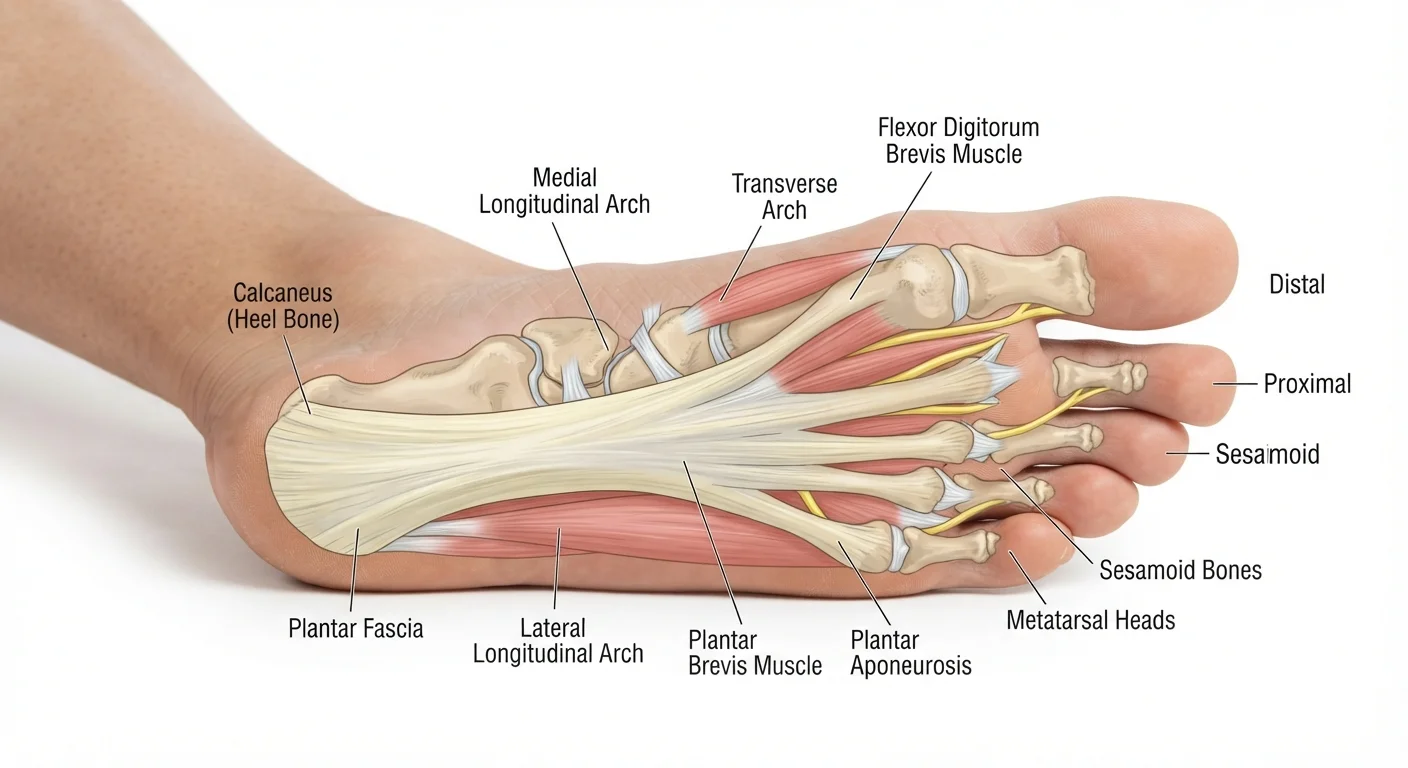
The plantar fascia is a thick band of connective tissue that runs from the heel bone (calcaneus) to the base of the toes, supporting the arch with every step. Plantar fasciitis develops when repetitive strain causes small tears and subsequent inflammation in this tissue. The result is pain concentrated at the medial (inner) heel, classically worst in the first minutes after waking or after sitting for a long period.
A heel spur is a hook-shaped calcium deposit that forms on the underside or back of the calcaneus. Spurs grow gradually in response to chronic stress on the bone, often at the site where the plantar fascia attaches. Importantly, spurs themselves are not inherently painful. The pain associated with them usually comes from the surrounding inflamed tissue, which is plantar fasciitis.
This distinction matters clinically. When a patient reports heel pain and an X-ray reveals a spur, the spur is often treated as the explanation, yet research published in peer-reviewed orthopedic literature consistently shows that roughly half of people with plantar fasciitis have a visible spur, and many people with spurs have no pain at all. The inflammation is the primary driver of discomfort in the vast majority of cases. For a broader look at how foot structures contribute to pain, see how arch structure influences pain.
How symptoms differ and overlap
Plantar fasciitis produces a predictable pattern. Pain is sharp and localized to the inner heel, peaks during the first steps of the morning, eases somewhat with movement, then returns after prolonged standing or at the end of an active day. Pressing on the medial heel typically reproduces the pain directly.
Heel spurs, when symptomatic, produce a duller ache that is harder to pinpoint. Some people describe a bruised sensation across a wider area of the heel rather than one sharp spot. Because spurs often coexist with plantar fasciitis, the symptom pictures overlap frequently, which is why imaging is sometimes necessary to separate them.
One useful clinical test is palpation. A clinician pressing firmly on the medial calcaneal tubercle who reproduces the patient's exact pain is finding plantar fascia involvement. A spur alone, absent inflammation, usually does not reproduce sharp pain under direct pressure. For a comparison with other soft-tissue foot conditions, see how neuropathy, tendinitis, and bursitis differ.
| Criterion | Plantar fasciitis | Heel spurs |
|---|---|---|
| Tissue involved | Soft tissue (plantar fascia ligament) | Bone (calcium deposit on calcaneus) |
| Primary cause | Repetitive strain and micro-tears | Chronic stress at tendon or fascia attachment |
| Pain character | Sharp, stabbing at inner heel | Dull ache or bruised sensation, often asymptomatic |
| Worst timing | First steps after rest or sleep | Variable; may not cause pain at all |
| Diagnosed by | Physical exam and symptom history | X-ray imaging |
| Requires imaging to diagnose | Not always | Yes |
| Treated with specific intervention | Stretching, load management, footwear | Rarely; focus is on inflammation instead |
General management principles
Because plantar fasciitis drives pain in most cases, management focuses on reducing tissue inflammation and restoring normal load tolerance to the plantar fascia. Clinically supported approaches include calf stretching (which reduces tension on the fascia's heel attachment), intrinsic foot muscle strengthening, and temporary load reduction. Supportive footwear with adequate arch support and cushioning is a practical first step that can reduce fascia strain during daily activity. Research on footwear design shows that shoe structure meaningfully affects tissue stress over time.
Heel spurs rarely require specific treatment beyond managing the accompanying inflammation. In cases where a spur is mechanically irritating a bursa or nerve, a healthcare provider may explore additional options, but this is not the common scenario. Well-intentioned home habits can sometimes slow recovery rather than help it. Some common foot care routines quietly prolong pain, so it is worth reviewing your approach with a professional.
For anyone uncertain about the source of their heel pain, a physical examination remains the most reliable starting point. A broader look at foot pain causes can help contextualize what a clinician is likely to assess during that visit.
This article is for informational purposes only and is not medical advice. If you are experiencing heel pain, consult a qualified healthcare professional for an accurate diagnosis and personalized care plan.