

Key Takeaways
Peripheral circulation
Peripheral circulation refers to the movement of blood through the vessels supplying the arms, legs, hands, and feet. The feet sit at the farthest point from the heart, which makes them especially dependent on healthy vessel function to receive oxygen and nutrients. When that flow slows or meets resistance, tissues in the feet are among the first to register the change.
Clinicians use the term peripheral arterial disease (PAD) specifically for arterial narrowing in the limbs, though venous insufficiency and microvascular dysfunction can also reduce effective foot perfusion.
Why blood flow matters more at the feet
Blood has to travel farther to reach the feet than any other soft tissue in the body. The arteries that supply the lower limbs branch progressively into smaller vessels, and by the time blood reaches the toes, it is flowing through capillaries only a fraction of a millimeter wide. Gravity works against venous return on the way back up, which is why the feet and ankles are where fluid tends to pool when the venous system loses tone.
This anatomy means that systemic vascular problems, such as arterial stiffening or venous valve failure, often show symptoms in the feet before they appear anywhere else. Oxygen delivery falls, waste products accumulate between cells, and tissue repair slows. None of those changes happen in isolation: they alter how the foot feels during both activity and rest.
See what commonly causes foot pain for a broader look at the structural and neurological factors that can accompany vascular changes.
What reduced circulation actually feels like
The sensations associated with compromised blood flow vary depending on whether arterial supply, venous return, or small-vessel function is affected.
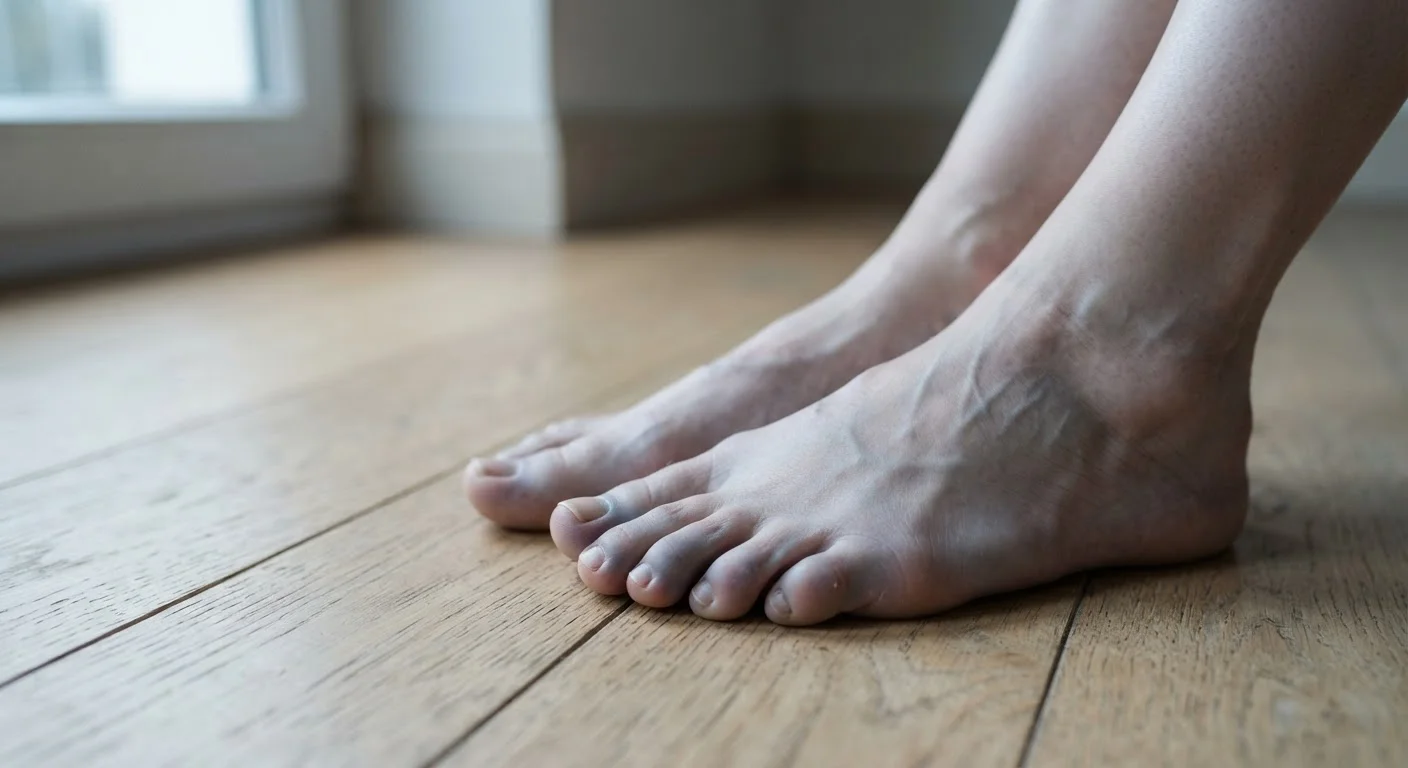
Coldness and color changes are among the earliest signs of reduced arterial flow. A foot that stays cold regardless of room temperature, or that turns pale when elevated and dark red when lowered, is showing the classic color-change pattern clinicians call dependent rubor. Bluish or mottled discoloration suggests the capillary beds are not receiving adequate oxygenated blood.
Tingling and numbness occur when reduced perfusion affects nerve fibers. Unlike neuropathy, which typically follows a stocking distribution from the toes upward, circulation-related tingling may be more variable and often improves briefly with movement. The overlap between vascular and nerve symptoms is real, and the two can coexist. Distinguishing neuropathy from other foot conditions is an important step before choosing a self-care approach.
Swelling and heaviness reflect venous and lymphatic insufficiency. When valves in the leg veins fail to prevent backflow, fluid leaks into surrounding tissue, producing a dull, pressure-like ache and visible puffiness around the ankle and lower foot. This is often worse after prolonged sitting or standing.
Slow wound healing is a significant concern, particularly in people with diabetes. Without adequate blood flow delivering oxygen and immune cells to a wound site, even minor cuts, blisters, or calluses can progress to serious ulcers.
A simple daily foot check
People with diabetes or known vascular conditions are generally advised to inspect their feet each day, including the soles and between the toes, for cuts, blisters, color changes, or unusual warmth. A mirror or a smartphone camera can help reach areas that are hard to see directly. Report any wound that has not started closing within a few days to a healthcare provider.
Risk factors that reduce foot perfusion
Several conditions and habits consistently reduce blood flow to the feet.
- Diabetes impairs both large vessels (through accelerated atherosclerosis) and small vessels (through microangiopathy), which together reduce perfusion significantly.
- Smoking constricts peripheral arteries acutely and accelerates their structural damage over time.
- Prolonged sitting compresses femoral vessels and reduces calf-muscle pump activity, the mechanism that pushes venous blood back toward the heart.
- Obesity increases venous pressure in the lower limbs and promotes inflammatory changes in vessel walls.
- Hypertension and elevated cholesterol contribute to arterial narrowing over years.
For adults managing any of these factors, routine attention to foot appearance and sensation is a practical early-warning system. Building foundational foot care habits covers how to structure that monitoring as part of daily life.
6.5 million
Americans affected by peripheral arterial disease
The Centers for Disease Control and Prevention estimates that roughly 6.5 million adults age 40 and older in the United States have peripheral arterial disease.
50%
PAD patients with no classic symptoms
Clinical literature consistently notes that approximately half of people with peripheral arterial disease do not report the textbook symptom of leg pain during walking, which delays recognition.
2x
Elevated foot ulcer risk in people with diabetes and PAD
Coexisting diabetes and peripheral arterial disease approximately doubles the risk of lower-extremity ulceration compared with diabetes alone, according to vascular medicine reviews.
Practical steps to support foot circulation
Self-care cannot substitute for medical management of established vascular disease, but several approaches have documented support for improving peripheral blood flow in generally healthy adults or as adjuncts to treatment.
Walking is the most accessible vascular intervention. Calf-muscle contractions during walking mechanically pump venous blood upward and stimulate the release of nitric oxide, which promotes arterial dilation. Even short, regular walks are more effective for circulation than one long session followed by extended sitting.
Foot and ankle exercises done while seated, such as pumping the ankles up and down or tracing the alphabet with the toes, activate the calf pump without requiring full weight-bearing. These are useful for people who spend long periods at a desk or traveling.
Elevation reduces venous pressure and helps fluid drain from swollen feet. Lying down with the feet raised above heart level for 15 to 20 minutes can provide temporary relief from edema-related heaviness.
Massage applied with gentle upward strokes from toes toward the ankle can support lymphatic and venous return. The self-massage techniques for tired feet guide covers practical methods you can apply at home.
Footwear that compresses the toes, restricts ankle movement, or cuts across the instep can mechanically impede local circulation. Common foot care habits that worsen pain includes footwear patterns worth reconsidering.
This article is for informational purposes only and is not medical advice. If you experience persistent cold, numb, discolored, or swollen feet, or any non-healing wound on the foot, consult a qualified healthcare provider for evaluation and guidance appropriate to your individual health status.